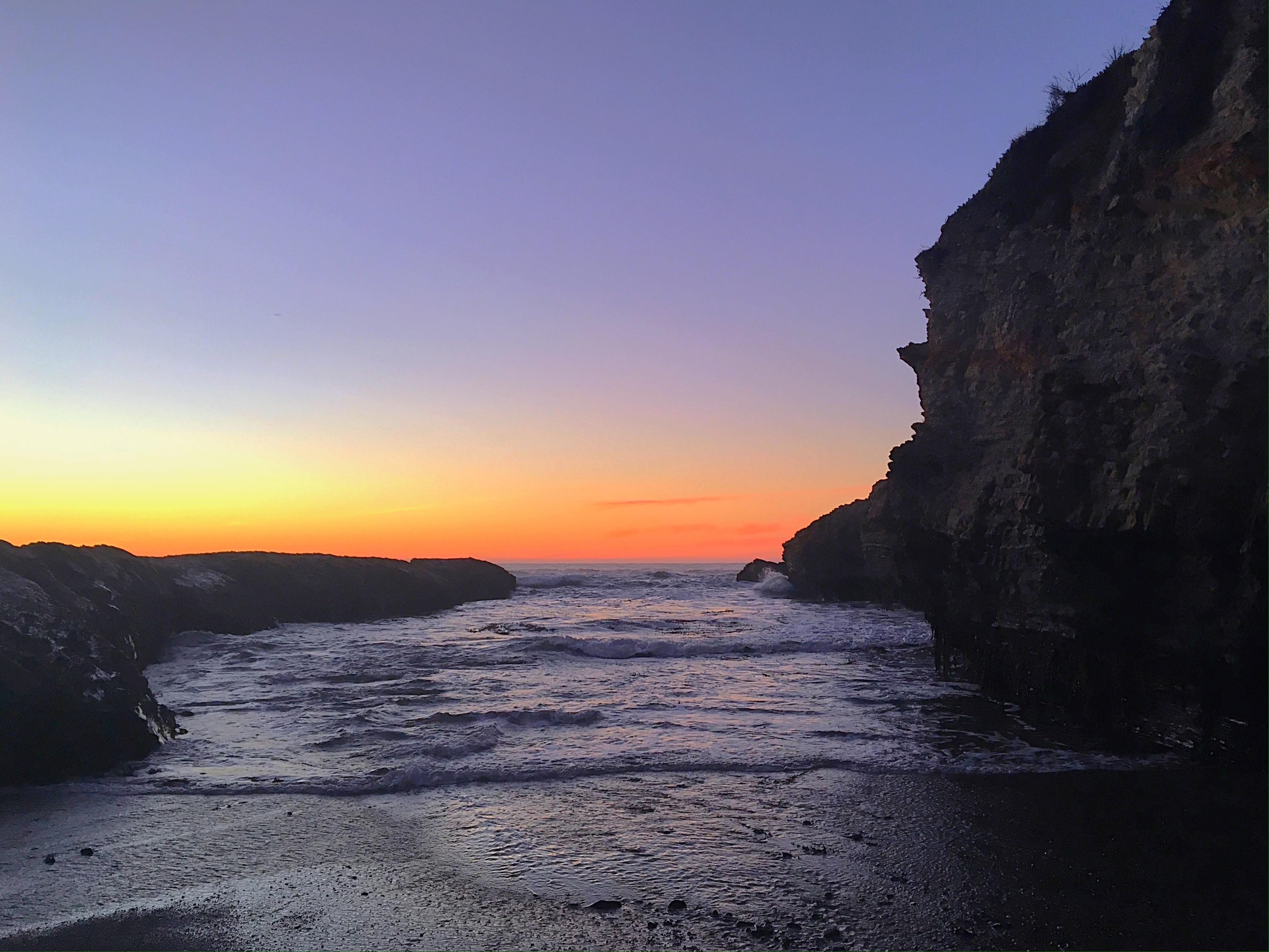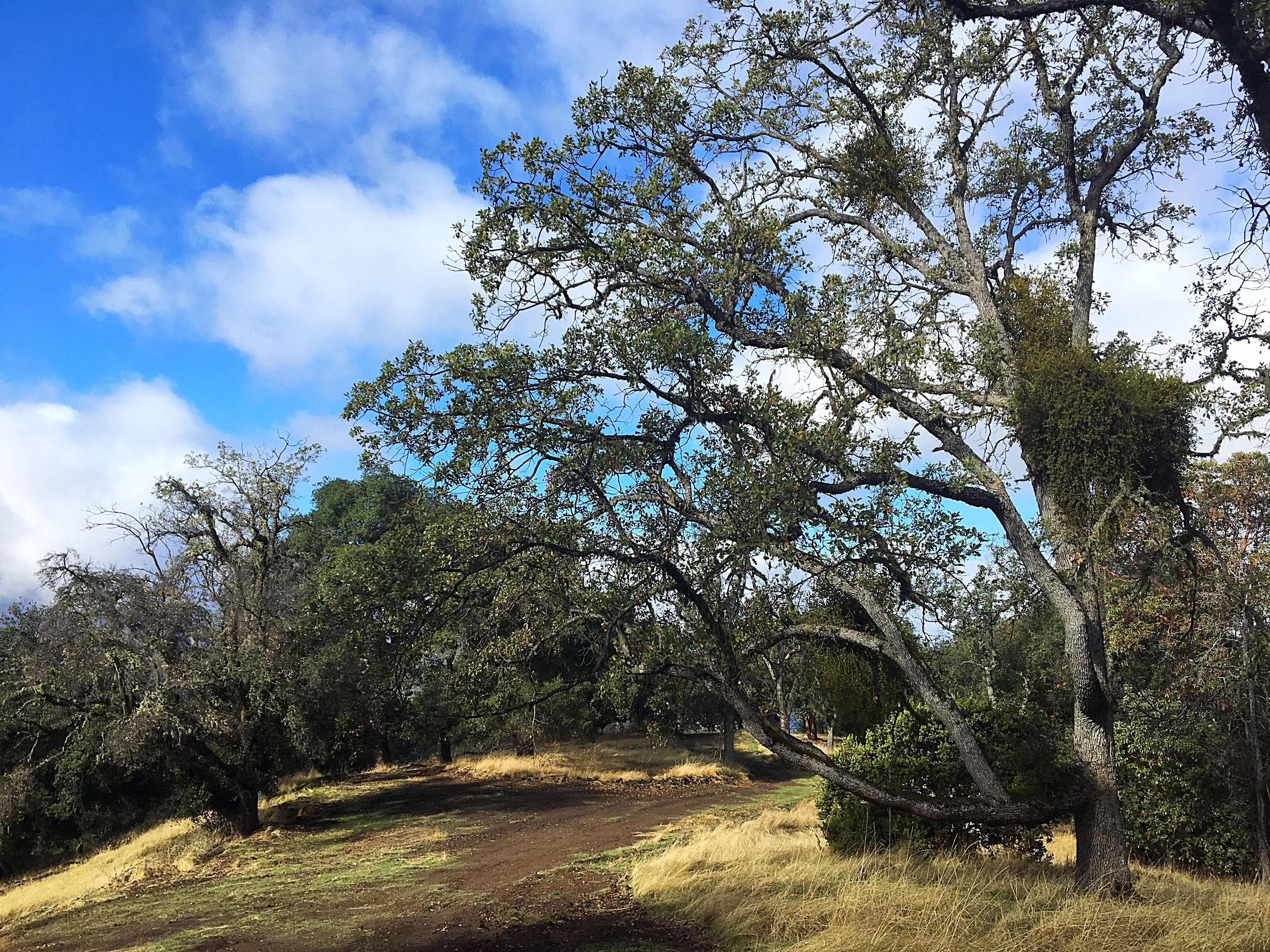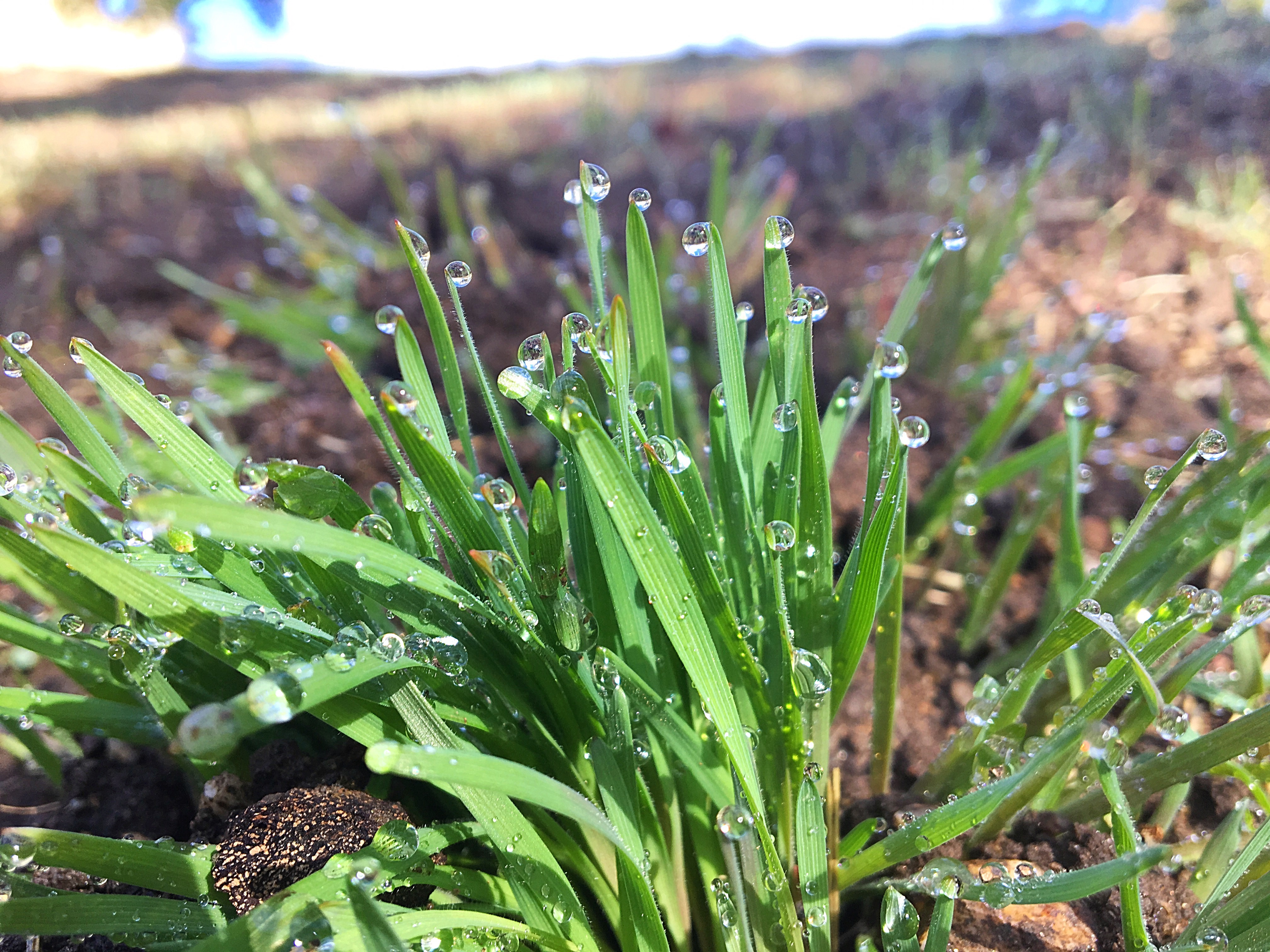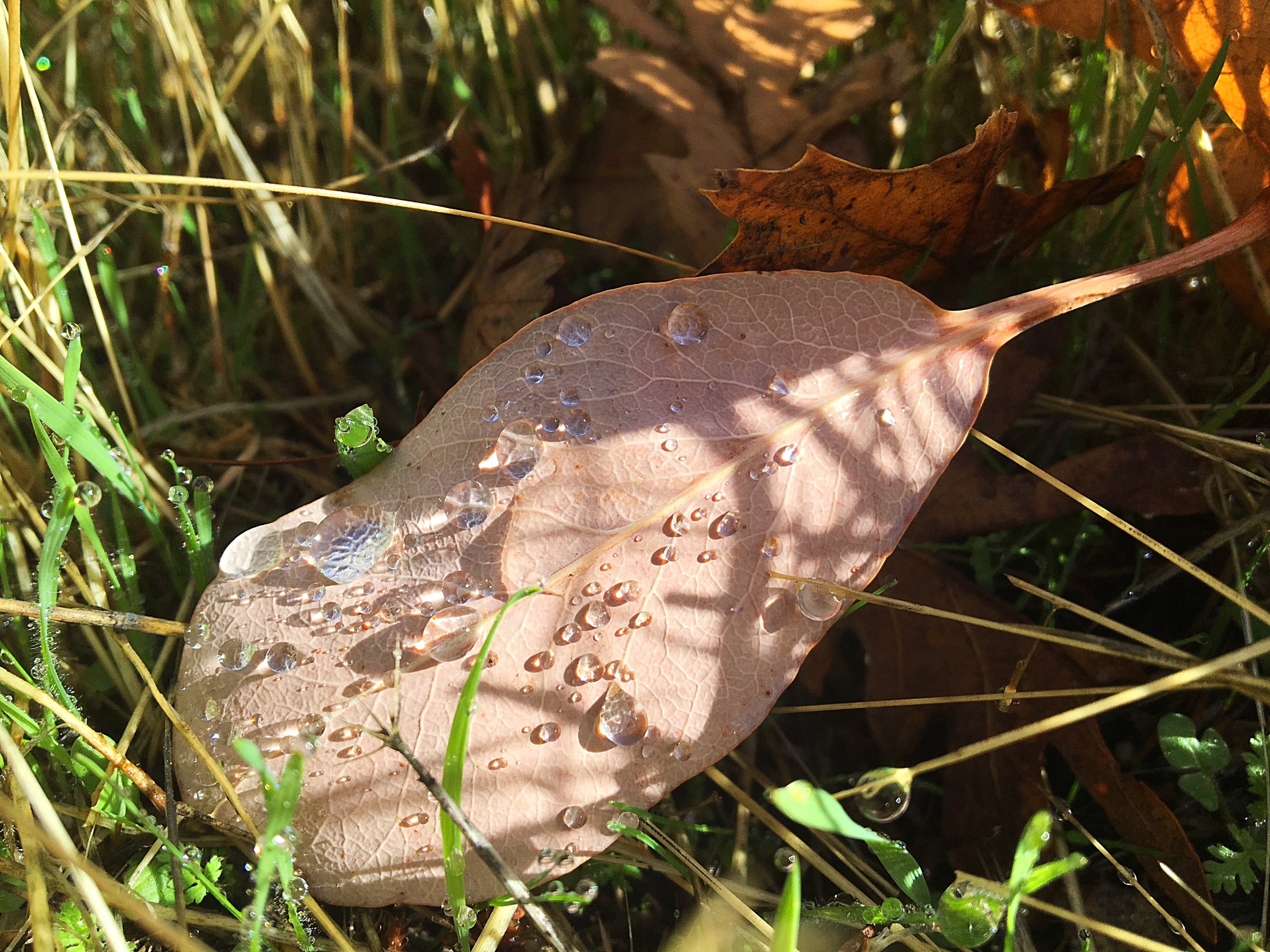
Drought Damage

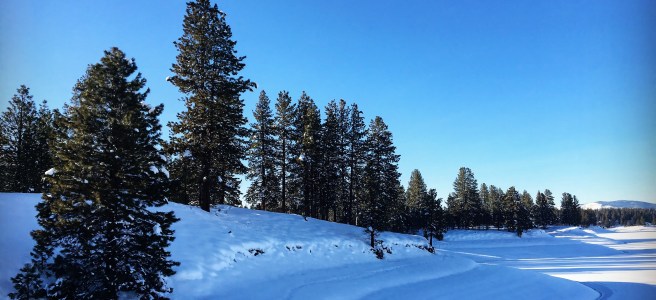
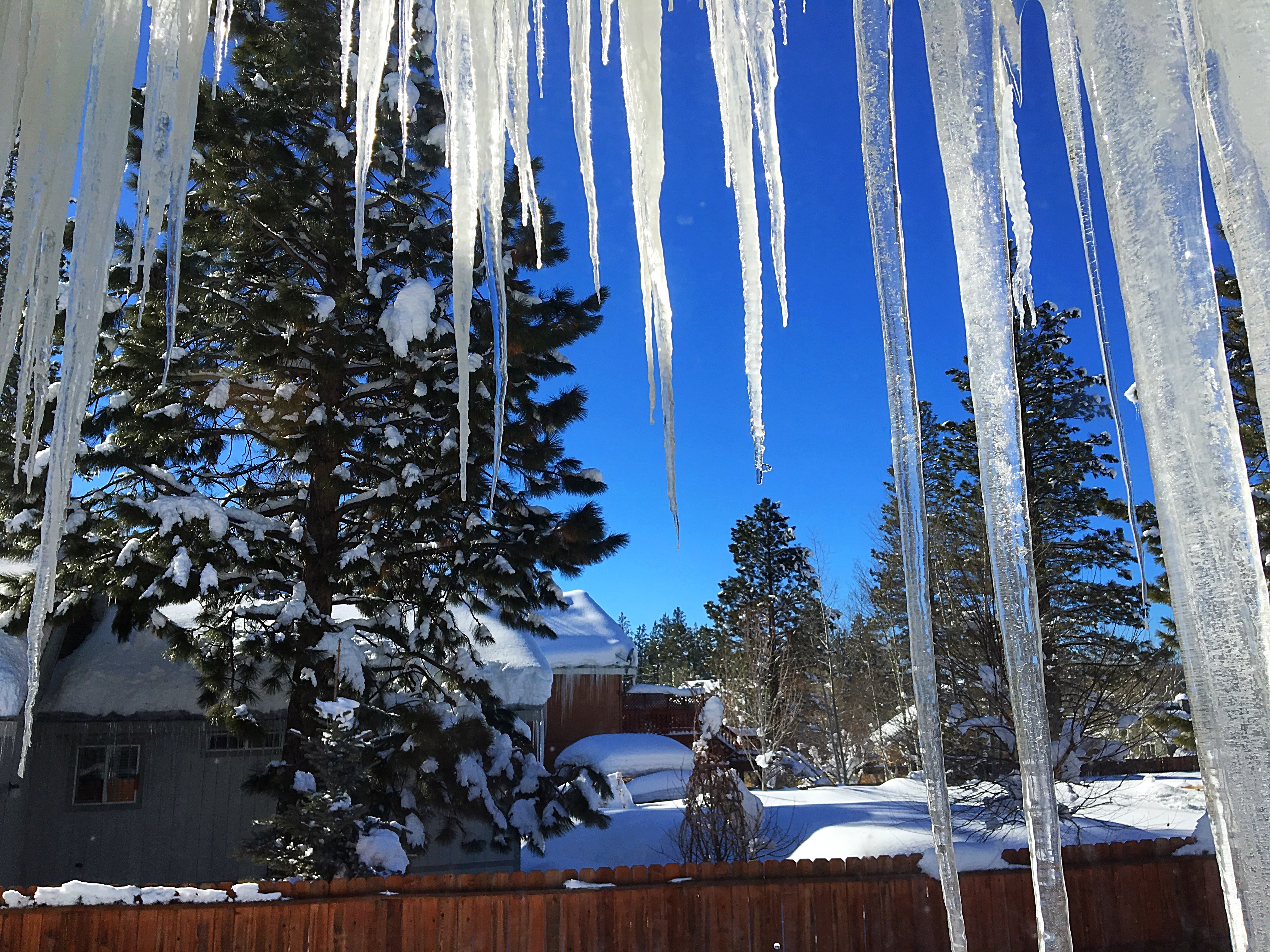
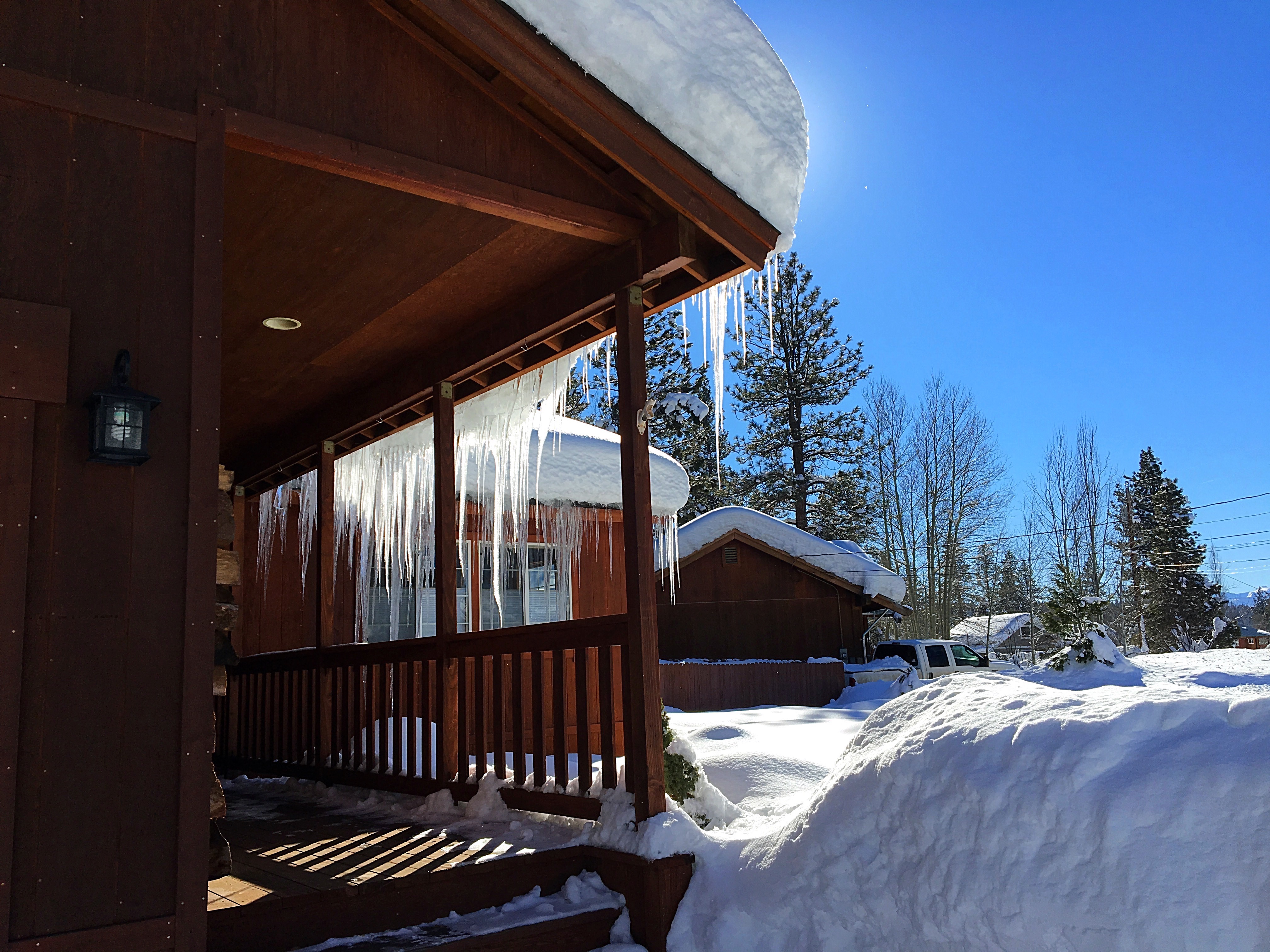
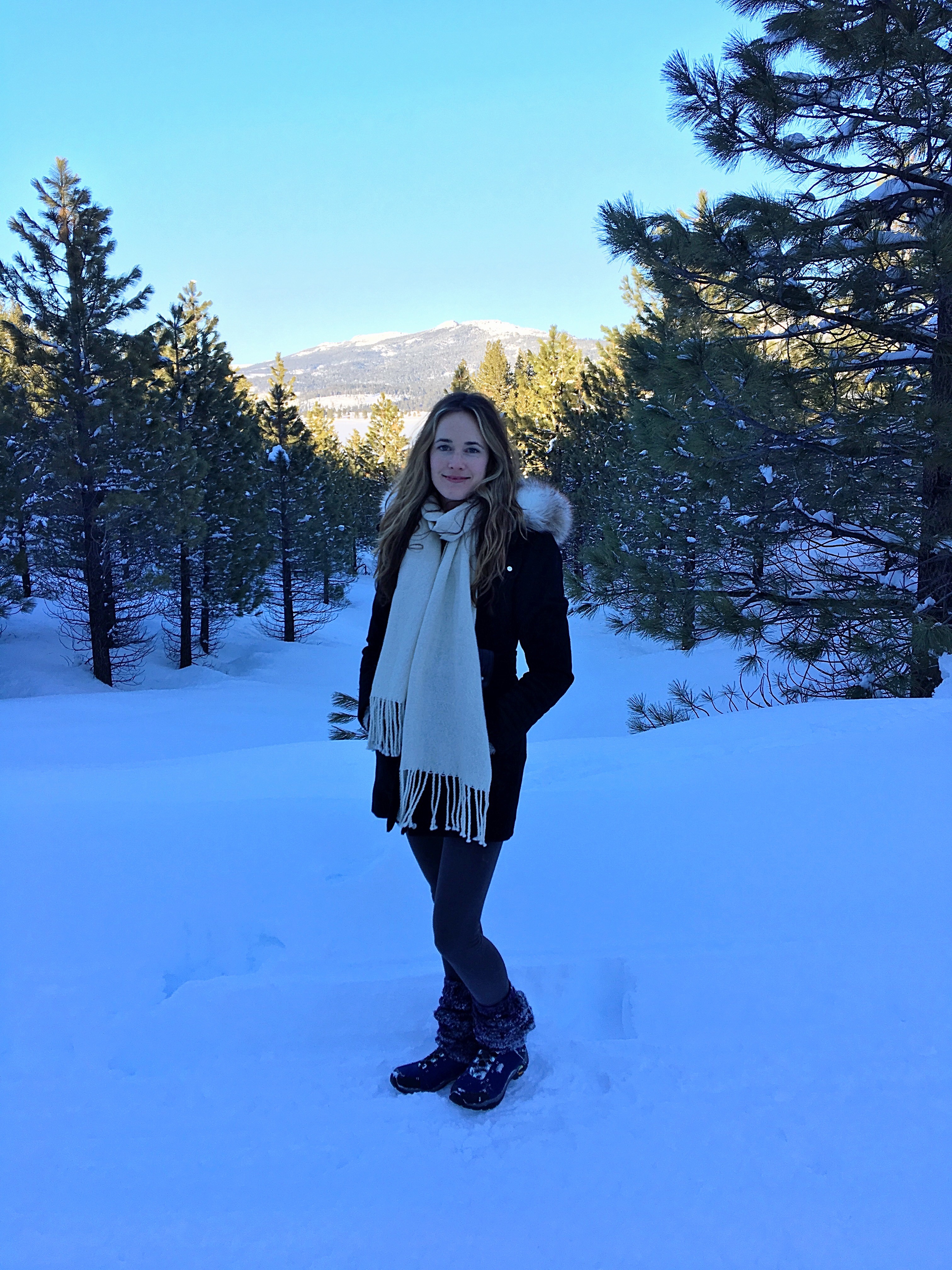
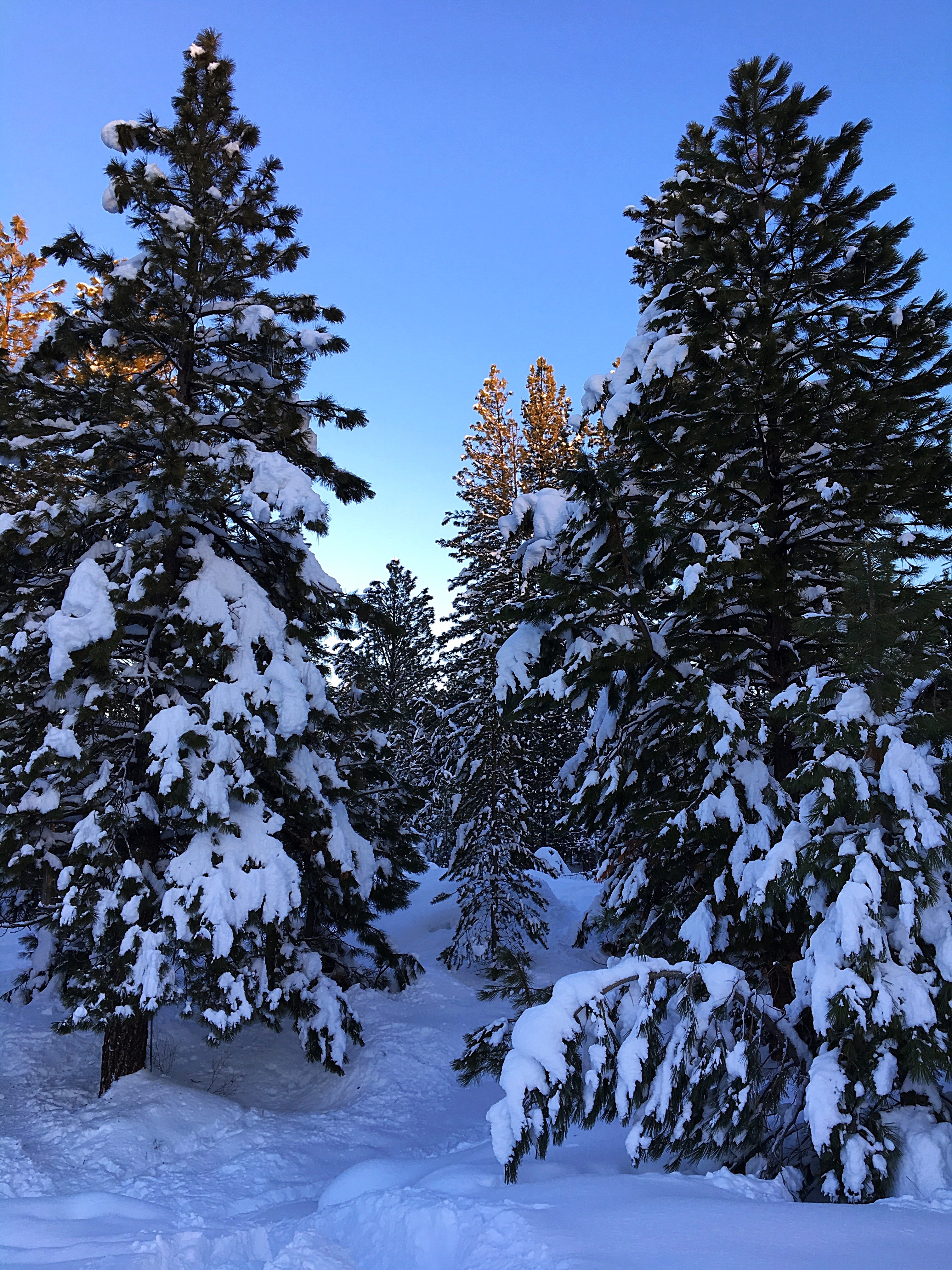
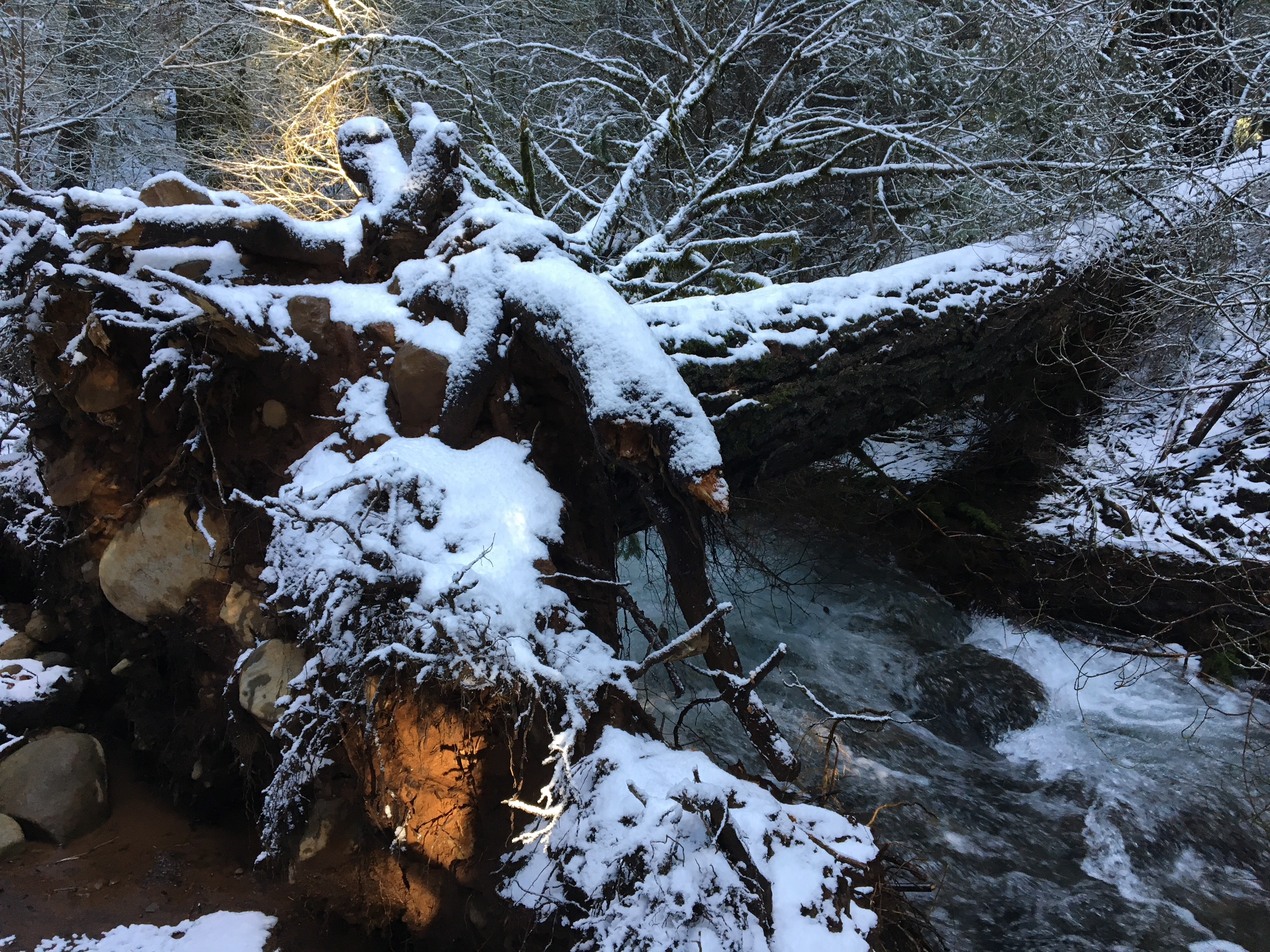
I live at 2,500 feet on my aunt and uncle’s property and more often than not, snow in the forecast only brings disappointment; yet, one night a cold front descended, and at dawn, I awoke with the sun, and seeing a brilliant dusting on pine needles outside my window, I leapt from my bed and put on warm clothes. I luxuriated that morning, taking pictures of all the familiar sights that sparkled as if new.   
Through our greatest luck, my mom planned a visit that day. I called her and told her to come immediately: “The snow won’t stick for long,” I said.
Sure enough, by noon, the snow had melted from the trees and only amoeba-shaped patches remained on north-facing hills. 
“It’s too bad the snow’s gone,” I said to my mom after giving her a hug when she arrived.
“That’s ok, there was some on the drive up.”
“But you should have seen it,” I said. “Everything was at least 100 times more beautiful.”
“It’s beautiful enough,” she said, with her standard measured smile.
“Have you visited the snow this season?”
“No, you know I haven’t.”
“We should find some. I went on a hike through Rock Creek recently. There’s probably snow there. What do you think? Want to go?”
“Sure, but I don’t have snow shoes.”
“I have an extra pair.”
“OK. Do we need chains?”
“Probably, let’s buy some.”
“Have you ever put them on?”
“No, but it can’t be too hard.”
“Ok…” she looked at me skeptically.
We purchased chains and drove up the mountain. By the time we got to Nevada City, we saw snow on the ground. Highway 20 began a steep incline and my mom looked out the window at the snow, which thoroughly covered the ground and trees. 
“I know it’s cliche,” she said. “But this is a winter wonderland.”
We pulled off the highway and wrapped down narrow roads to the trailhead.
“The car is sliding!” my mom exclaimed as we drove down a steep stretch.
“Not that bad,” I said, completely unfazed.
“I hope we don’t get stuck on the way up,” she said.
“We won’t get stuck,” I wasn’t worried, having never driven in the snow. “We’re on an adventure, mom! A glamsient adventure.”
“Whatever that means,” she said.
“You would know if you read my blog,” I joked.
We pulled into the empty parking lot — the best kind at a trailhead.
“Look mom, yours are the only footsteps,” I called when she walked in front of me.
“Yes!” she made S-curves to revel in the novelty.
It amazed me to see her frolic. She is often serious and reserved, but in the snow she hopped and scampered. Effervescence infused her spirit. She patted snow together in her bare palms.
“Don’t throw it at me!” I said.
She threw it at a tree trunk and flashed a smile that I hadn’t seen since before my grandma got pneumonia and died.
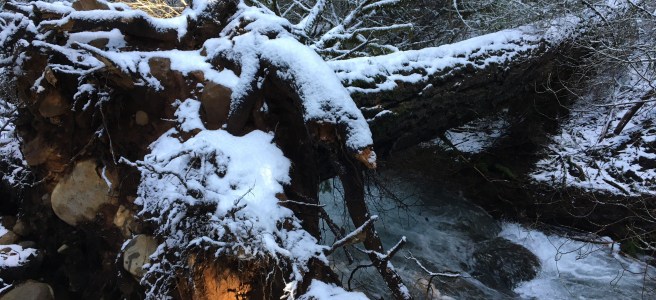
“Can you tell there’s a lot of damage here?” I asked.
“Yes, but it’s all beautiful under the snow.”
We came to a blockade — a large, fallen tree that stretched across the entire path.
“Should we turn back?” my mom wondered.
“I climbed over it the other day.”
When we got to the other side, she asked me, “is there snow on my head?”
“A little.” 
She went under a branch and shook it. “How about now?” she laughed.
I laughed along with her. She threw more snowballs at trees. We laughed when she missed her targets.
“Last time we were here, Kitten said the falling trees and branches are because of the drought.”
“Oh, yes. The forest service estimates that 1 in 3 trees in Californian forests have died from the drought.”
“Really?”
“I think it’s an underestimate,” she said. “We will see more damage. It takes years for the forests to return to good health.”
We walked along the creek, a new scenery with the snow, completely different than it had been in the rain. I even lost the trail in one section, although I didn’t tell my mom.
“The aquifers are mostly depleted in California,” my mom continued. “Since the 1930s, big agriculture since has run them dry.”
“That’s sad, mom.”
“Fresno has sunk some 20 or 30 feet because the aquifers below the city are empty.”
“I didn’t know that. Now I guess those aquifers are ruined.”
“It’s almost unimaginable how much humans have changed the earth.”
“Greed and ignorance,” I said.
At the end of our walk, we put chains on my car’s tires. It only took a dozen tries, and constant reference of the instructions, but we did it!
We climbed the hill at a low speed until we arrived at the steepest slope. My Mom gripped her seat while I stepped onto the gas and the car wobbled through slush. 
“Come on, little car!” My confidence bottomed out when I felt the car lose traction. I had no idea what I was doing and it was time to admit that to my mom.
But then — by some strange magic — the tires gripped and took us out of the churned up road. The car felt steady again, slowly progressing.
“We made it, Mom!” I said.
“Yeah,” she sighed, somewhat sarcastically as relief washed over her face.
The next morning, she wanted to leave early to avoid the San Francisco Bay Area traffic.
“You know how it gets,” she said.
“I just wish you could stay longer.”
“I noticed you have a few dead trees on the property,” she said.
“The pine trees?”
“Yes, the tops are brown. A sign of drought damage.”
“Do you remember the giant oak in the middle of the meadow last time you were here.”
She looked as if she were trying to recall her last visit.
“Doesn’t matter,” I said. “It fell last summer. Did I tell you that story?”
“I don’t think so.”
“One night, I was reading in my room and I heard Shadow making strange noises outside. I called his name a couple times out the window, but he kept going. So I went downstairs and opened the door to see what was going on and there’s Shadow on the fence, looking towards the meadow. I called his name and tried to get him to come in, but he just kept staring towards the meadow and making weird noises. I got kind of creeped out thinking maybe there was something or someone out there. 
“I went inside and when I was halfway up the stairs, I heard this loud, cracking sound and then an enormous thud, which shook the whole house! For a second, I couldn’t move. My heart was beating so fast. I had to check outside, but I couldn’t see that anything changed. It was so dark out and I didn’t want to go past the porch. 
“The next morning I went outside and, sure enough, the giant oak had split at it’s lowest branch — right down the middle. The top half of the tree was on the ground and the rest of the trunk remained standing like a jagged obelisk. Aunt Marika and Uncle Rick were shocked when I told them.”
“Another drought death.”
“I don’t know. It looked like there was a hole and some rotting where the tree split. It looked like insects had gotten in and then water went in the hole.”
“That’s the drought, for you. The tree becomes distressed when it’s not getting enough water, and bugs can burrow into it.”
“It’s natural defenses are down.”
“Exactly.” 
We finished our breakfast and I walked my mom to her car. We hugged and said goodbye, thank you for visiting, thank you for having me, come again soon. We waved as she pulled away.
I turned to the meadow and walked to the remaining chunks of the giant oak. Looking at the thick, moss-covered cylinders, I remembered the oak’s grand stature, a living connection to the past. Surely it had been alive before the United States became a country. Seeing it now, in only a few chunks and pieces, the majority hacked up and hauled away by neighbors for firewood, I remembered my young cousin’s reaction when she saw the tree had fallen. She grew up on the property and knew the oak — felt it’s presence — by the time she could walk.
I recalled her devastation. While my Aunt and Uncle surveyed the damage, my cousin climbed into the tree from the top where it rested on the ground, and walked through its branches towards its base; her face spoke of when her father set up a swing on its thickest branch, and the times she climbed it and found refuge in its branches like a secret hideaway. When she was ready, she found a place to sit, her back to me. She leaned against a branch, now vertical, pointing to the sky. She wrapped her arms around it; I approached her, and heard as the memories spilled softly from her eyes. 
 

Snowflakes

Decorated and adorned — the mundane made profound — neighborhood houses become gingerbread with thick, clean frosting on the roofs. No longer differentiable between old or new, run-down or well-kept, each dwelling takes on an air of elegance. Icicles hang from awnings like stalactites. An enchanted child appears behind my eyes. 

We make tall footprints on what we think is the path. Away from the homes, a reservoir sits still and frosted. Creeks shimmer, cutting through the meadow, frozen in place, lightly dusted; large rocks and boulders, capped white, create bright mounds in the dark river. Cottonwoods, having lost their leaves, look dead beside the Pines, which pop their green heads out of the snow.  

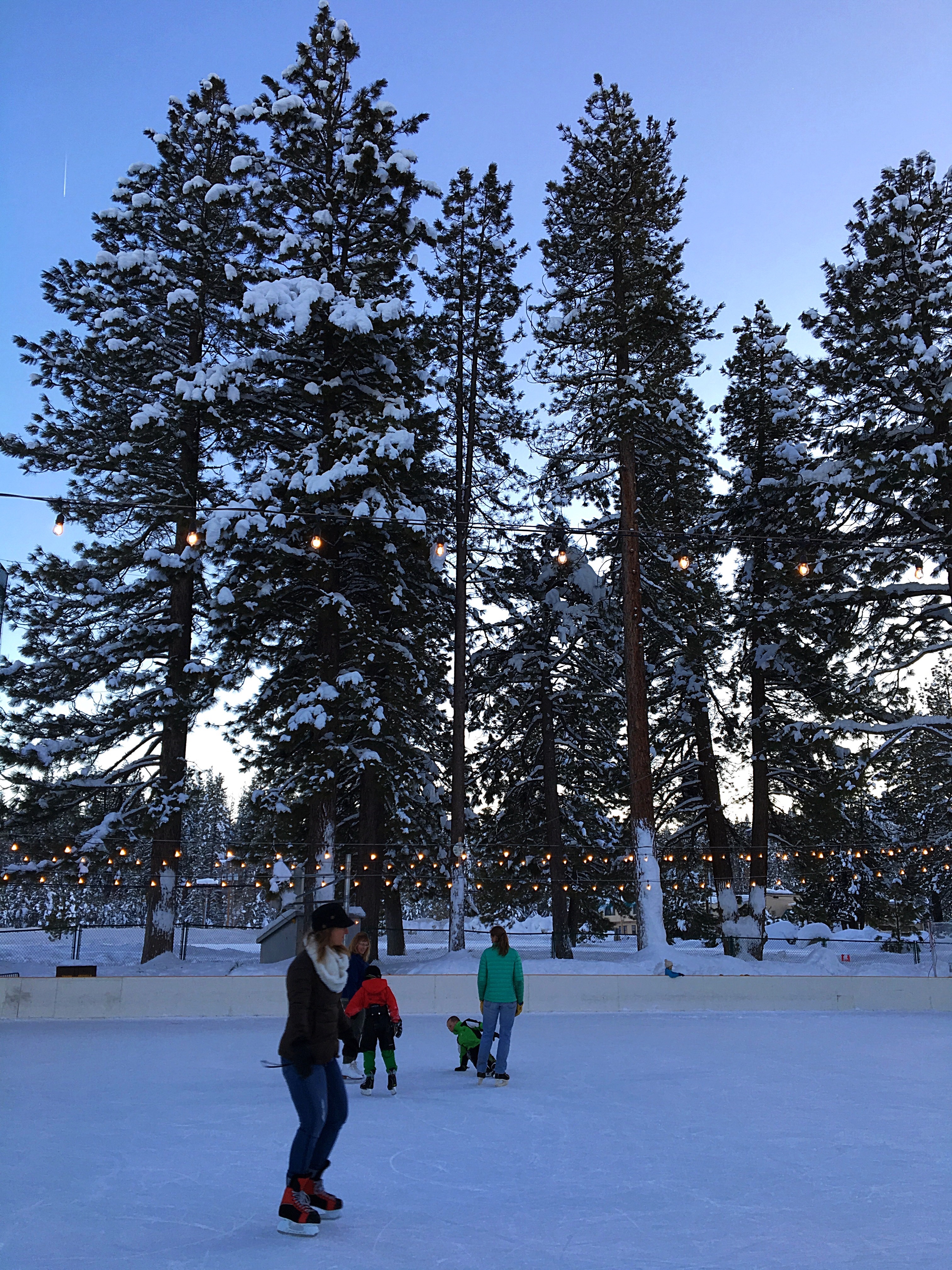
In town, we pass the ice rink. Cafe lights and ballroom waltz music from the early 1900s creates a sense of nostalgia for a time we never knew.

We drive off-road. Tree branches droop with heavy snow and drop the weight in puffs that cascade to the blanketed ground. We stop on a ridge and step out of my cousin’s Jeep. The landscape surrounds us in sacred silence created by the deep snow, sparkling as if rhinestones fell in the storm.

“Almost takes my breath,” I’m entranced by the mountains and valleys before us.

“I saw the best snowflake the other day,” Derek tells me in his ski bum drawl. “I was standing on my front porch and it was one of those big fluffy ones. I watched it float down and land on the railing. It was so perfectly geometrical and intricate and it just stayed there. I wanted to pick it up and show my roommates, but obviously that’s not gonna happen.”
“Such an incredible paradox, isn’t it? One snowflake is so fragile, yet put together –” I reach to the landscape.

“There’s been a bunch of avalanches this season. Kinda crazy. Just last year we were complaining about another snowless winter.”

“Did you know that people are using ‘snowflake’ as an insult these days?” I ask.

Derek laughs, “what? No. That’s lame.”

“I agree. I found out about it on Twitter. Apparently it’s to insult someone who is fragile and thinks they are unique — a bleeding-heart or triggered person who gets trophies for participating. That’s the context, I suppose. It started with conservatives using it against liberals, but now liberals have embraced the term against conservatives. Reminds me of the Sneetches from Dr. Seuss. Do you remember those creatures with stars on their bellies?”
“Yeah, totally. You just can’t insult someone by calling them a snowflake, though. It’s magical. Literally everything is more beautiful in the snow. And if it’s too outta hand, houses get crushed. Even if it does melt, it becomes water and enters the water cycle. It doesn’t go away. Being called a snowflake just isn’t and insult.”

“I don’t get it either. Part of nature as humans is to feel — it’s what gives us our humanity. And for people to mock that side of ourselves, it’ll turn people into unfeeling monsters.”

“Damn. That’s true.”

“Seriously. Having an open, compassionate, sensitive heart requires courage and strength in a world with so much pain and suffering.” 

“And evil.”

“It’s a strange time, Derek.”

“A strange time, indeed.”

We slip into silence, admiring the changing sky. Delicate pink, purple and indigo hues reflect in the white mountainside like a painting. Stillness and peace reside between our voices. 


A Day in Los Osos

Nostalgia washed over me as I drove into Los Osos at sunset. I pulled into my friend Nikki’s driveway; it was my first visit to her new home.
“I can’t believe I haven’t seen you since the Burn,” she said, giving me a hug.
“It’s been too long!” I agreed.
She hopped with excitement. “Come see my new place,” she walked me down a stone path. Succulents, feathers, and skulls decorated her entryway.
“This is my room,” she said as she walked through the door.
I looked around, first at a three-paneled stained glass window and then at the plants and ornaments on her windowsill beneath it. “I don’t think I’ve ever seen a stained glass this large in someone’s room. It makes your space feel holy.”
“I love sleeping here. It’s peaceful.”
Nikki showed me the rest of her house — pointing out the craft-style ceilings — and then walked to the large backyard with a view of the Pacific.
“I’m so glad you landed here,” I said. “This is exactly what you wanted to manifest months ago: privacy and a backyard.”
She smiled at me, “it’s perfect. I’m blown away by what I called into my life. And at an affordable price!”
We made tea and walked back into her room.
“I love this quirky town,” I said. 
“It’s got it’s own thing going from the rest of the Central Coast. A lot of artists live here. You get things like this stained glass that you might not find elsewhere.”
“When I lived here I felt like I was in a vortex. I wouldn’t want to leave for days on end. I don’t know if it’s all the natural beauty or the dead-end streets or what –”
“Los Osos definitely has me in its vortex. I love it here,” Nikki said, making herself comfortable on a cushion. “I can’t picture myself living anywhere else right now.”
“That’s a wonderful feeling,” I said. “It shows you’re exactly where you’re meant to be.”
She sipped her tea. “Have you heard of the I Ching?”
“Yes, but I don’t know much about it.” 
“I’ve been getting into it lately,” she said. “It started in ancient China and can be used as an oracle. I’ve been listening to a weekly interpretation by Bobby Klein and I’m finding his wisdom helpful for my daily life.”
“What is the latest?”
“He said we might be feeling unmotivated, lazy, and unproductive –”
I sighed. “I can relate! I want to write, I have ideas, but I can’t seem to sit and get them out. And when I do sit, I can’t seem to get them out in a way that pleases me.”
“See? It’s uncanny. I feel that way in a lot of areas in my life.”
“What’s the wisdom?”
“According to the reading, we can use ritual and ceremony to move past these kinds of blocks. And the energy we spend in that endeavor will translate into a bountiful harvest.”
“Have you tried it?” I asked.
“I have. In one way, for ritual, I’ve been waking up early and moving my body to put me in a positive, active mindset. And this window and the windowsill helps me create ceremony; I’m using it like an altar.”
I looked again at the colorful stained glass, reminiscent of religious art. “Is it working?”
“I think so. I’m definitely more positive and motivated, but I’ll know for sure when it’s time to harvest.”

Sweet Springs Nature Preserve
We woke up early the next morning to a sunny and warm fall day. After Nikki and I practiced yoga in her backyard, she went to school and I headed straight to Sweet Springs Nature Preserve, a 24 acre parcel of land neighboring the Morro Bay estuary. 
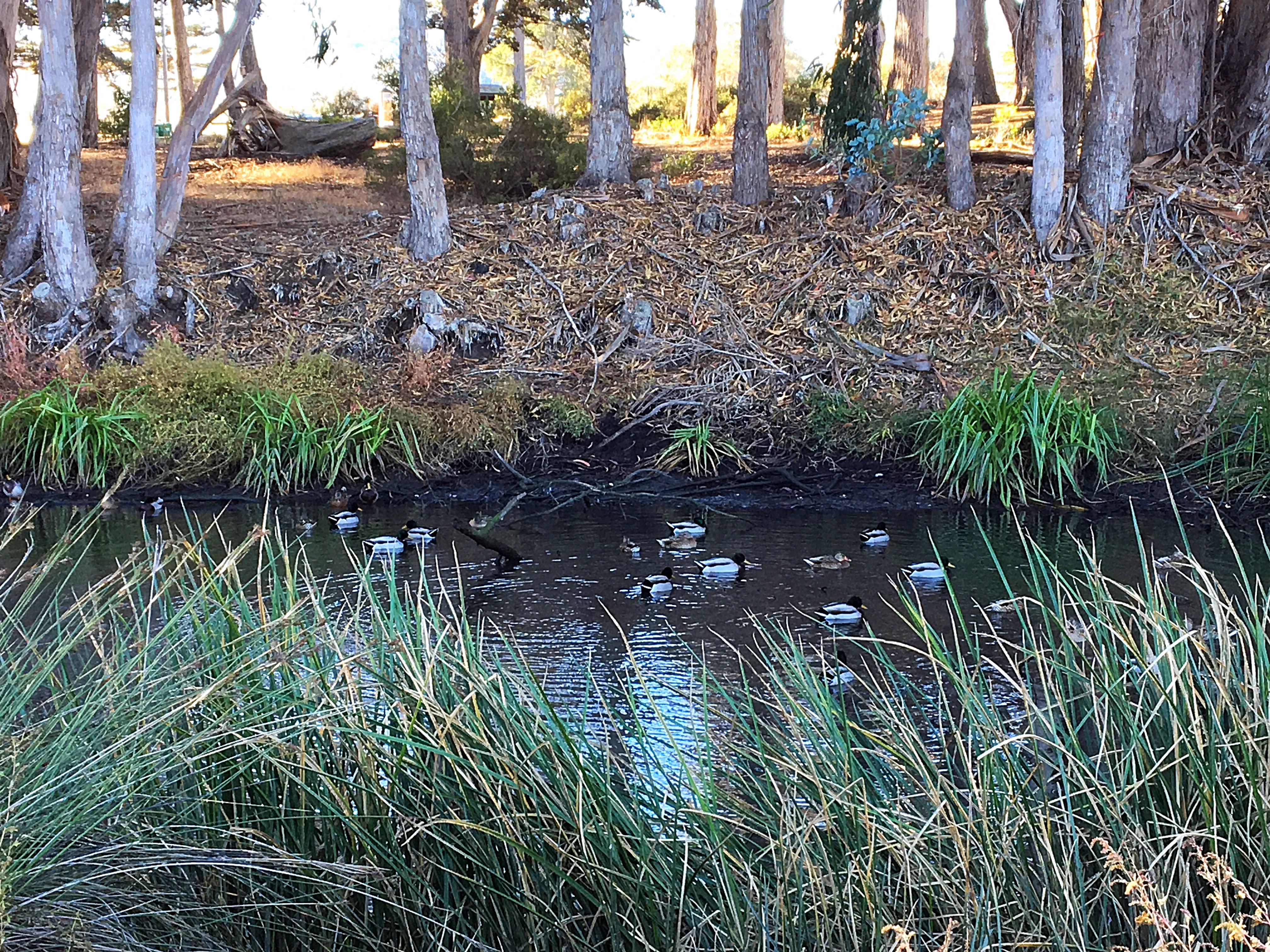
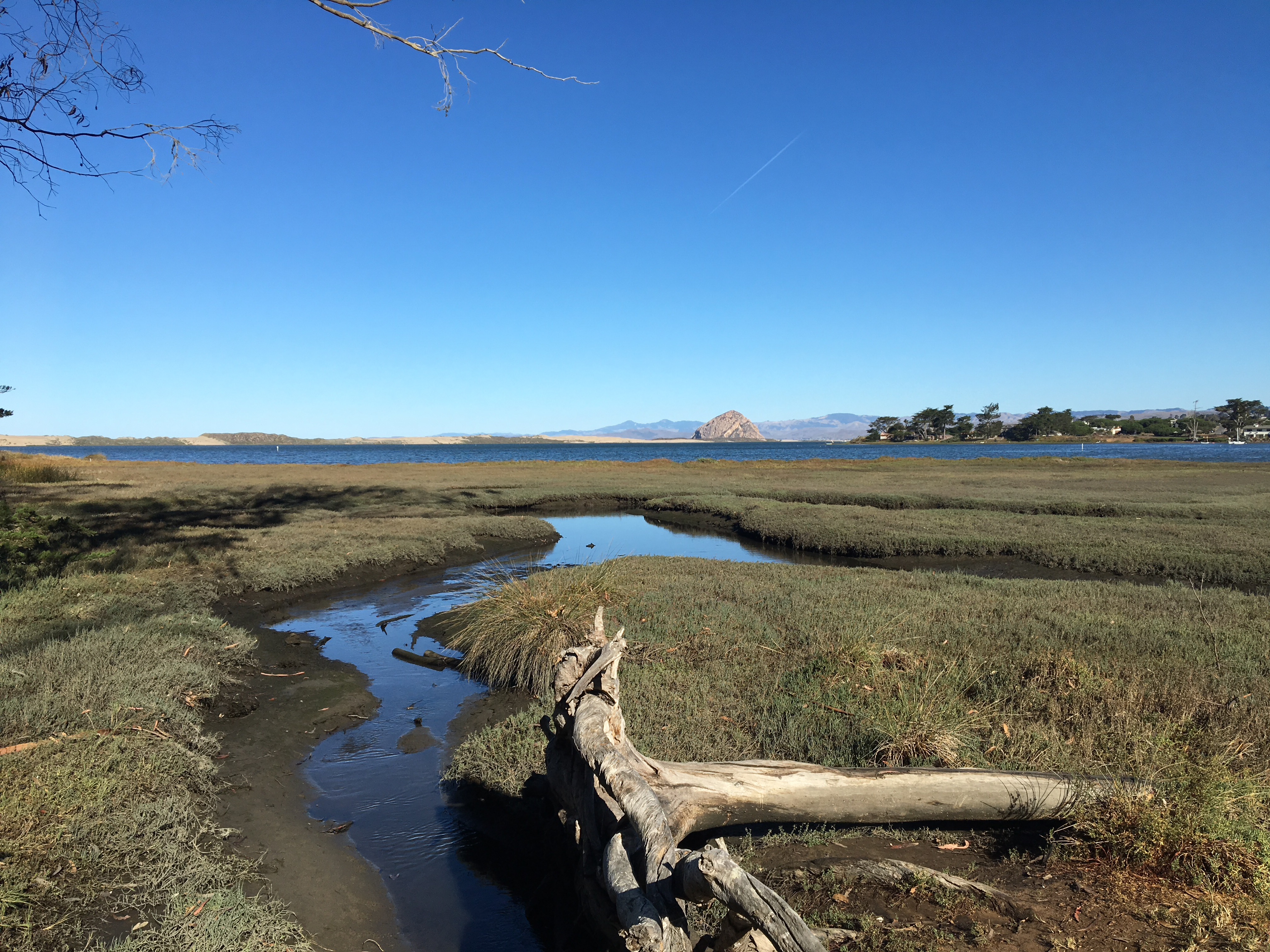
Wind rustled through Eucalyptus leaves, producing an airy music and a pungent, menthol scent. Dirt paths and wooden bridges guided my feet to views of Morro Rock, the enormous volcanic plug considered sacred by the Chumash tribespeople. Crossing one bridge, I came upon a flock of mallard ducks quacking and bathing. Several benches dotted the one mile trail, but I sat on a fallen tree at the edge of the marshlands.   
Listening to the Eucalyptus leaves and singing birds, I wondered how I could bring ceremony and ritual into my life to move past my creative blocks. 
I saw a Blue Heron gliding on the air. A few moments later, a Snowy Egret came into view, stepping carefully through the estuary, catching its breakfast with quick stabs of its long beak.
To the west, a large, waning moon hung over the ocean. I walked towards it along a boardwalk. Soft waves coming in from the harbor joined the trees and birds in Nature’s song. A sandpiper walked along the water’s edge, poking its beak in the sand; in the distance, a Blue Heron stood in tall grasses and a Snowy Egret perched on a docking post.

Los Osos Oaks State Natural Reserve 
As the day grew warmer, I drove east on Los Osos Valley Road to an 85 acre reserve, which is home to Chumash middens, ancient sand dunes, and three varieties of Oaks up to 800 years old. At the trailhead, I found a map and I planned my route — a loop that would encompass all three sections of the gentle trail. 
At the first trail marker I became confused. It pointed in three directions (right, left and straight), but it was placed much further than the left-hand trail. I walked to the left, but questioned if I had chosen the trail I wanted. 
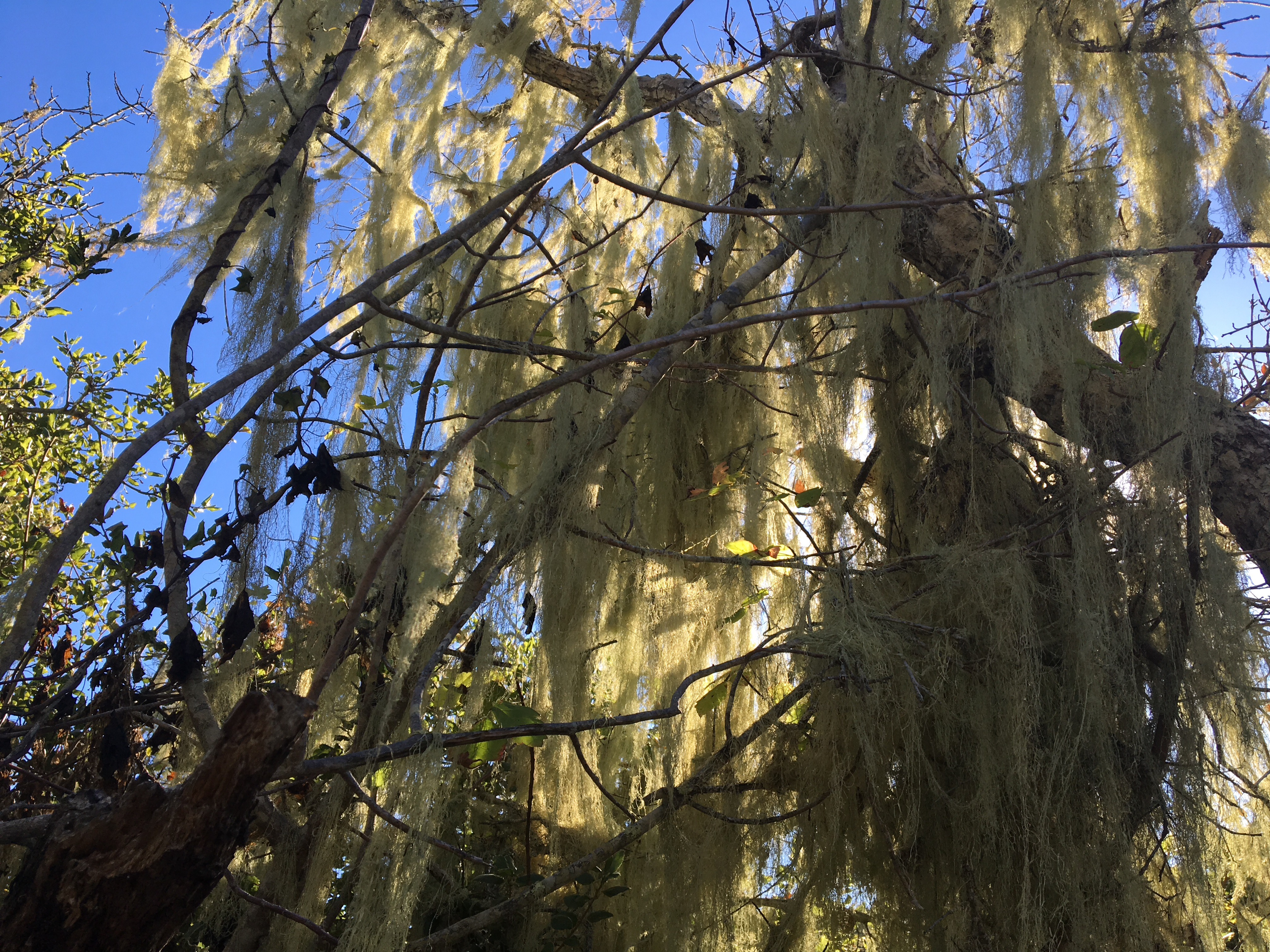
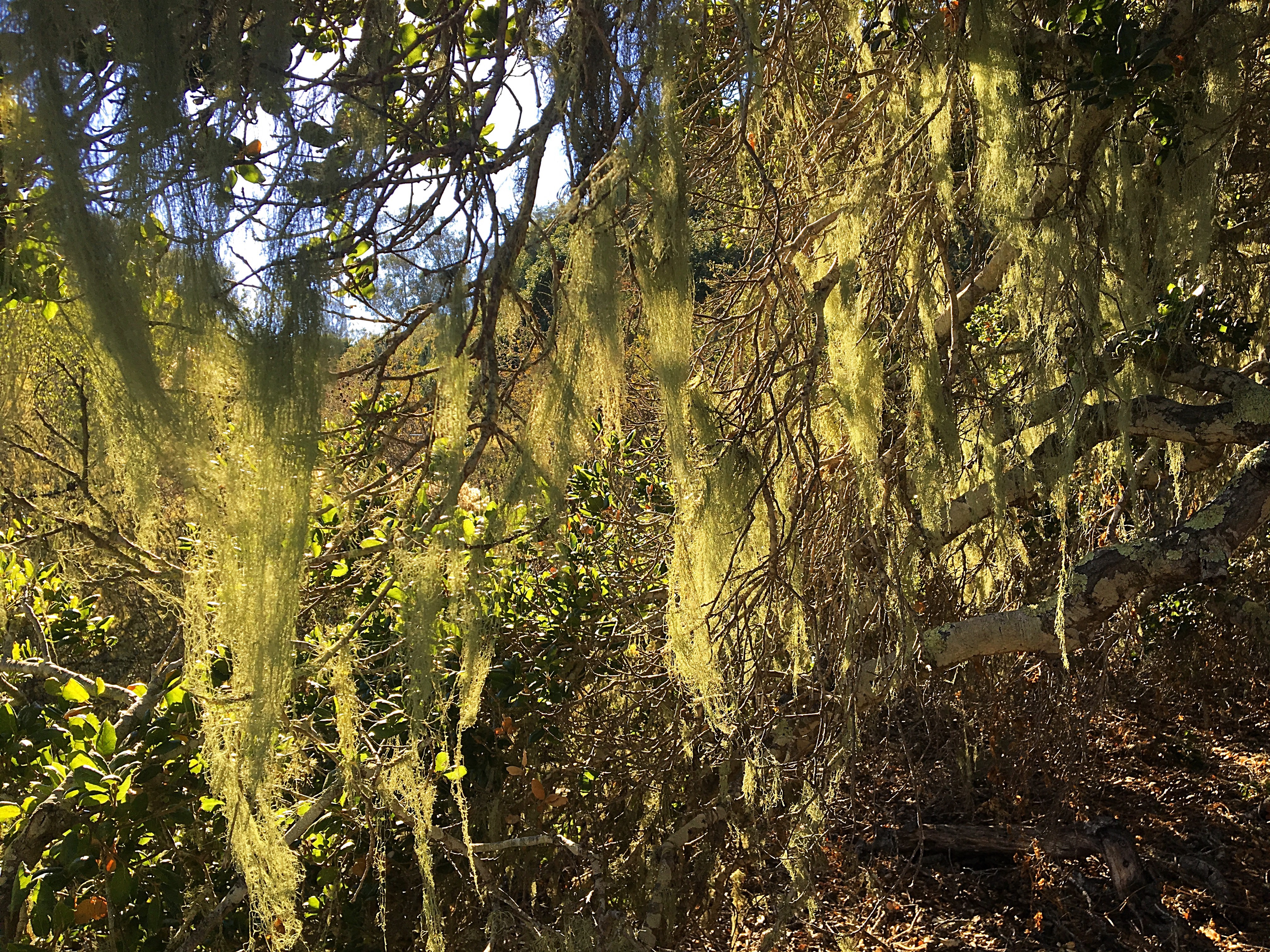
Hesitation faded while I examined Beard lichen drooping from oak branches, but this section of the trail moved directly next to the road and the traffic distracted me from immersing in the forest; the noise was jarring compared to the otherworldly beauty of the oaks. 
The path began splitting into what I assumed were local trails and deer paths. Which one was the “right” trail?
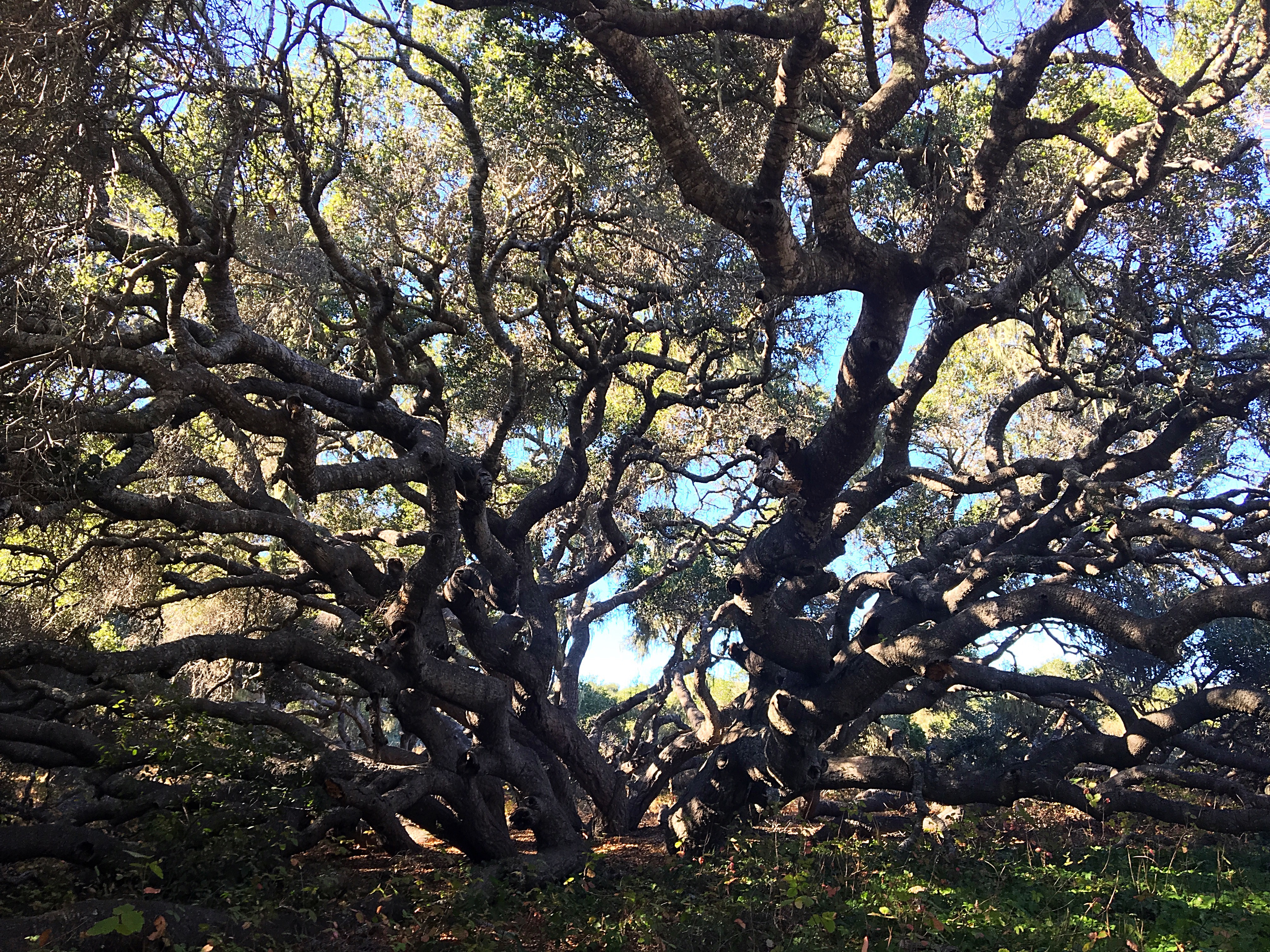
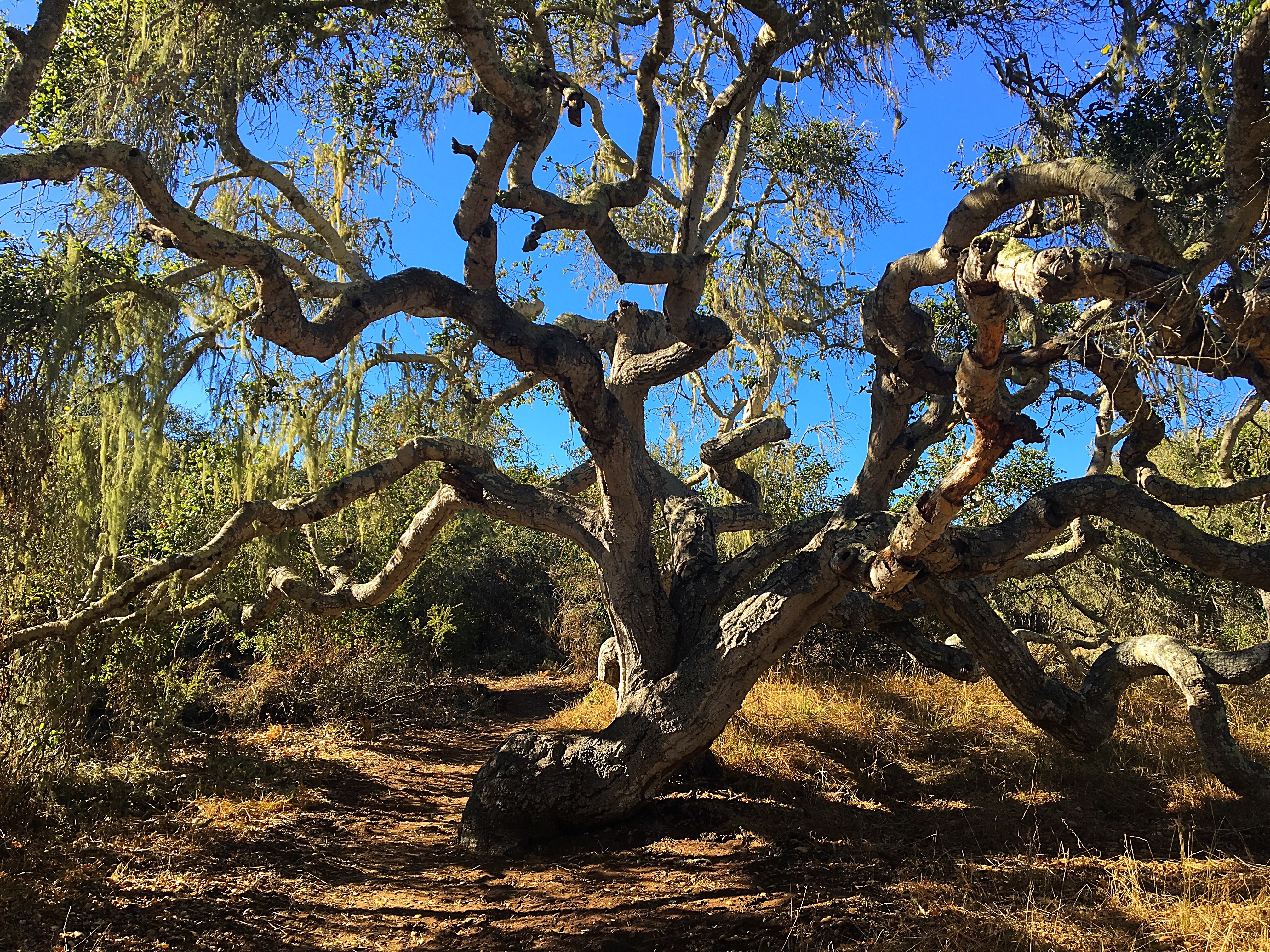
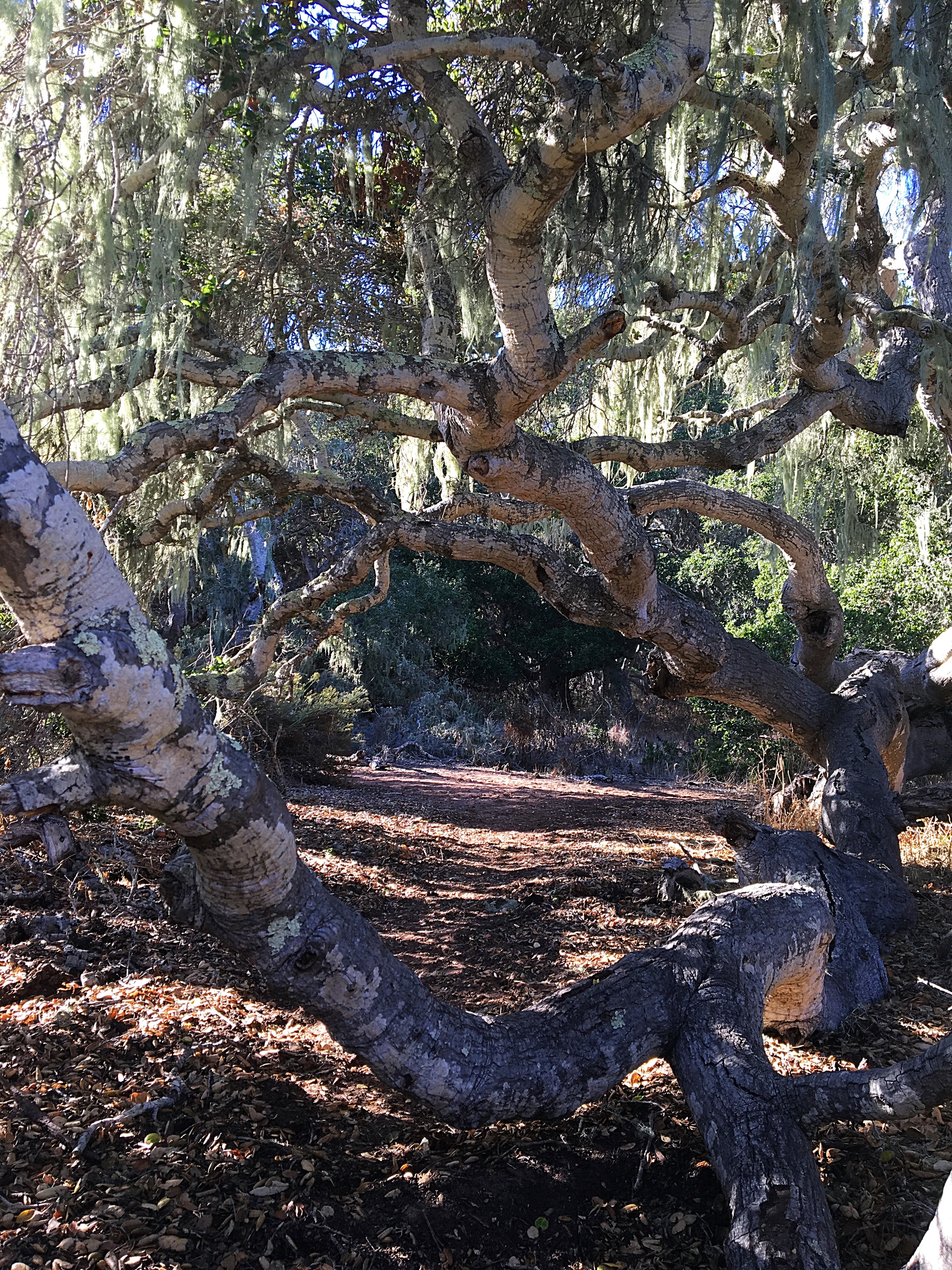
Turning a corner, I saw an enormous oak with wide-spread branches, twisting and turning, defying all patterns and rules. I approached the grand oak in awe of its divine, ancient presence, and when I moved under the furthest reach of her branches, the road suddenly went silent. For just a moment, it was only me and the oak.
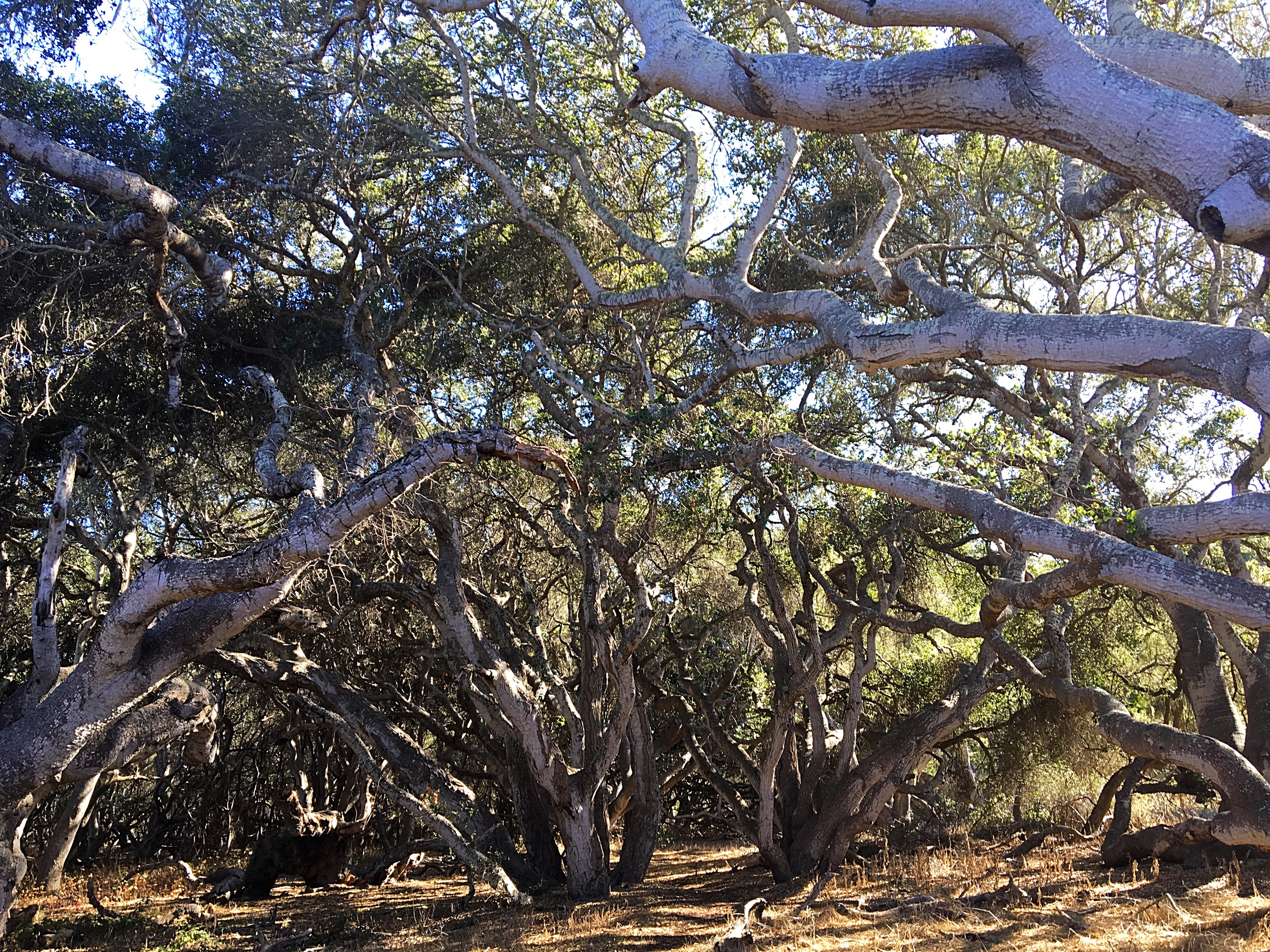
As trails took me further from the road, noise faded into the peace of nature. Oak branches created natural benches for me to sit on and listen to the crows call and birds sing. Gazing into the forest, it seemed the branches formed a wild tapestry, building intensity by intertwining and crossing each other. 
If only I could harness the vitality of the oaks in my writing. What could I possibly do to draw that force into my craft?
I continued on my way, guessing which path to take each time it splintered. Trails twisted and turned like the oak branches above them; I had to surrender to the randomness and chaos. I guessed my direction more than I was certain — I thought I was on a new trail until I came across a landmark and then I thought I was on a familiar trail until I saw something unusual. I felt like Alice in Wonderland, not knowing if I was here or there or lost or found, popping in and out of the forest onto the dunes. 
Stepping onto the shrub-covered sand dunes, I had an areal view of the oak canopy. Butterflies fluttered before me in graceful arcs. I came across middens, which spoke of the site’s Chumash heritage, the indigenous people who lived in the area for millennia — from Prehistoric times until the 1700s when the Spanish settled.
By the end of the hike I felt grateful for the road because the sound gave me a sense of direction. Walking out of the reserve, I felt like the Los Osos vortex had sucked me in and swirled me beneath its oaks in a meandering dance.     

Elfin Forest
Finishing my strange wanderings in the Oaks Reserve, Nikki and I met again for a walk in the El Moro Elfin Forest Natural Area. One of the most protected areas of Los Osos, the path is a complete, unified boardwalk and there are strict guidelines to keep visitors off the vegetation. This nature walk is great for strollers and people with disabilities — one entrance even has wheelchair access from the road. 
Consisting of 90 acres with views of Morro Rock, the Elfin Forest is aptly named for the pygmy oaks, which are a variety of California Live Oak dwarfed by soft soil, mineral depletion, salt spray and constant wind. Despite their small stature, these pygmy oaks are 200-400 years old. 
“I love being surrounded by oaks,” Nikki said. “I love feeling them and seeing them. They’re like dinosaurs.”
“There’s something majestic about oak trees,” I agreed. “It’s hard for me to say. It’s not just the moss or lichen or the wild branches. There’s an essence –”
“They’re the most energetically dense wood. That’s why people burn it. I imagine when they’re alive, there’s a strong field around them like they pulse with life.”
“We might not be able to see it, but we can feel it. Maybe that’s the Osos vortex. All the oaks together in clusters.”
“I love having oak forests a quick walk from my house.”
“That was my favorite part of living here, too. I miss it.”
We came to small clearing. Nikki set her bag down and began twirling her hoop.
“Hooping is another way I create ceremony and ritual in my life,” she said as the hoop orbed around her.
“I’ve been thinking about how to add ritual and ceremony into my life all day, actually.”
“When I’m hooping, I let myself drop into the flow of life. I focus on letting go of my thinking brain and it’s like I’m connecting with a divine energy. It’s hard to explain, but I think that’s how I’m able to manifest my desires. Letting go and creating a moving meditation.”
“I’ve heard meditation helps with manifestation because it’s a great way to be more positive and receptive to the divine. It puts us into our original, or natural state of being.”
“It allows us to just be with the divine. Something opens, something releases. And the divine rushes in. It’s nothing short of a miracle.”
While Nikki spun her hoop, I invited my mind to empty and become present. 
We had to complete our walk because Nikki needed to do homework. I, on the other hand, got to finish my day with the crown jewel of Los Osos.

Montana de Oro State Park
Named after the glory of springtime wildflowers, Montana de Oro (Mountain of Gold) is at the end of the last road in Los Osos and is gorgeous every time of year. Stretching 8,000 acres, most of the land is completely wild. 
I got out of my car at Spooner’s Cove to eat a picnic dinner with the sunset. Instead of watching it from the beach, I took a quick hike on the north bluff of the cove. 
As I ate, gulls flew towards Morro Bay and waves crashed on the tide pools and rock formations below me. 
I thought about my artistic vow and the bouts of resistance I encounter towards it. I want to be more productive, I want to write with more inspiration. So why am I standing in my own way? And what ceremony and ritual could I use to destroy these blocks?
I thought back to what Nikki said about getting into the flow with meditation. 
I looked out at the ocean — powerful, deep, vast, mysterious. I timed my breath with her waves and set my focus there, clearing my mind. We moved together and suddenly I knew.
I touched the turquoise necklace I was wearing and had bought because turquoise is a symbol of clear mindedness, creativity, communication, and releasing blocks around self-expression.
When the sun dipped behind the fog bank at the horizon, I walked back to Spooner’s Cove. I approached the ocean with my hands on my heart. Everyone was leaving the beach since the sun had set, but I walked to the water with sincere reverence and intention. Pebbles crunched beneath my feet.
I walked to the water and she approached me as well, reflecting the colors of the sunset. Wispy clouds turned pink in the distance, but the sky above me was clear. Little bugs with large wings flew through the air like tiny angels.
I walked to the far right of the beach, which was entirely secluded. To the right, seaweed grew down the cliff and to the left, rock formations created a wall. Behind me, Islay Creek came from the depths of the Montana de Oro wilderness to meet the ocean. It was the perfect place for my ceremony.
“Dear Ocean — powerful and deep, beautiful, mysterious, a force unlike any other — people come from every corner of the earth to see You, to know You. You’re ever present, ever moving; You’re expansive, You stretch further than I could ever see; You inspire; You bring us peace; Your power creates awe in the most cynical and hardened hearts. You, Ocean, were my constant companion when I was a child, I grew up playing in Your waves; You are my home; now, even though I don’t live near Your shores, You still feel like home, close to my heart. 
“Dear Ocean, bless my communication, bless this turquoise rock that I will dip into your waters; open my voice with Your power, Your strength, Your mystery, Your expanse, Your inspiration. You, dear Ocean, are considered a symbol of consciousness, the soul, and truth — imbue my voice with Your ineffable qualities that must be felt, heard, and experienced; fortify my voice with Your quality that sets deep into the soul and speaks to our ancient roots, as one of the first creations of life, the first creator of life. When I dip this turquoise into your water, bless my voice with Your power, Your strength, Your thundering waves, Your calm, Your peace, Your everlasting Spirit. Bless my voice, Ocean, deep, powerful Ocean, bless my voice.”
I took off my necklace and bowed to the water. I dipped the stone in her waves as they approached and put my hand in, too. I placed my hand on my throat and felt my pulse as the water dripped down to my chest and belly. I changed hands, prayed again, dipped the stone, touched my hand to the water and again to my throat. I clasped the pendant and felt it throb with power and vitality. 
The little bugs flew around me and gulls passed silently in the distance.
I put my necklace back on and bowed to the ocean, waiting for her to come to me. She returned, so sweetly. With my hands in prayer, I placed them both in the water and put them back on my throat feeling the wave drip down my arms and chest. 
“Amen,” I said, moving my hands to my heart. 
The sky had turned to violet. I struggled to pull myself away from the ocean even though night descended upon us.

Mallard ducks in Sweet Springs
The fallen tree I used as a seat
Snowy Egret in the Estuary, Morro Rock in the distance
Los Osos Oaks Natural Reserve


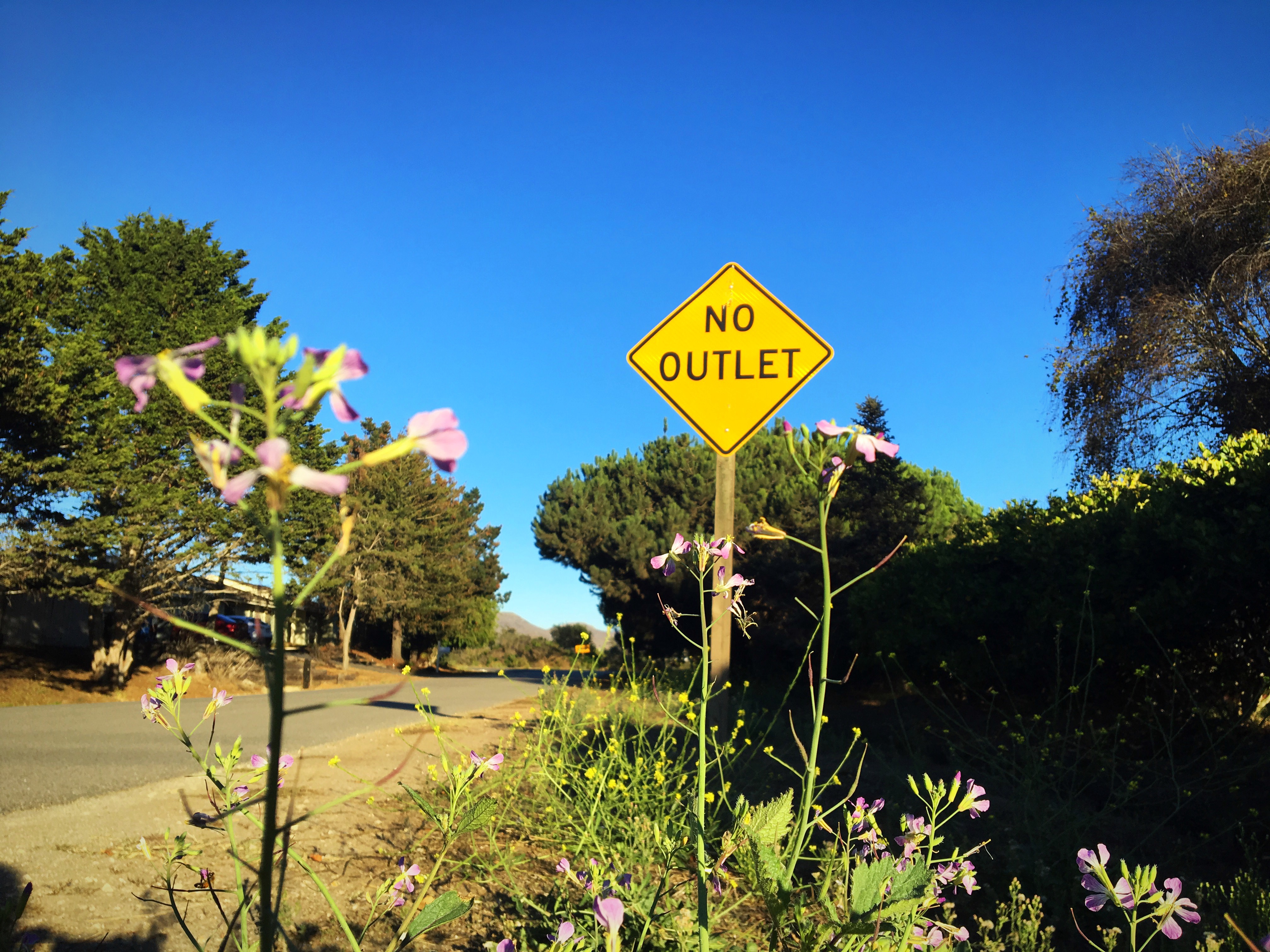
A common sight in Los Osos
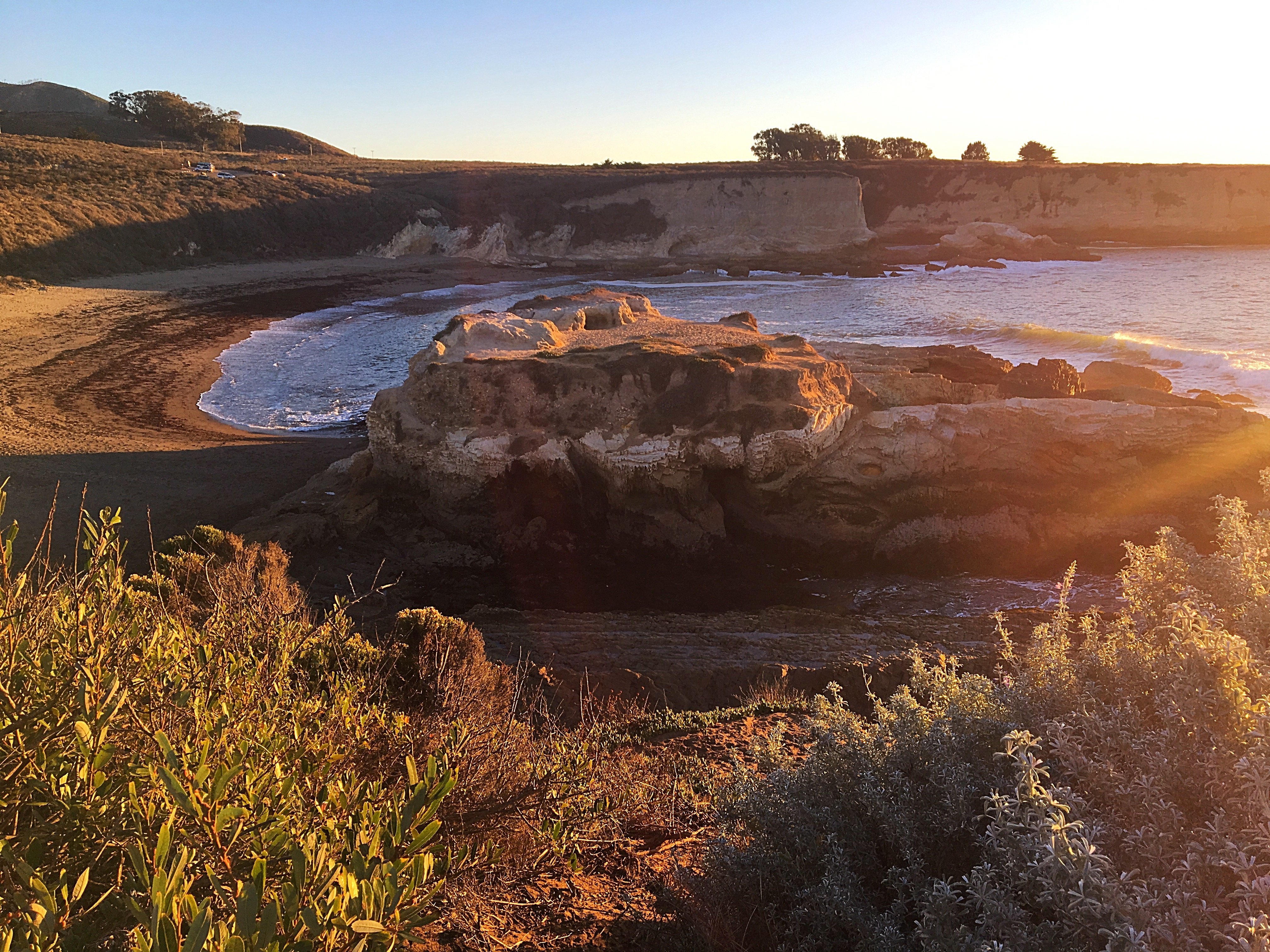
Spooner’s Cove

Evidence of a Chumash Midden
The beach at Spooner’s Cove
The perfect place for my ceremony

The Forest’s Song

I step outside. The sun peeks around clouds to caress the world and welcome me. Unseen doves proclaim the beauty around us. 
Dew rests on the earth; oaks stretch in wild formations. Brown leaves blanket the ground and young grasses grow amongst those that had died in summer. Moisture adorns foliage with drops that sparkle and glitter in the sun. Deer tracks tell me I am not the only one who walks this trail. 
I take a deep breath; crisp, clean air fills my lungs. The distant scent of Linney’s wood-burning stove reminds me that only a few months ago a wildfire raged in these mountains.
I come to a clearing and see a flock of quail, each dressed with its own fancy spots, stripes and bobbling headpiece. They whistle as they run away on speedy legs.
I hear a crinkling sound and see California Towhee kicking up leaves to forage beneath them. As soon as I’m close, they fly away in perfect unison, their wings purring through the air.
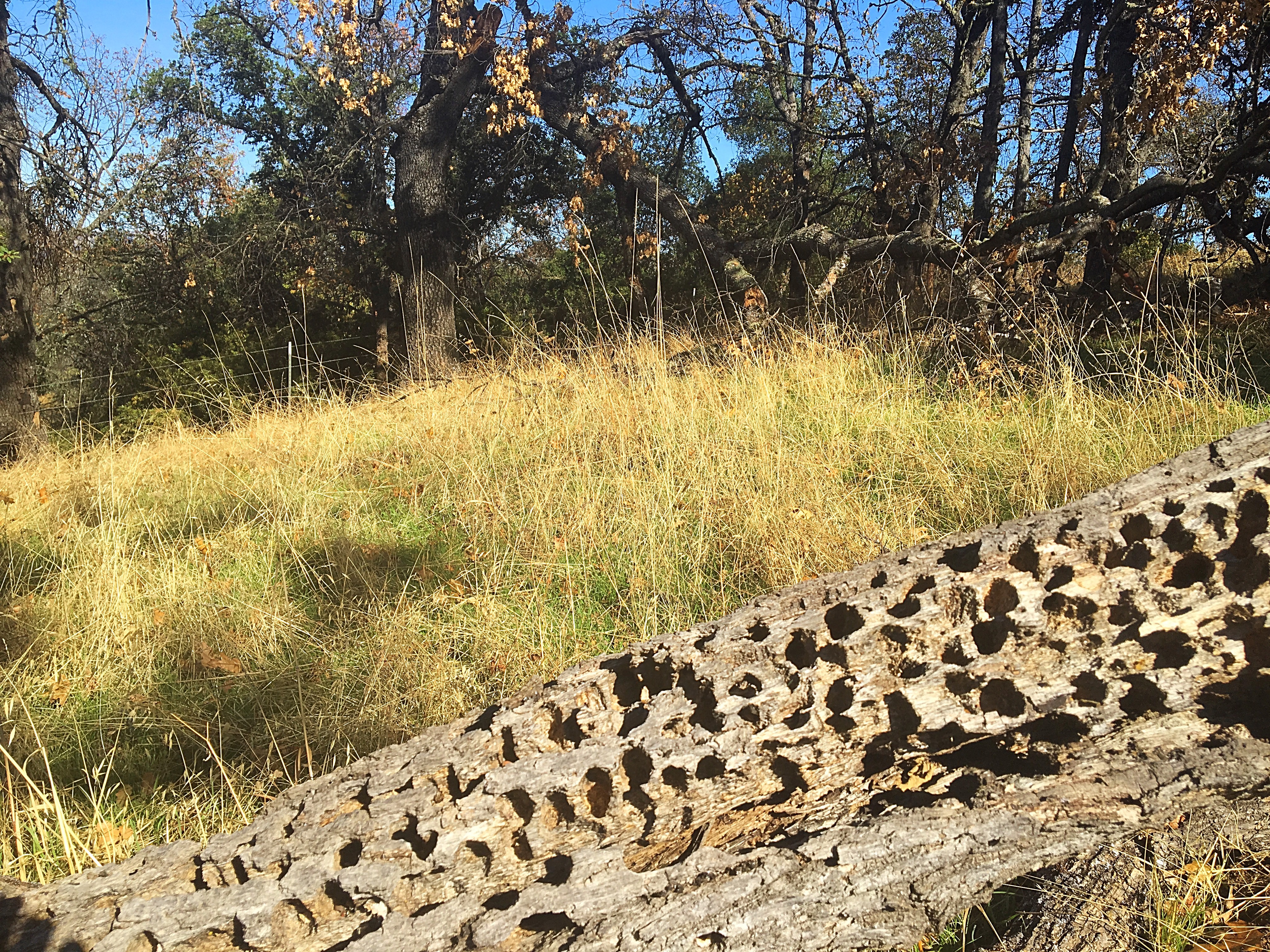
Acorn Woodpeckers squawk and chuckle while they perch on tree trunks, wearing tuxedos and red caps, drilling holes and stuffing them with acorns. Their happy, gleeful chucking brings a smile to my face. They must be telling jokes to make work more fun. 
Off the trail, a thick oak branch grows horizontally from its trunk. Seeing that it’s dry and free of insects, I hoist myself onto it, stretch out my legs and recline back. The tree holds me like I am lying in its arm. 
Gazing into the canopy and up to the sky, I hear birds all around me. They rustle in leaves, they fly with fluttering wings. They sing, chirp, laugh, and coo. Each voice joins in one abundant song: the song of the forest.
I could lounge for hours on the tree branch listening, yet I know the forest does not sing for me. The forest needs no outside audience for its symphonies. It is a true and great artist: creating for creation’s sake, creating for itself. 
If the forest is the ultimate artist, how do I compare? What happens when I am the only one who reads my writing? 
I know the answer; I have felt it often. When I am my only audience, I get discouraged. I blame my voice — I call it awkward and uninteresting. My dream appears hopeless. My feelings keep me from putting words on the page.
The oak holds me like a mother. 
“Show me the way,” I whisper. “How can I create like you?”
“Close your eyes,” she says.
I obey. 
Minutes pass and I begin noticing subtle layers of the song. A hawk calls from high. A frog croaks in the distance. A crow caws. 
The forest tells me there’s room for every voice and contributors are never ashamed of their sound — it is the one they received at birth. They need not be melodic, gentle or harmonic to join the orchestra; they need only to be themselves. The song’s beauty is in its rich and vibrant variety. Each day it creates a new score without one thought of who will listen. The forest creates by design — without doubt or self-consciousness. 
Opening my eyes, I look into the tree with new understanding and say, “I will add my voice to the forest’s song.”

On the right, the tree who held me like a mother


Empty holes drilled by Acorn Woodpeckers

Gratitude: An Ode to the Rain

A severe drought — the worst in recorded history — has plagued California for years. Wildfires ravage the state, lakes receded to shocking levels, creeks and rivers ran dry. But this year, the rainstorms started early. One real storm blessed us in August, a few graced us in September, and this months we’ve had several large storms. I remember in 2013 we were ecstatic to have our first rain on Halloween — but that’s also when the rainy season ended.
At home, I am thankful even though the rain sends ants scurrying inside through every unsealed crack. The sweet, musty smell of wet earth makes up for it with each breath I take. I love turning to see my cat sit on our bench under our awning to watch the showers. Turning off the drip irrigation brought a smile to my face as do the seedlings propagated from flowers I planted in summer. Now I have an entire garden filled with baby plants. The world around me looks clean and vibrantly fresh.
Driving southwest, I am thankful for the rain even though I hate driving in the rain. At times, the downpour is heavy and my fastest wiper setting can’t clear the windshield; yet, I am grateful to slow down. As I pass vineyards and orchards, I praise grass between the rows, amazed to see green just south of Sacramento. I listen to drops beat a percussion on my windshield — I love them all, from the daintiest mist to the wildest splotches. The grey sky brightens my vision; clouds part and sunlight shines onto the earth in heavenly beams.
Just west of the San Luis Resevoir, I am grateful to see a soft dusting of green on brown hills — miraculous grass in a region that, lately, has been brown all year.
Stopping at a CVS in Carmel, I meet a transient man playing didgeridoo. We speak about his recent travels and experiences at Rainbow Gathering where he felt deep connections with strangers and realized the best of humanity is found when a society existed with a gifting economy and emphasized creation. Kneeling at his feet, I know I had so much more to be grateful for than I could ever count. I bring him food and shake his hand. I wish I could give him more, but I know he appreciated my gift by the way he smiles and waves goodbye.
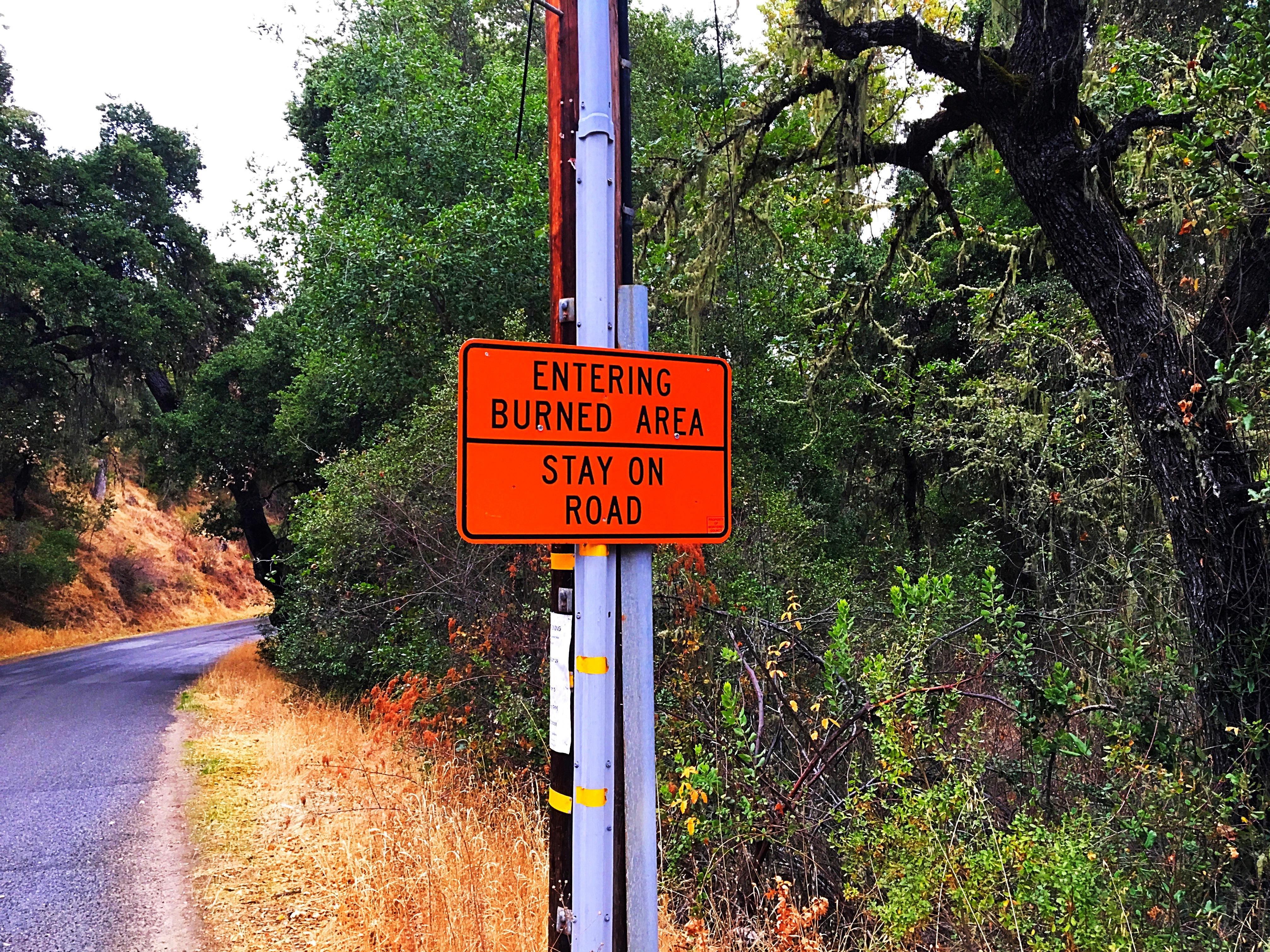
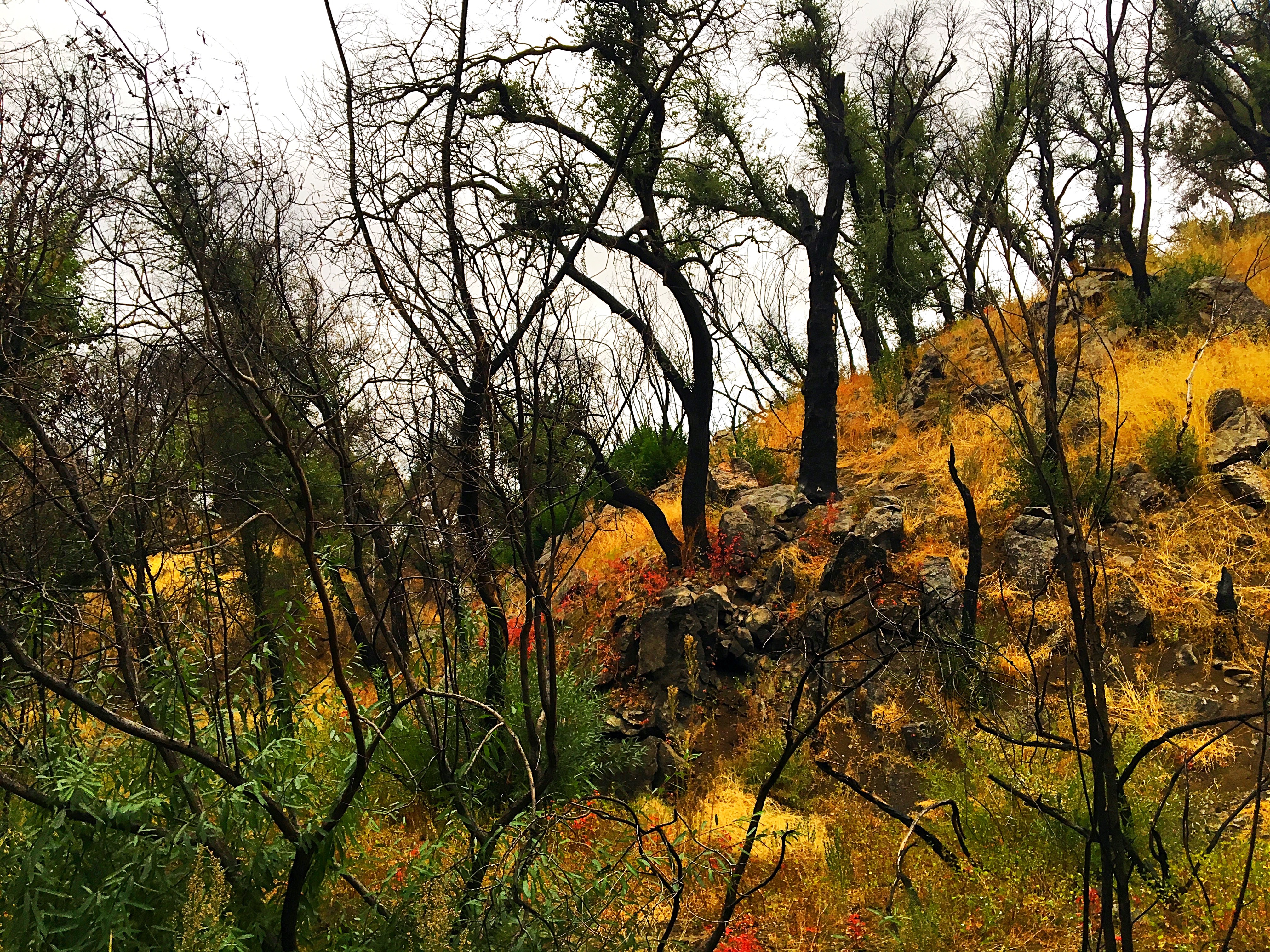
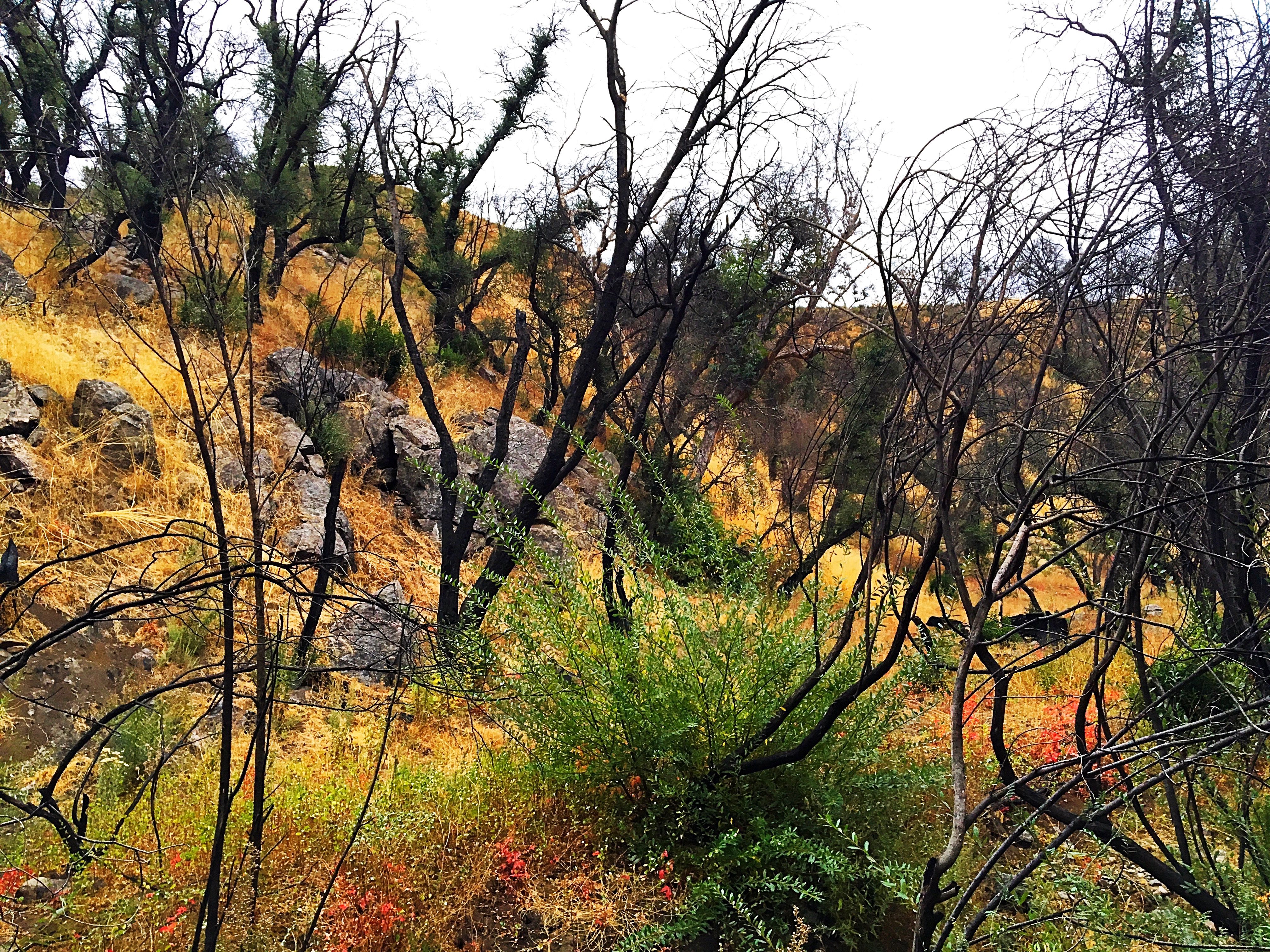
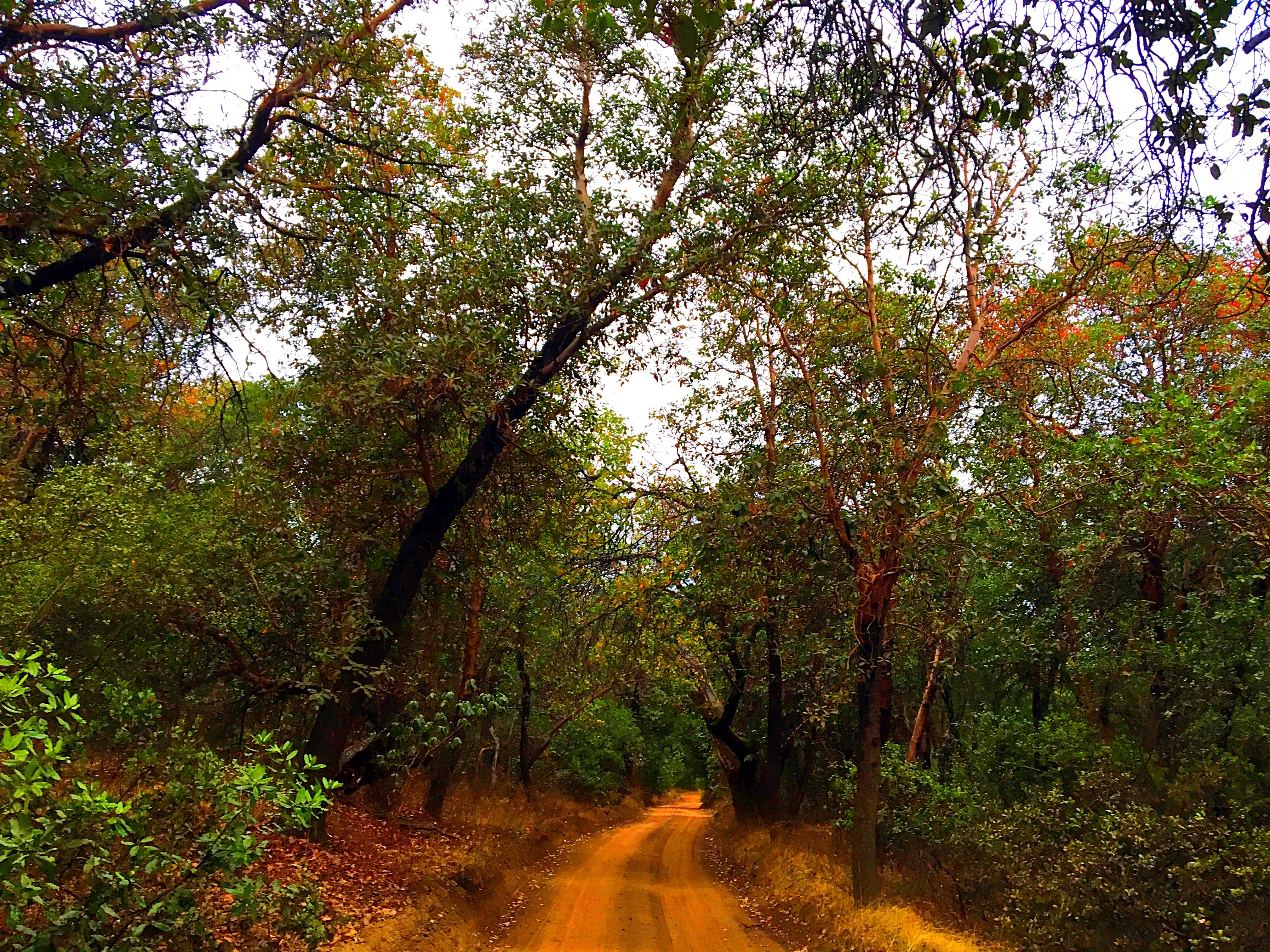
As I drive into the hills of Carmel Valley to visit Linney at her mountain retreat, my heart grows at the site of last year’s Tassajara fire. Only a few months ago it looked post-apocalyptic, but now I see new life. This year, the Sobranas fire, which came within a mile of Linney’s retreat, burned for three months and decimated over 100,000 acres of the Los Padres National Forest. I am grateful for the rain, knowing it will act as a salve on the parched earth to bring healing and restore life to the land.

My thoughts turn to prayers of safety, which I send to those at Standing Rock protecting our healer, our medicine, our mother. As they honor our sacred earth, I pray our communities will gather in unity to defeat corporate greed that aims to destroy our precious home; I pray that understanding rain into the hearts and minds of the violent oppressors; I pray the water within all life glows with truth and righteousness to respect and defend that which gives us life. 


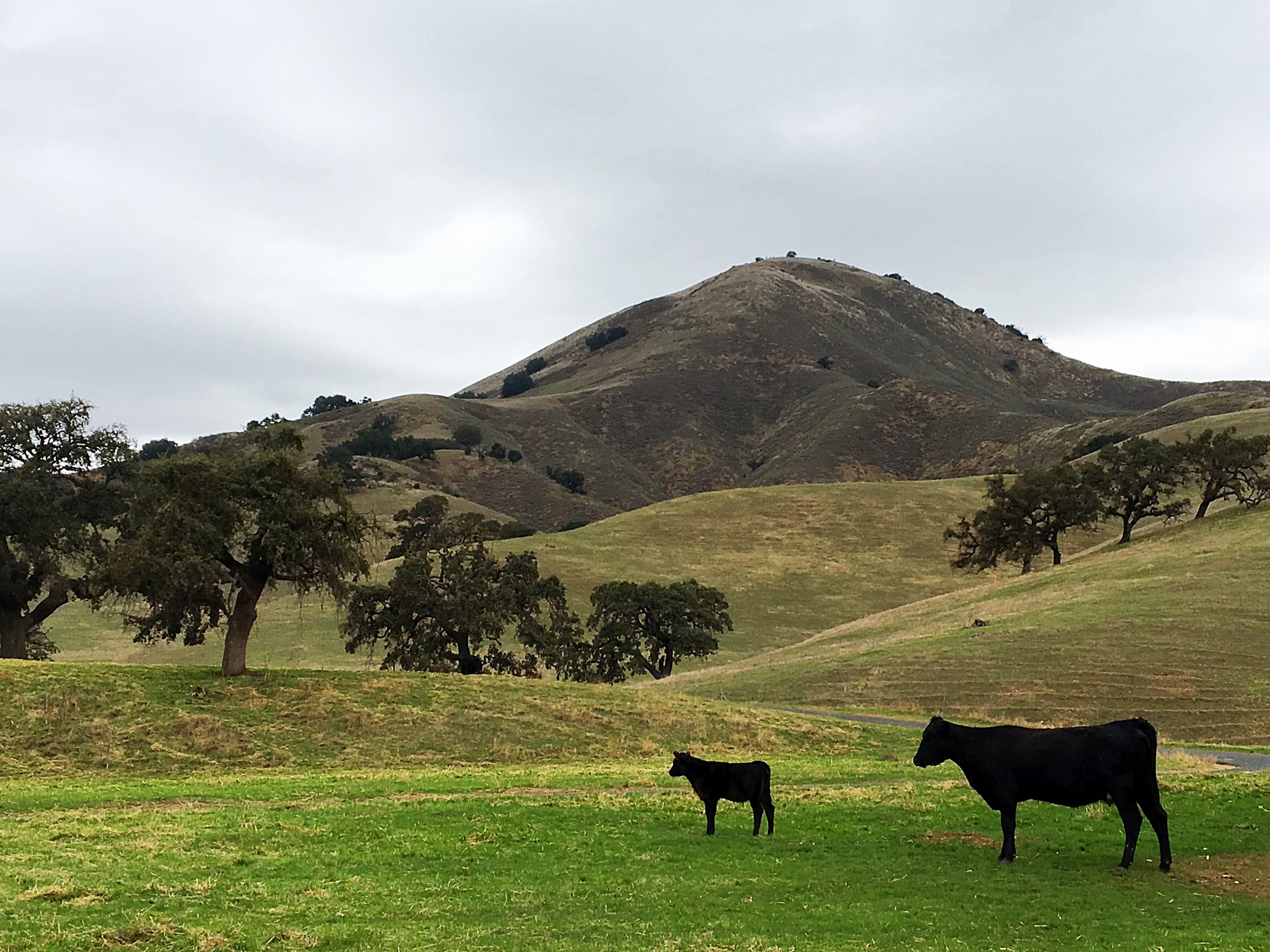
Cows and the green-dusted hills
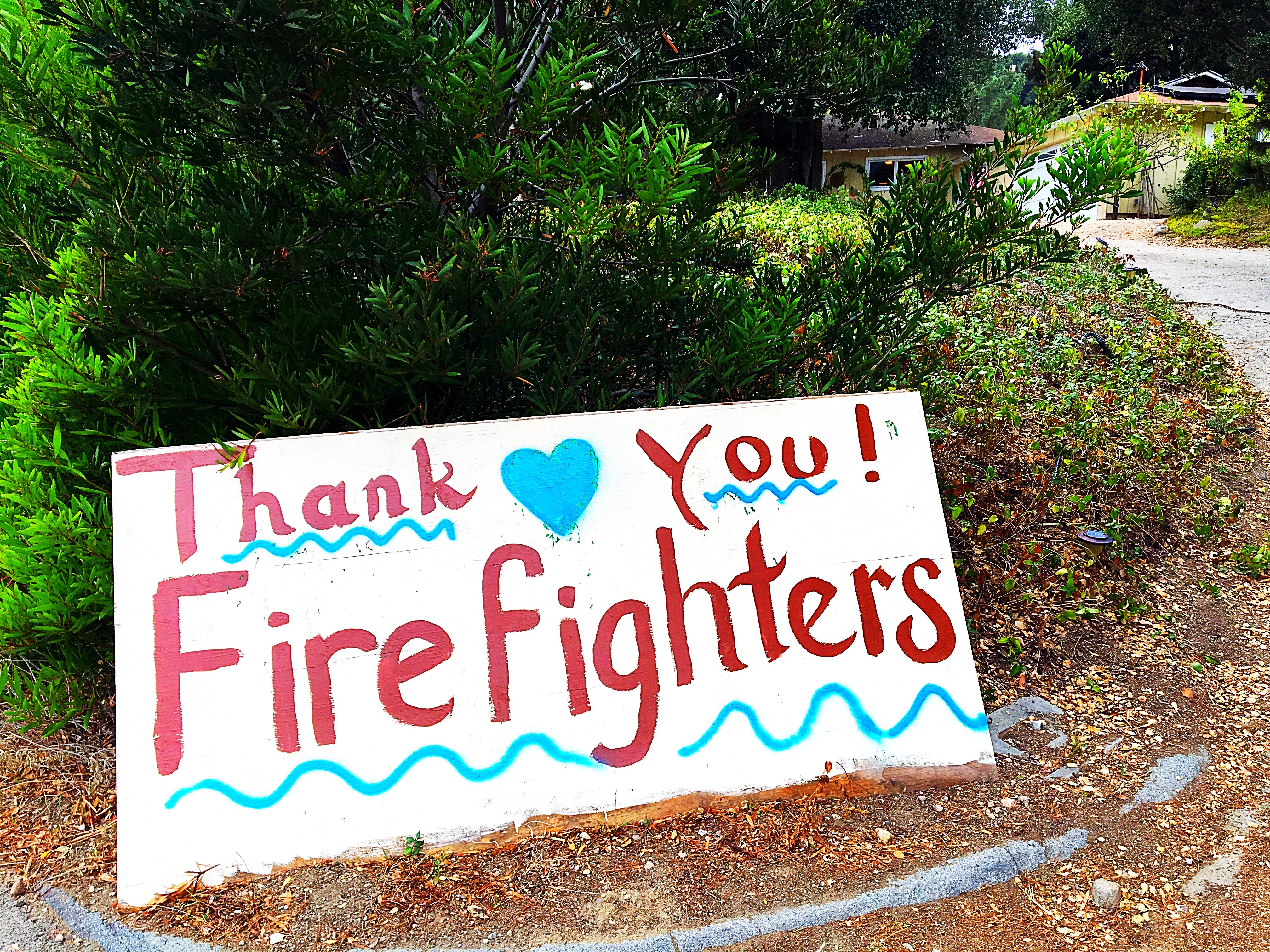
A sign in Carmel Valley Village

New life in the burned area

The dirt road to Linney’s retreat looking vibrantly fresh

Lake of the Woods

As if drawn by a magnet, Linney and JC returned to Tahoe National Forest last week. Lucky enough to have some free time, I joined them one afternoon at the Jackson Meadows parking lot, roughly 20 minutes outside of Truckee. Linney and JC had brought all their dogs — four total, three of which belong to Linney. The dogs greeted me first with huge smiles and wagging tails. 

JC stared at my car while we said hello. “Re-park your car and jump into Linney’s. Yours won’t make it to the lake; the road requires four wheel drive and clearance.”

“Re-park? But why?” I looked around at the vacant lot. “Do you think there’s suddenly going to be a rush of people?”

“You’re not even in a spot,” JC said sarcastically.

“How can you tell? There aren’t any lines.”

“You’re in the middle of the whole parking lot. Just — move to the side or something.” 

I acquiesced and parked on the periphery in sight of the freeway; at least it gave me the idea that I was moving it for safety’s sake.

With all the gear and dogs, there would be no way to take just one car. Linney and I got into hers and JC led the way.  

“Another adventure curated by our chaperone,” Linney beamed. 

I have no way of knowing how long it took us to drive the rocky, uneven road. Linney and I were too busy catching up with our latest news and admiring Lacey Meadows to notice the time. Stretching the entire length of the valley below us, the meadow was only interrupted by a winding creek. The dirt road veered to the right and climbed the mounting, moving into a thick forest. 

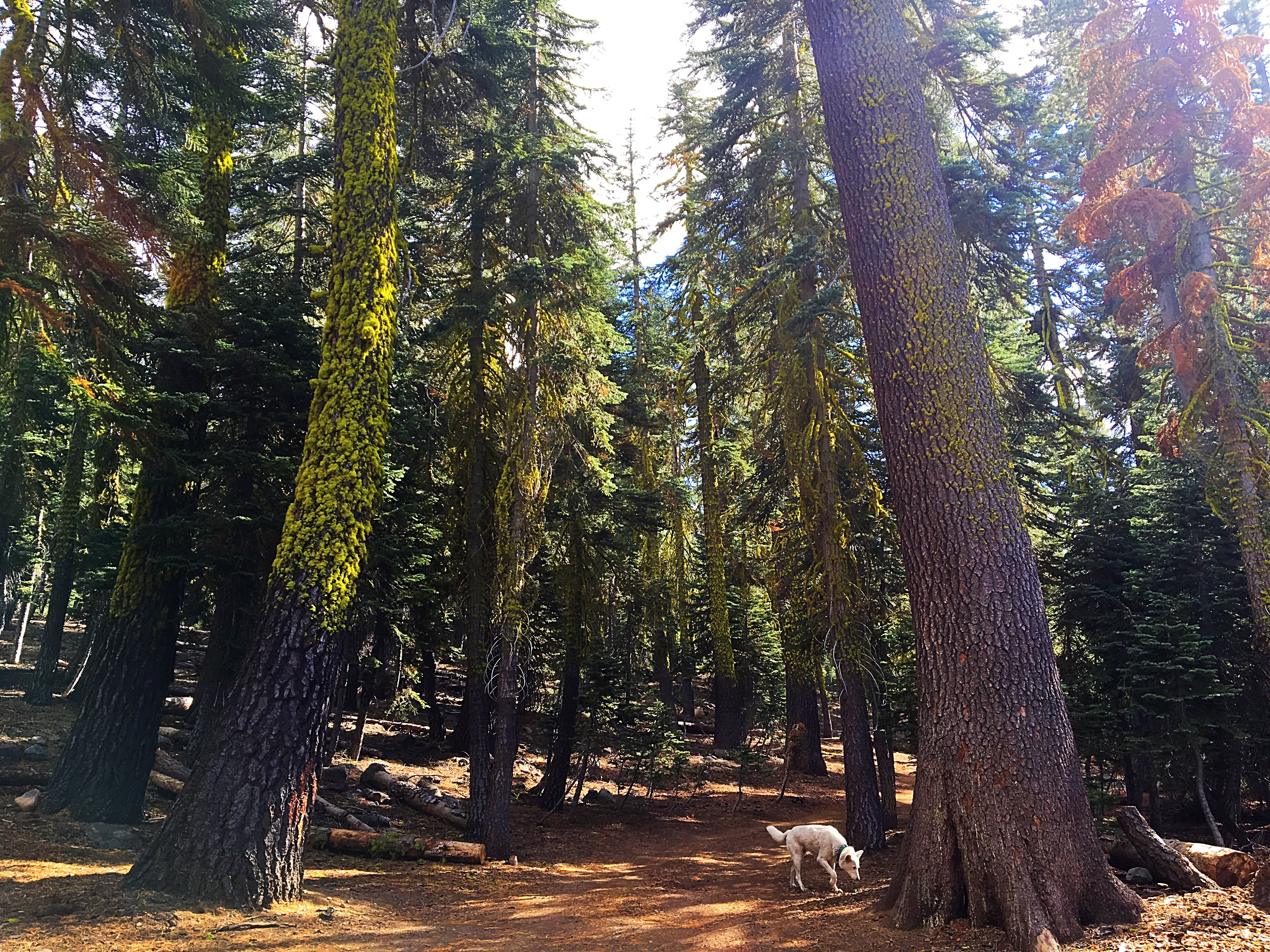
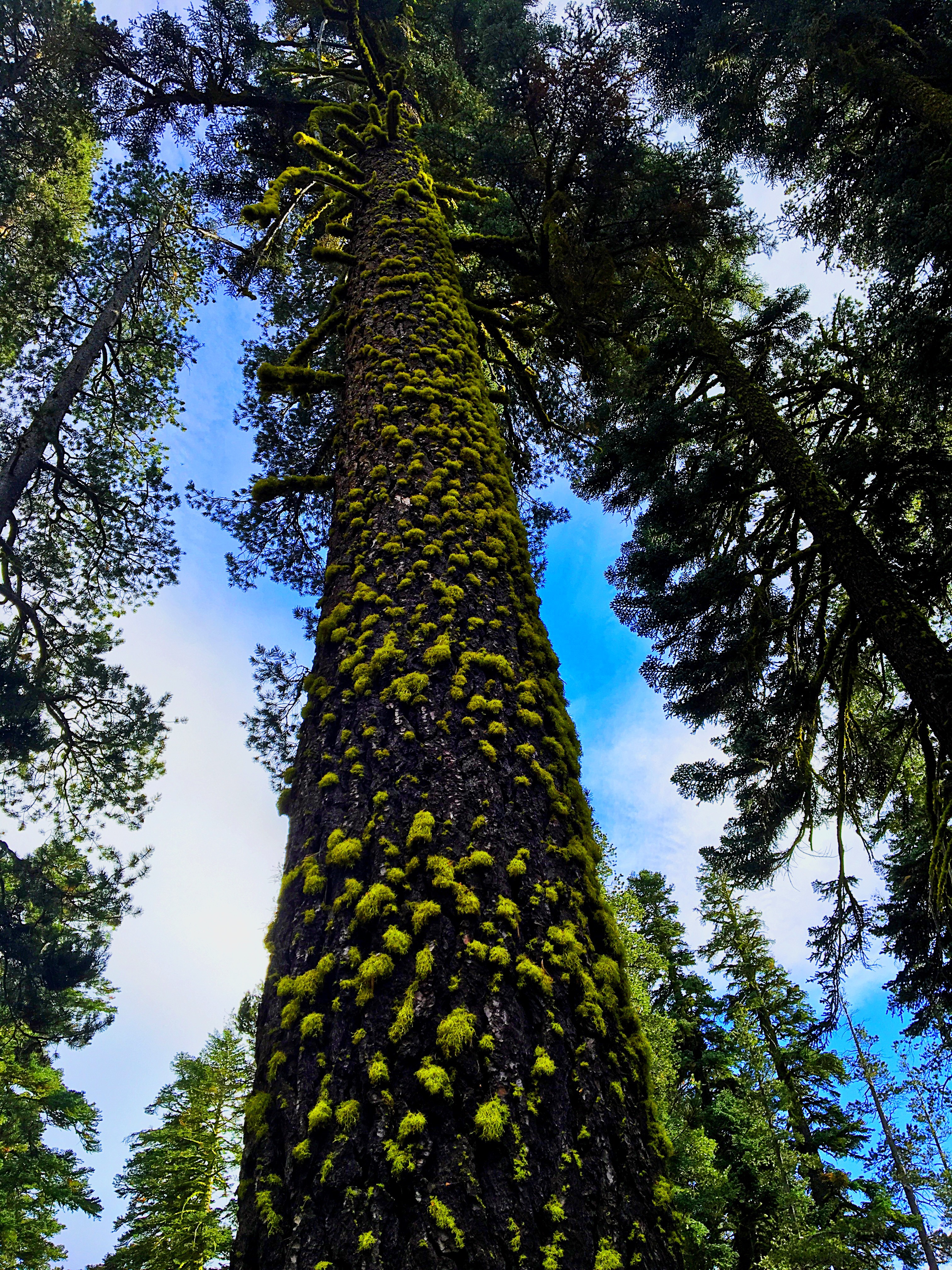
At last, we reached the campgrounds. We turned to the right and followed as the narrow road navigated between tall pines cloaked with lime-green moss. When we got to the end of the campgrounds, JC parked his car. We stepped out onto the ground, speckled with sunlight and made soft with pine needles. The dogs took off into the forest in wild bursts.

“This is beautiful,” Linney said as we walked towards the lake. “I feel like I’m in that book, The Hatchet.”

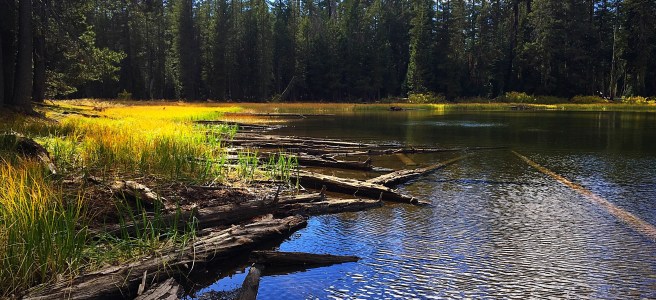
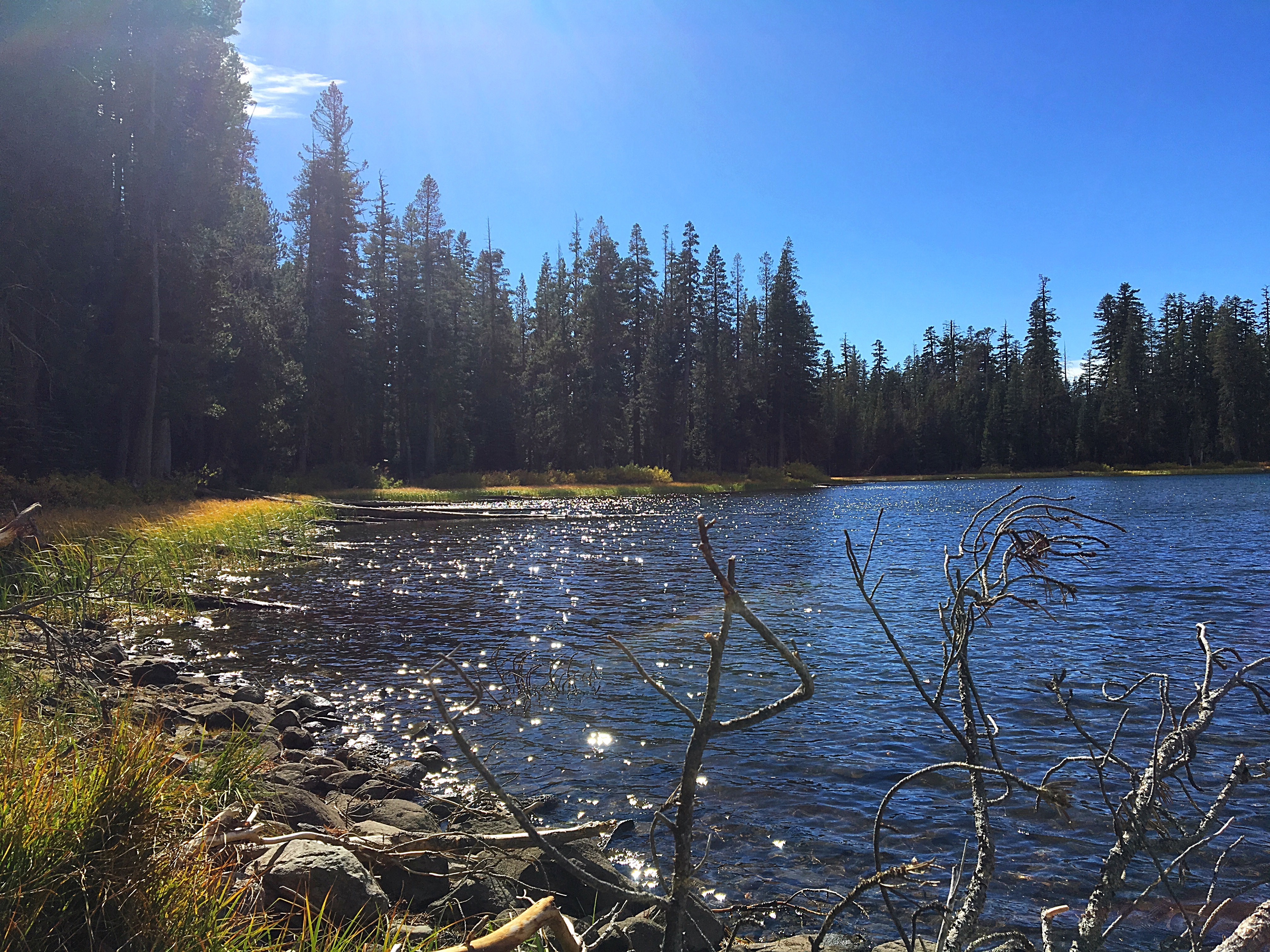
I listened to the small, frequent waves created by the wind. The gentle lapping at the shore soothed me. With the sunbeams glistening on the waves, they created bright sparkles of light. I felt effervescent, yet calm.

“Let’s go to the other side and get out of the wind,” JC said. “Last time I was here this was the side without wind. If we’re going to chill here for a bit we don’t want to be blown all over the place. It’s not relaxing.”

Once the dogs were collected, we got into the cars and turned around. Making our way back to the entrance, we continued along the road until we got to the restrooms. JC stopped his car and jumped out. He walked over to a large, brown box.

“What is he doing?” Linney asked.

“I could not tell you.”

“Remember I said I only had one shoe?” JC called out to us as he lifted a shoe from the box and laughed.

“Did he just take that shoe?” I asked Linney.

“I wonder if that’s his size. He said he was missing a shoe,” she said.

“This is very confusing.”

We ruminated over the shoe incident, searching for meaning, until we parked.

When we reconvened, JC explained: “I saw the shoe and laughed, thinking, ‘look some idiot left their shoe.’ And then I realized it’s mine!”

“That’s your shoe? Your actual shoe?” I asked.

“Yeah, I was here a few days ago — I wasn’t sure where I’d lost it. It’s the best hiking shoe. Light and breathable, but totally waterproof. It’s a $140 pair of shoes, so really, that’s a $70 find!”

“Well, no, that’s a $140 find because what are you gonna do with one shoe?” I asked.

“Exactly.”

Linney walked on a log into the lake.

“This isn’t creek-fed,” JC told me. “It’s a natural occurring glacial lake. Theres a more fun, scientific term: moraine, moraine dammed, something. This is an incredibly pristine lake.”  

“It wins the Most Pristine Award,” Linney called with an air of elegance.

“It got a 96 on the Pristine Scale,” JC riffed. “Linney be careful. That mud is gnarly. If you step into it you’ll go up to your knees.”

Linney came back to the shore and we began to walk around the lake.

“Is that your fishing pole?” JC pointed to the ground. “Dude, somebody left a really nice fishing pole.”

“Mine now,” Linney said.

“Linney it’s your new fishing pole, I found it for you,” JC insisted sarcastically.

“Shouldn’t we leave it on the box like your shoe? What if they come back?” I asked. 

“Nobody would come back for that,” JC said.

“Do you have a fishing pole, Linney?” I asked.

“I used to,” Linney said. “And then JC borrowed it forever.”

“No, no, I didn’t borrow it forever.” 

I inspected the pole closely, “oh look, it even comes with bait!” 

“Brand new,” JC said. “You can tell from the zip tie on there. Brand new zip tie.”

“There’s a question you always gotta ask, you know, when you find something,” I said. “Did you manifest this or are you stealing? I think a pole in the woods you’re manifesting it.”

“We don’t have to feel like we have to give back just because the shoe was there,” JC said. “The shoe — the shoe is its own independent thing.”

“With bait included,” Linney said. “Although, I feel like I should pass. I’ll leave it for someone further on the -sient side of glamsient.”

“Oh my God. The dogs are so stoked right now. I knew they’d love it here,” JC smiled.

The older dogs bounded through tall grasses in the meadow and the younger dogs plodded through the mud in the lake picking up their legs one at a time, stained with three or four inches of mud.  

“I was telling JC I feel like I should be on some horseback ride through the countryside with them, fox hunting or something. They look like such fancy, weird little dogs,” Linney smiled at me.

“They need little top hats. Or you need a top hat if you’re going fox hunting,” I said.

“Oh this is super epic,” JC pointed to the sky. “Abalone-vagina clouds. When they get the ripple and the waves and the rainbow in them like that. I call them abalone-vagina.”

I admired the rainbow in the cloud. “That’s so cool! You could just call them abalone clouds.”

“Yeah,” Linney agreed. “You could totally just call them abalone clouds.”

“No because the ripple isn’t the same as the abalone. It’s the curviness, too. It’s the waviness –”

“Abalone have ripples,” I said.

“Accept the beauty of the yoni as a cloud, OK? Jesus Christ.”

“Sorry, I’m just a little sensitive with all this Trump –”

“Pussy grabbing,” Linney finished.

“Yeah, that has absolutely nothing to do with how I appreciate clouds and abalones and yonis all at once.”

We sat at a picnic table.

“Hey, look at this little bonsai tree,” JC motioned to a small pine.
Linney looked around, “there are so many little bonsai trees. I love them.” She stood up and walked to her car to get snacks.
“I have little baby trees growing in my garden and I’m not going to rip them out. I want little bonsai like these,” I said. 

“No, take them out,” JC said. “They’ll take over your garden.”

“But they’re so cute.”

“You can transplant them into a pot. And make them a bonsai.”

“Brilliant.”

“Just put them in a pot and then you gotta learn how to shape them. I mean, if you want to cheat you could dig one of these up — it’s horti-torture, you’re ruining it’s life. Taking a beautiful tree, but –”

“No, no, no. These stay here. In their home. I have ones I can use. I’m not going to ruin some wild tree’s life. Like, ‘Come back to my garden and be my Frankenstein.'” I said in an evil voice.

“‘Take you from your family and hold you hostage in a little, teeny, shitty clay pot,'” JC joked.

“This is a sad conversation to have on Indigenous People’s Day.”

“At least we’re celebrating Indigenous People’s Day at the beautiful, untouched, pristine lake,” JC said. “I would not, however, call this place Lake of the Woods. It’s a horrible name. I would call it the moist cove or something to do with –”

“Moist cove?” I asked. “No one likes that word.”

“I know you hate that word,” JC laughed. “Moist bay?”

“No, no moist is the word we want to get rid of.”

“Land of Special Water.”

“Land of Sacred Water — or Ancient Water.”

“Yeah, because there’s water here and it doesn’t come from a stream. There’s magically water here. Do you see how the grasses here are super green and perfect?”

“I honestly can’t believe this is a free campground. And it’s completely empty. We’re literally the only ones here.”

Linney laughed at her dogs as she walked back to us, “they’re amped. They’re having so much fun.”

“They should be,” I said. “Look at this place!” 

“The wind through pine trees sounds like the waves of the ocean,” Linney said.

Taking a moment to listen, I closed my eyes and realized the truth of her observation. 

After a few beers and some chips and salsa, we drove out of the campground as the sun was setting and made our way to Graegle where JC had rented a cabin. 

In the morning, Linney and I left early; we wanted to stop in Truckee for coffee and breakfast. 

Driving along Highway 89 in the early morning light through Sierraville felt like magic. Yellowing aspen with leaves fluttering in the wind heralded the season. Quaint, rustic farms with historic buildings from the gold rush era marked every bucolic turn. Many had wrap-around porches and weather panes. Dilapidated sheds, cows, sheep, and pine trees made homes in the valley that sprawled between mountains on all sides. We saw hawks and geese and drove along a creek that is so picturesque, I know I have to come back in a couple weeks.  

Peaceful beauty, undisturbed by humans, is the magnetic force — I realized — that brought Linney and JC back for more. 

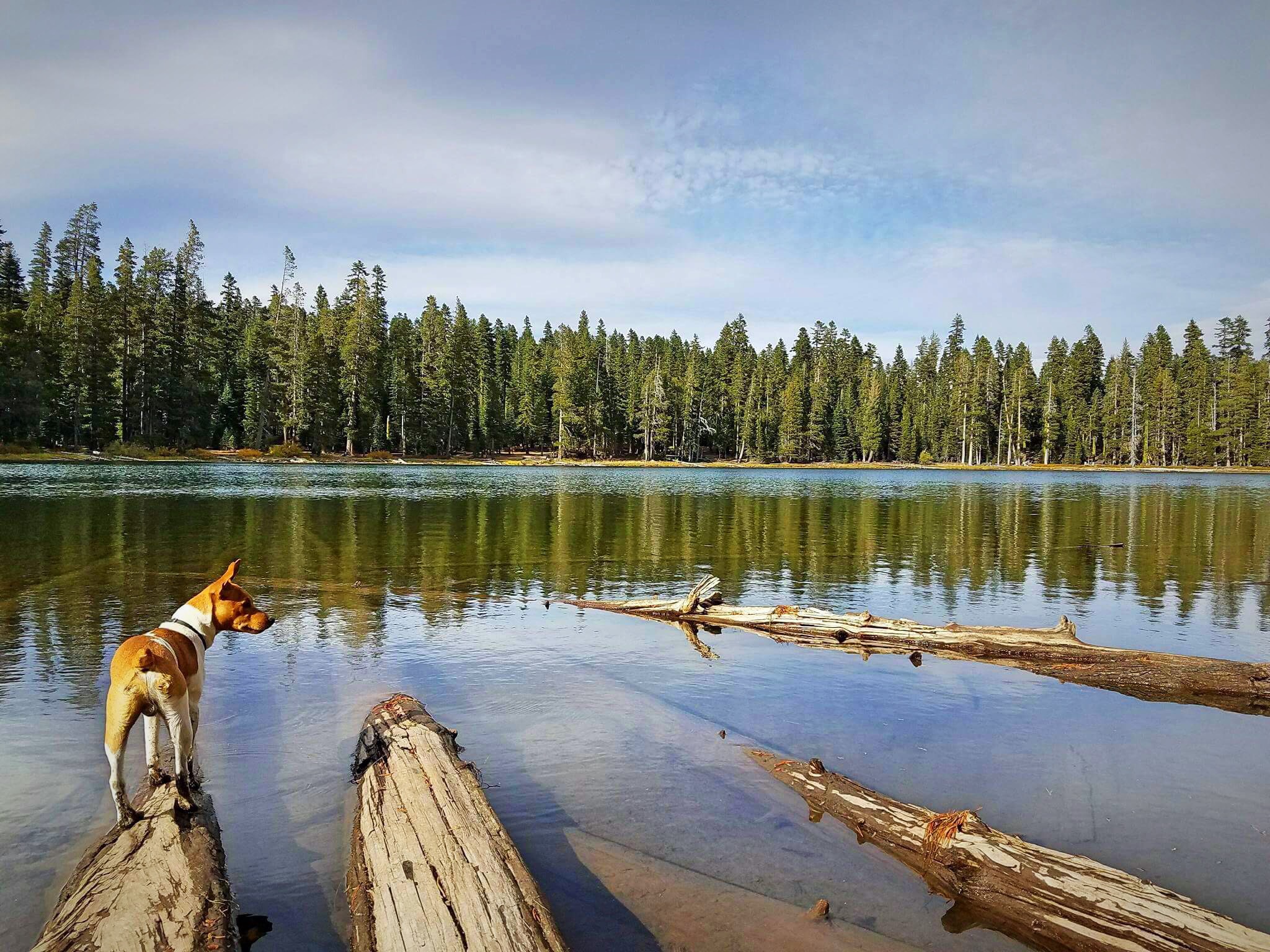
JC’s dog on the road that navigates the campground
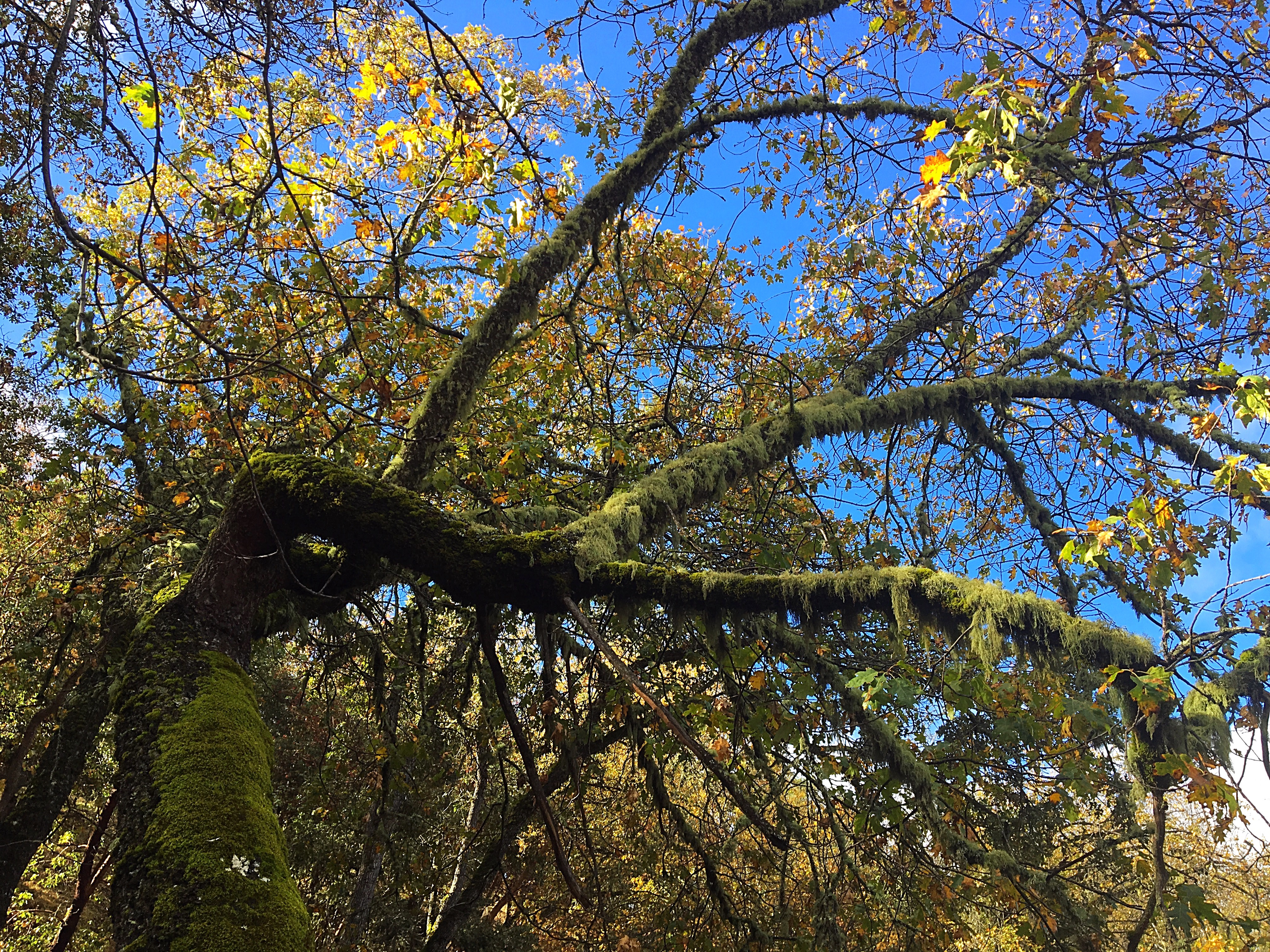
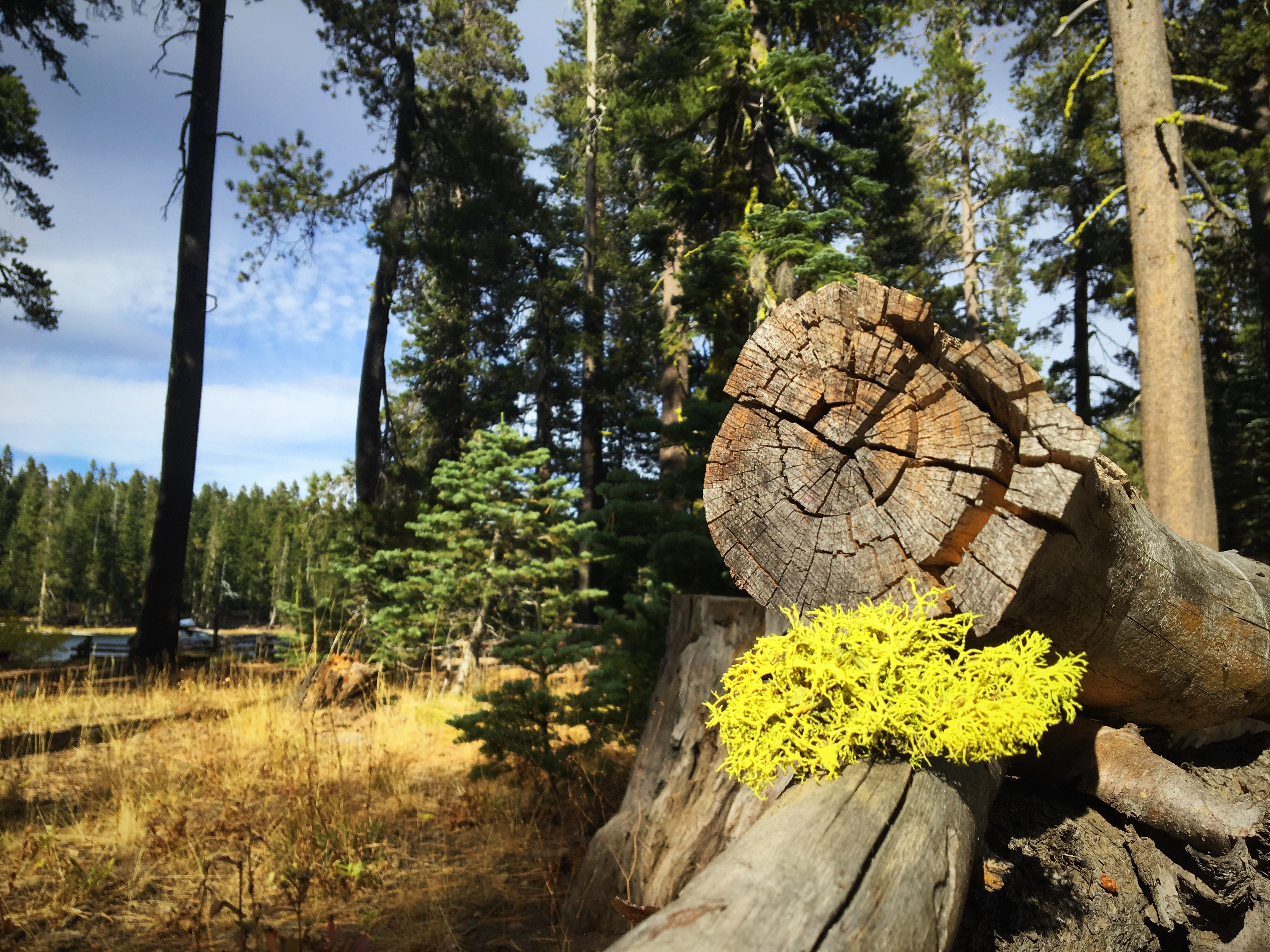
Mossy tree
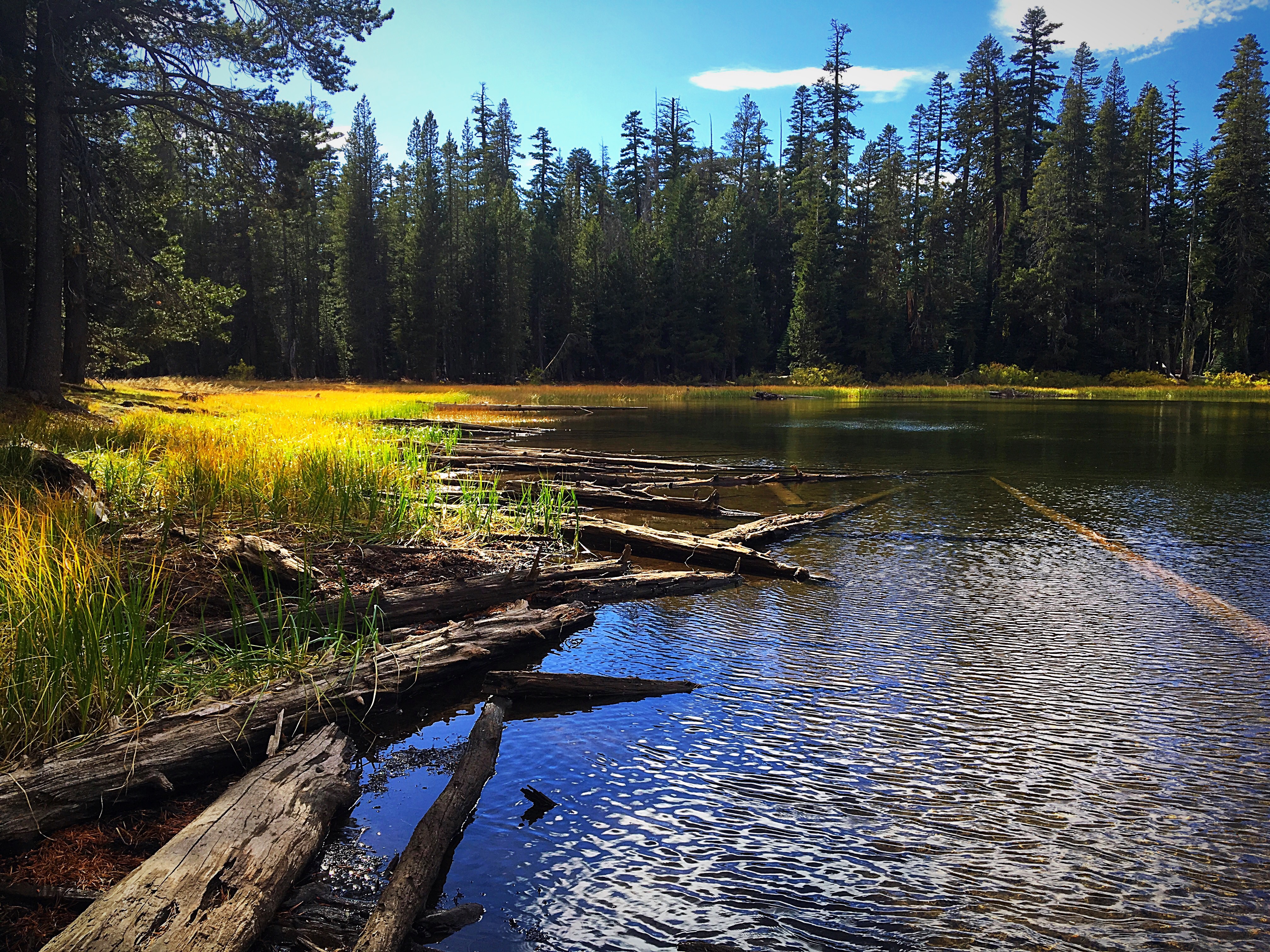
Sparkles on the Water

One of Linney’s fancy dogs; Photo by Linney

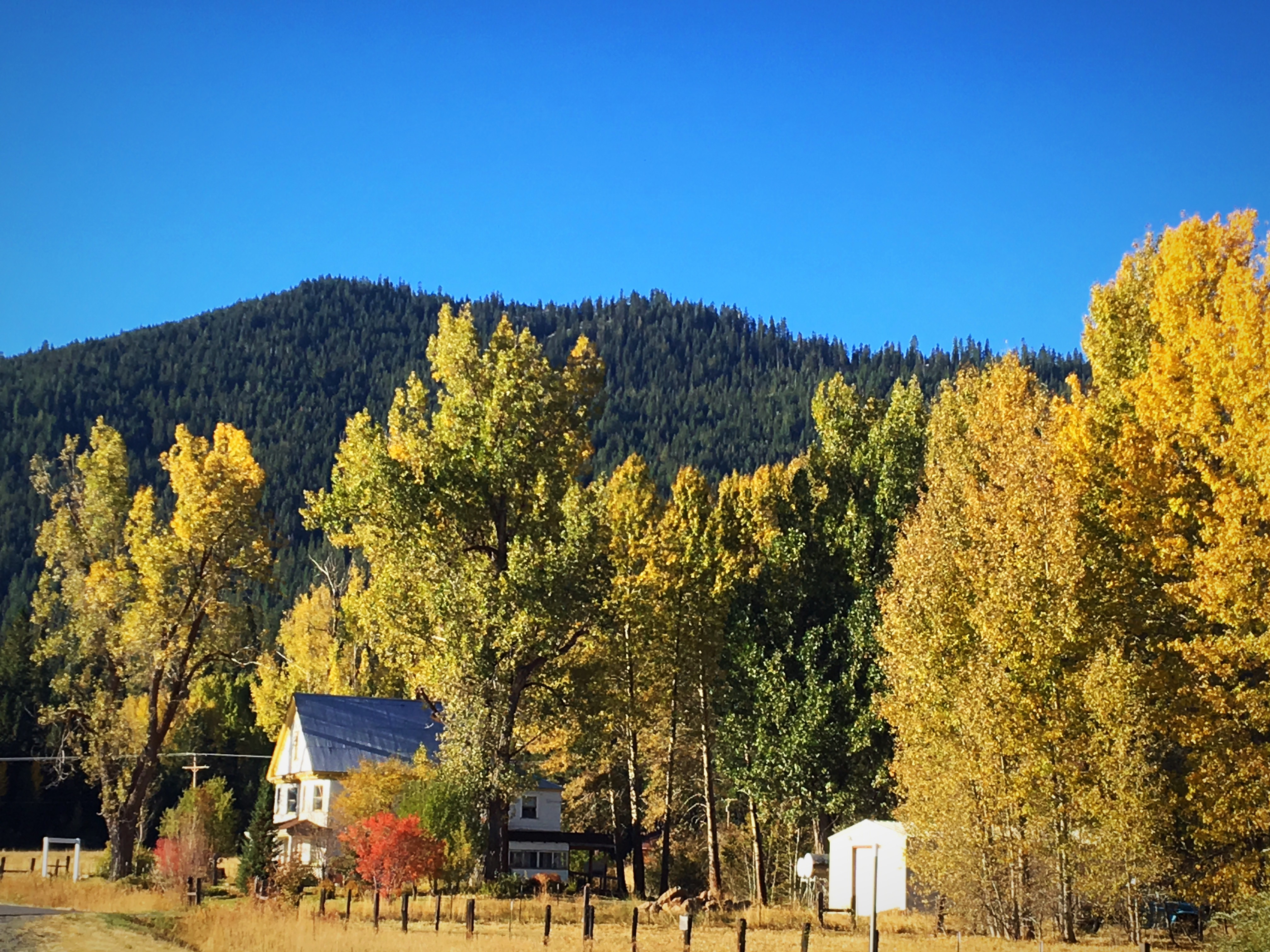
Yellowing Aspen in Sierraville

Pinnacles National Park: California’s Well-Kept Secret

Keeping my vow, the day I left work, I headed straight to Pinnacles National Park. Luckily for me, a glamsient friend had the day off and agreed to join me. We started at the visitor center on the east entrance where I saw a sign announcing the arrival of a California Condor.”A new baby! How exciting,” I said to the ranger behind the counter.
“Yes, a girl. We are thrilled,” she said. “It’s from the only nest in the park!”
“Do you have any camping available for tonight?” I asked. Knowing that many California parks fill up months in advance during summer, I braced myself for her answer.
“Oh yes, there’s plenty.” She handed me a map of the campground. “Pick out an empty space, come back and let us know which one you want.”
We drove towards the back of the campground — it was virtually empty! With so much availability, we found exactly what we wanted: a site surrounded by trees and bushes to give us privacy and shade.
High Peaks Trail via Bear Gulch Cave
For our first hike, we chose the High Peaks Trail by way of Bear Gulch Cave. My glamsient friend informed me this is the most popular trail in the park.
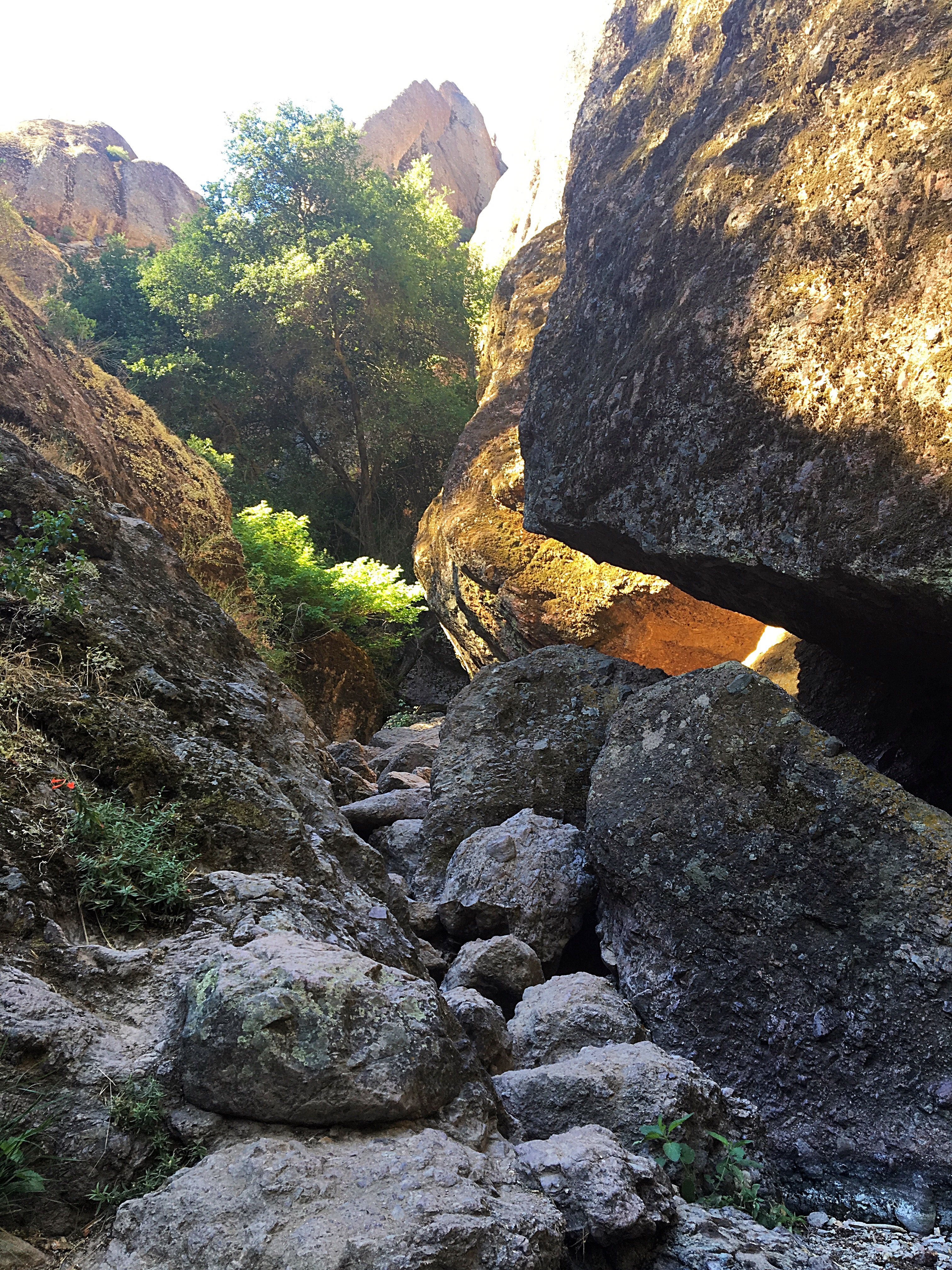
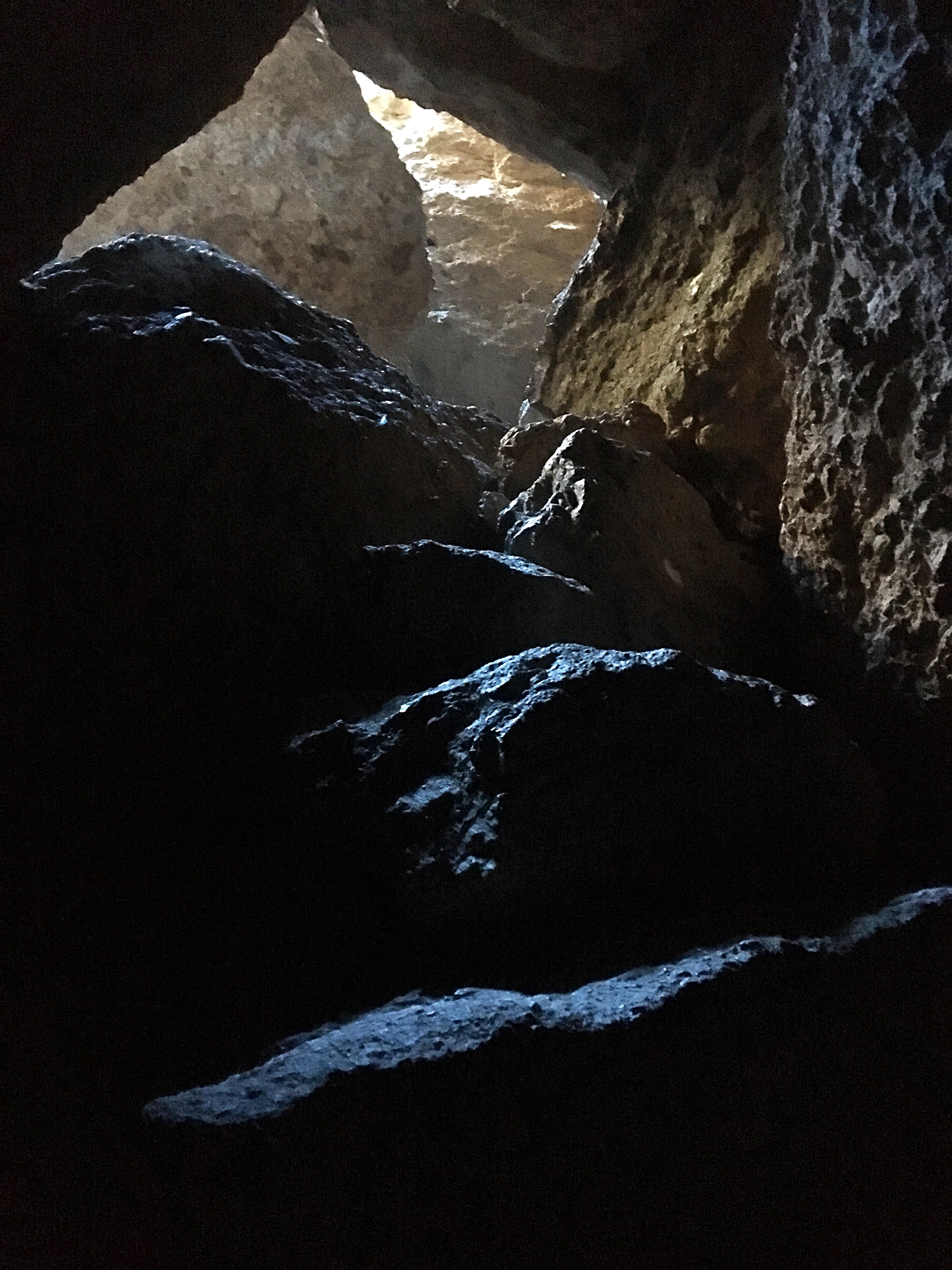
The first section guided us to Bear Gulch Cave, a rare talus cave thought to be formed in the ice age. The canopy of trees made this hike gentle and pleasant even in the middle of the afternoon. Created by large boulders that had fallen and wedged into narrow canyons, the cave was easy to navigate — sunlight made its way into the cave through open spaces to illuminate the path. We walked over bridges and up stairs created in the 1930s; part of the way, we had to crouch to pass underneath boulders.
“Wouldn’t want to be here during an earthquake,” my friend remarked. “The San Andreas fault is pretty close.”
For a popular destination at the park, the cave was by no means crowded; we saw only a few groups of people.
Leaving the cave, the trail led us to a small reservoir; that’s where the strenuous climb began to the High Peaks. Without the tree cover, under the blazing sun, every step moved me further uphill and every step told me that I am out of shape! I quickly realized this section of the trail would be much more enjoyable in cooler weather — either early morning in summer or a cooler time of year altogether!
(That being said, we saw many groups with children. They seemed fine. Hot, but fine.)
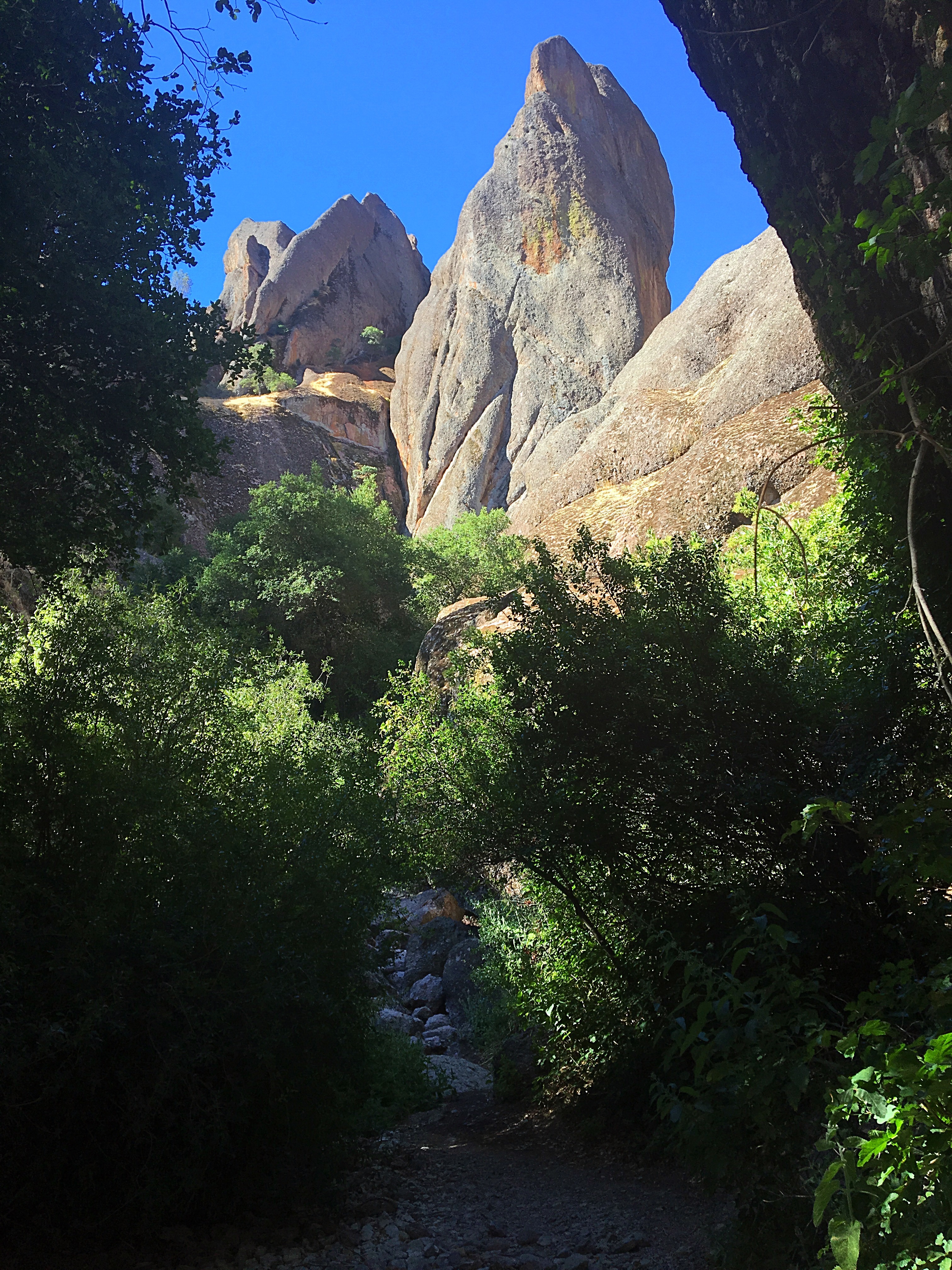
Ultimately, our effort paid off — the trail took us to an incredible peak revealing far reaching vistas of valleys, rock formations and mountain ranges to the east and west. The High Peaks trail showcases prehistoric rock formations; volcanic activity created these rocks 23 million years ago and erosion formed them into what we see today. It surprised me to learn seismic activity moved the solid, massive boulders over 195 miles northwest from the time of their creation.
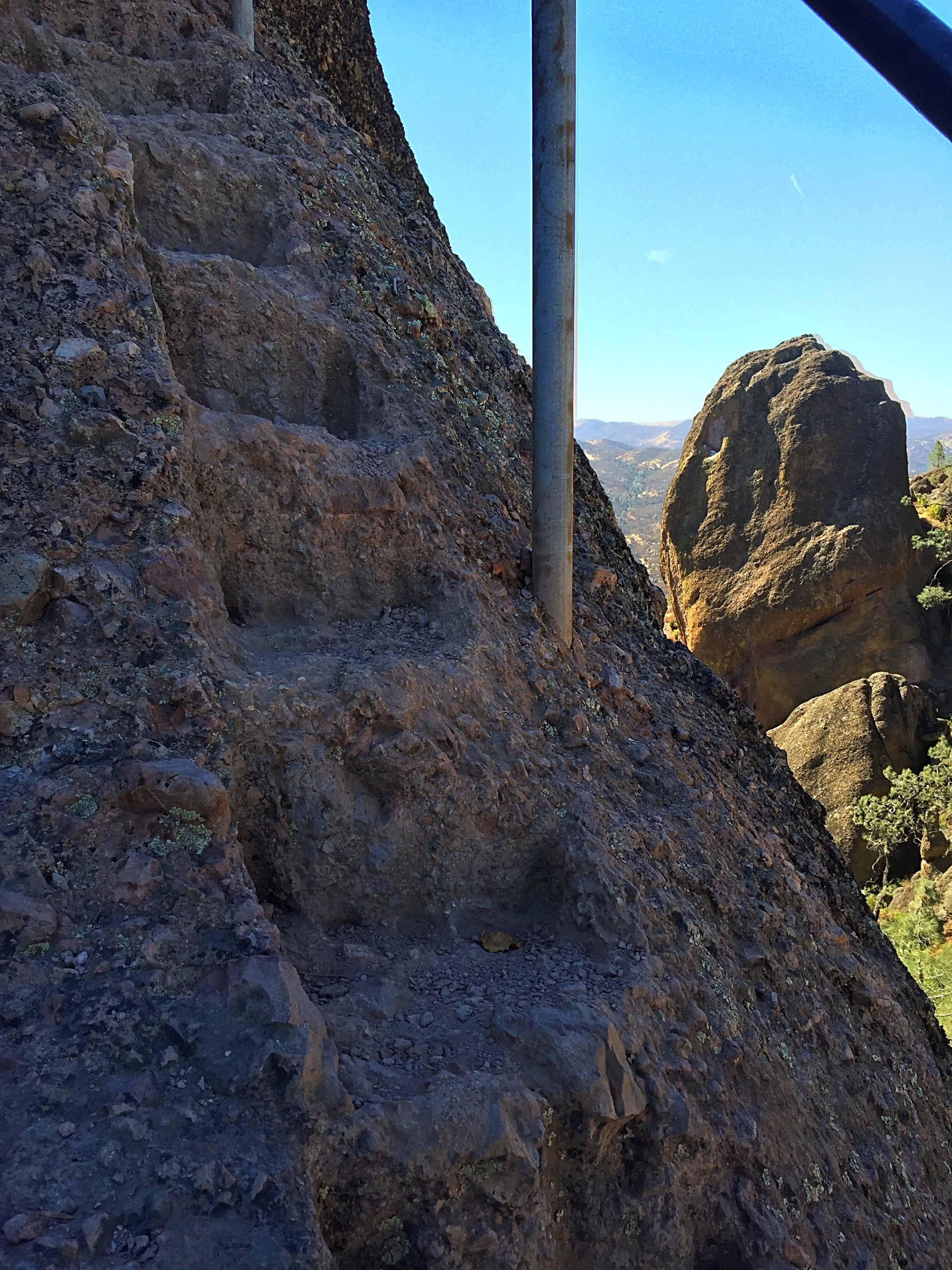
At the crux, we walked up and over boulders that created a long ridge — in many places, the trail was carved by dynamite into footholds and steps. We stopped to catch our breath, but lost it when a Condor flew overhead! One of only 36 wild in the park, we knew we were in the right place at the right time.
Shortly after we made our descent, we saw a couple on the trail.
“Is the peak much farther?” The young man asked. He sat in shade created by chaparral, his face was red and dripping with sweat. “We are thinking of going back.”
“You’re so close,” I told him. “Keep going.”
“It’s worth it,” my friend said. “The views and everything — you don’t want to turn back.”
“And there’s a cave on the other side,” I said.
Halfway down, we found a spot to rest and wait for the full moon. Despite my aching feet and jelly knees, seeing the moon — large and pink — rise over the mountains at sunset was a glory to behold.
It was dark when we returned to camp for dinner. Eating that night, I noticed a sense of vitality within me. My blood pumped through my veins, fresh air emboldened my lungs and my muscles felt active and alive!
Balconies Trail
The next morning, my fellow glamsient left early for work. Part of me wanted to head home, but I quickly recognized that desire as my old habit of rushing to the destination. The Balconies Cave enticed me and, remembering to slow down and savor the journey, I chose to stay in the park.
Driving to the trailhead I saw quail, turkeys, and a doe with her fawn. The parking lot was empty apart from my car, and only the sound of birds accompanied me onto the path.
Meandering through trees, the Balconies trail is mostly flat — a perfect companion to yesterday’s strenuous hike. Yellow swallowtail butterflies greeted me as if to say I had made the right choice. I breathed deeply, enjoying the time to myself.
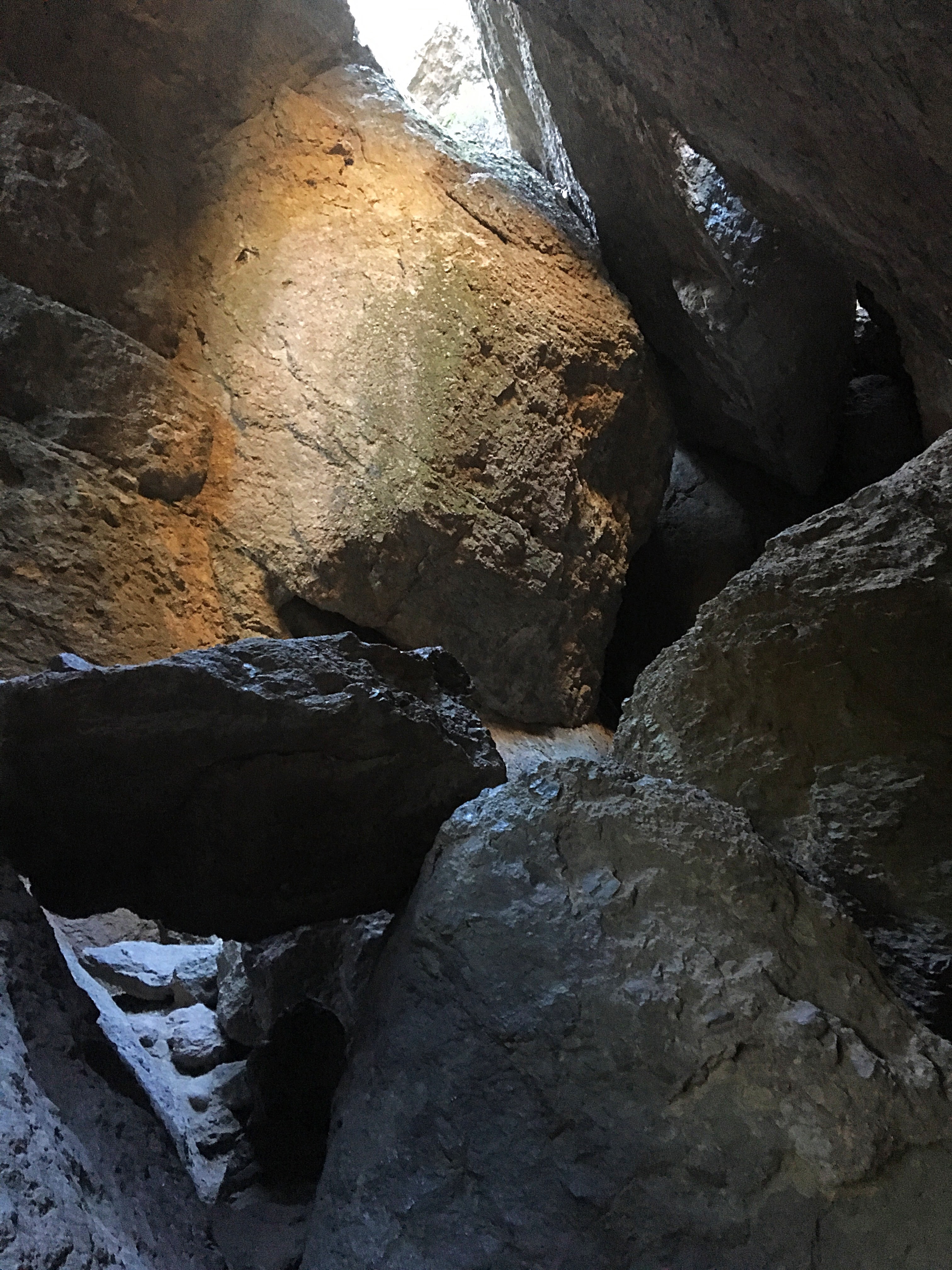
When I came to the entrance of the talus cave, I saw a large, metal gate. “Flashlights Required,” a sign read. Having seen a similar warning at the trailhead I had my headlamp — and thank goodness for that! The cave was pitch black; only little white painted arrows marked the trail.
Cool and dark, the deep quietude of the cave penetrated my being. I was completely alone, and instead of steadily moving through to the other side, I sat and turned off my headlamp. Surrounded by rock, my small, vulnerable body felt soft and humble, but I was not afraid. I felt held and supported. I seemed to dissolve, as if I were part of the rock, the air, the empty space. In perfect stillness, I tuned to the deepest part of me — connected and endless.
When I was ready, I moved forward through the cave. As soon as the first rays of sun beckoned me out I wanted to go back into the dark, cool, quiet chamber. It had given me a thrill unlike any other.
Hiking the next section of the trail — a moderate stretch with views of rock formations jutting out of the earth like balconies — my mind returned to my experience in the cave. Wholly grounding, yet also uplifting, I longed to return to the cave and the feeling of oneness.

Rock Formations
Small and humble
A shady, gentle, empty stretch of trail
Footholds in the trail
Rocky trail
Rock formations over the trail
Entering the cave
Exiting the cave
Taking in the view from the high peaks


The Road to Happiness

Recently, I woke up feeling a strong aversion towards going to work; not because I hate my job, but because it is nearly 300 miles away from my new home and I didn’t want to make that drive.

When I’m scheduled, I usually leave as early in the morning as possible just to get there and be done with the drive. This particular morning, however, I decided to do things differently: I gave myself the glamsient luxury of time.

Instead of rushing out of bed, I snuggled with my cat much longer than anyone would consider appropriate, and before I got to packing, I went on the lake with my younger cousin. Dragonflies waltzed in the air, wildflowers crept close to the water’s edge, and fish made an appearance when we looked for them. We explored the lake on paddle boards, stopping in every eddy until we found a blackberry bush and savored its plump, dark fruit.

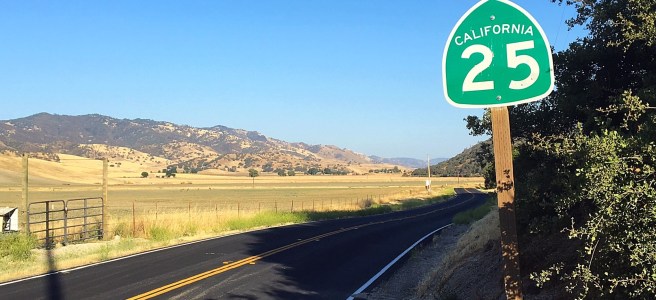
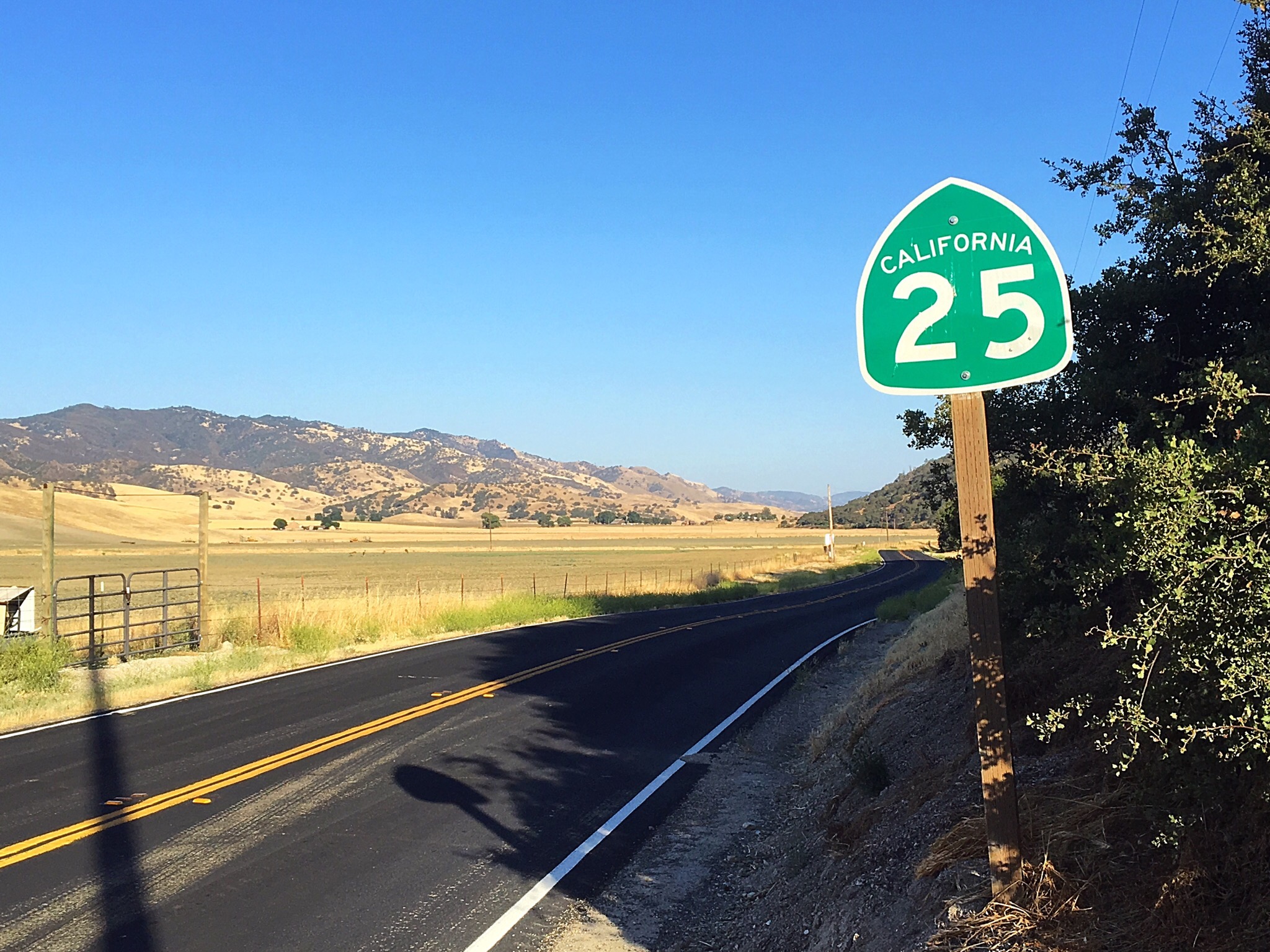
As morning drifted into early afternoon, I set out on my five hour drive. Invigorated and inspired by my new attitude, I decided to make my drive an adventure — instead of going the quickest, most direct route, I chose a new road. A stretch of California Highway 25, The Old Arline Highway, seemed appealing although I knew nothing about it.

Without any expectations, I felt a sense of curiosity towards my journey — much better than the dread I felt that morning.

South of Hollister, Highway 25 becomes a gently winding road and the scenery opens into long swaths of rolling hills, spotted with oak trees. East of Big Sur, valleys of agricultural and ranch land create a stark contrast to jagged mountains behind them. Highway 25 teemed with life: I saw hawks, vultures, quail, blackbirds, doves, goldfinches, turkeys, ground squirrels, rabbits and deer.

The highway was nearly devoid of other cars — a welcome reprieve from the hectic highways and freeways I often navigate.

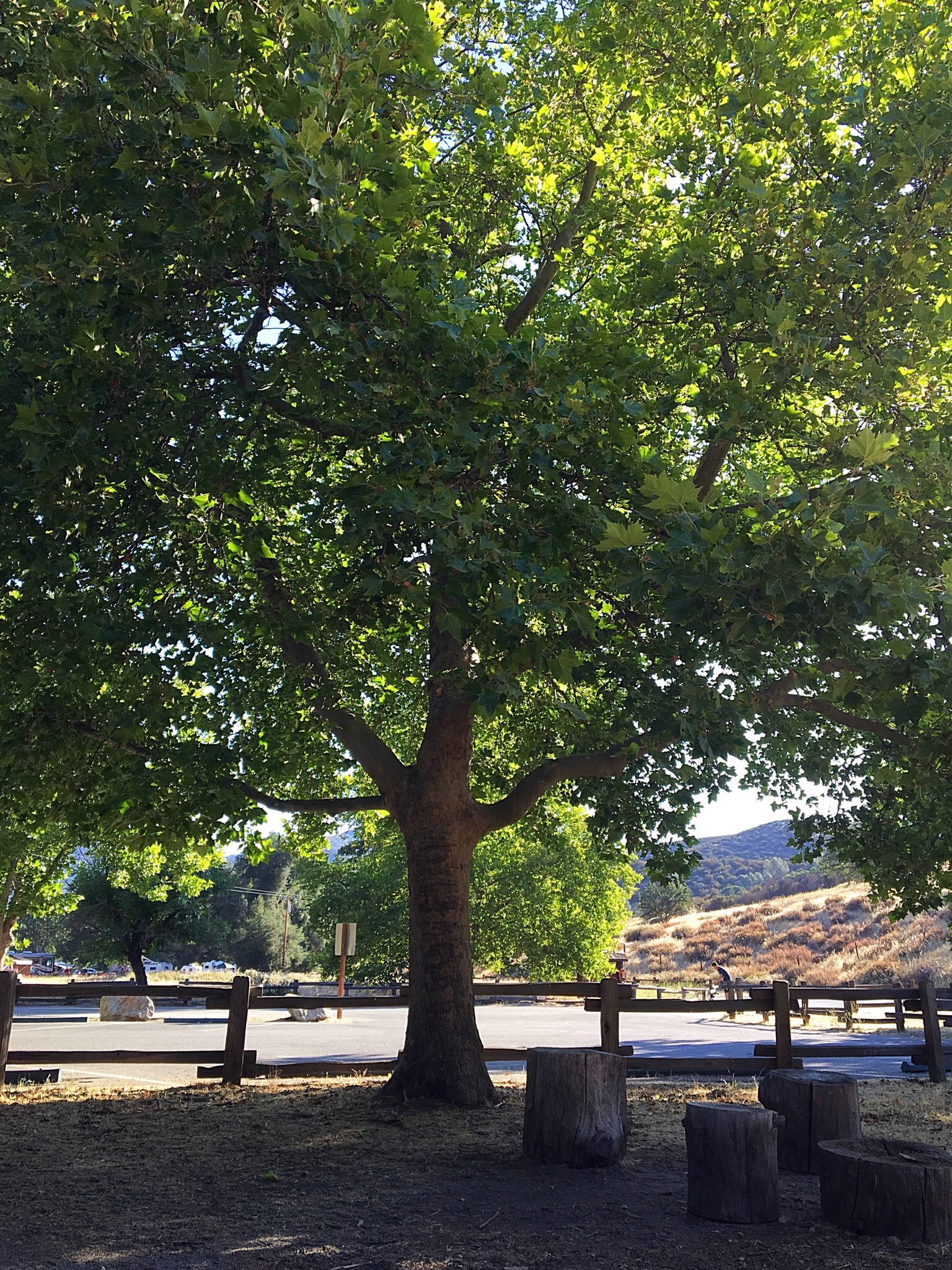
And then, I saw the signs to Pinnacles National Park. When I came to the entrance, I debated momentarily before consulting my new attitude and driving in to eat my dinner. I found a perfect spot under a large oak tree at the visitor center. Children laughed in the swimming pool behind me and a yellow swallowtail butterfly floated through the trees. A breeze rustled the leaves. I wanted to explore the park, but with only a couple hours of sunlight remaining, I knew I had to get back on the road. As I got into my car, I promised myself I would return on my way home.

Arriving at work just as the sun set, I felt refreshed and happy. Turning the drive into an adventure was the best thing I could do for myself that day. Instead of feeling grumpy and annoyed the whole way, I felt elated and light.

My small, impromptu adventure reminded me to slow down and take full advantage of every moment. I remembered that life isn’t about the destination, it’s about doing what it takes to enjoy the journey. Finding ways to create happiness and curiosity that day gave me the wisdom to shift my approach to everyday life.

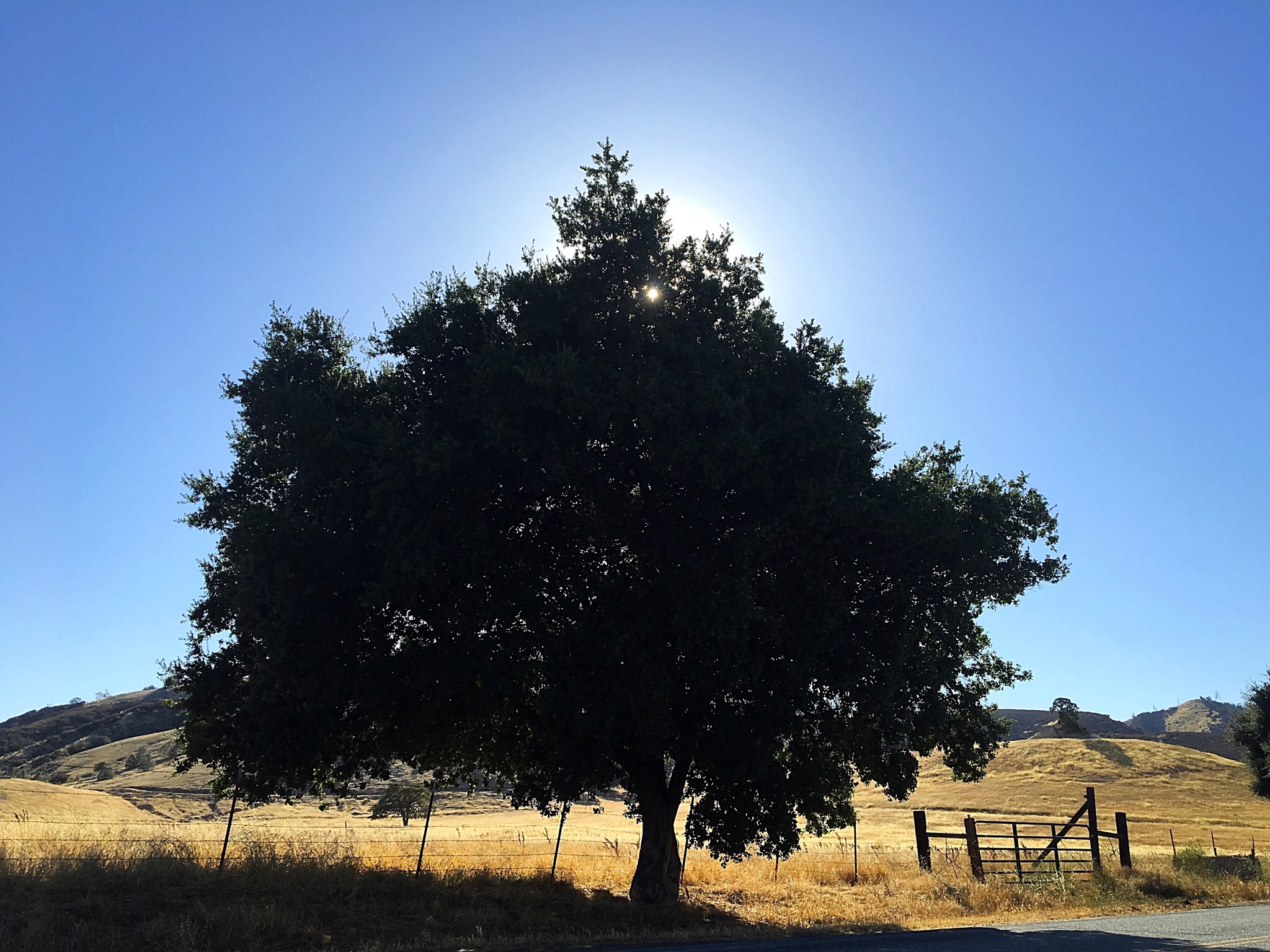
Oak Tree on the side of the Highway
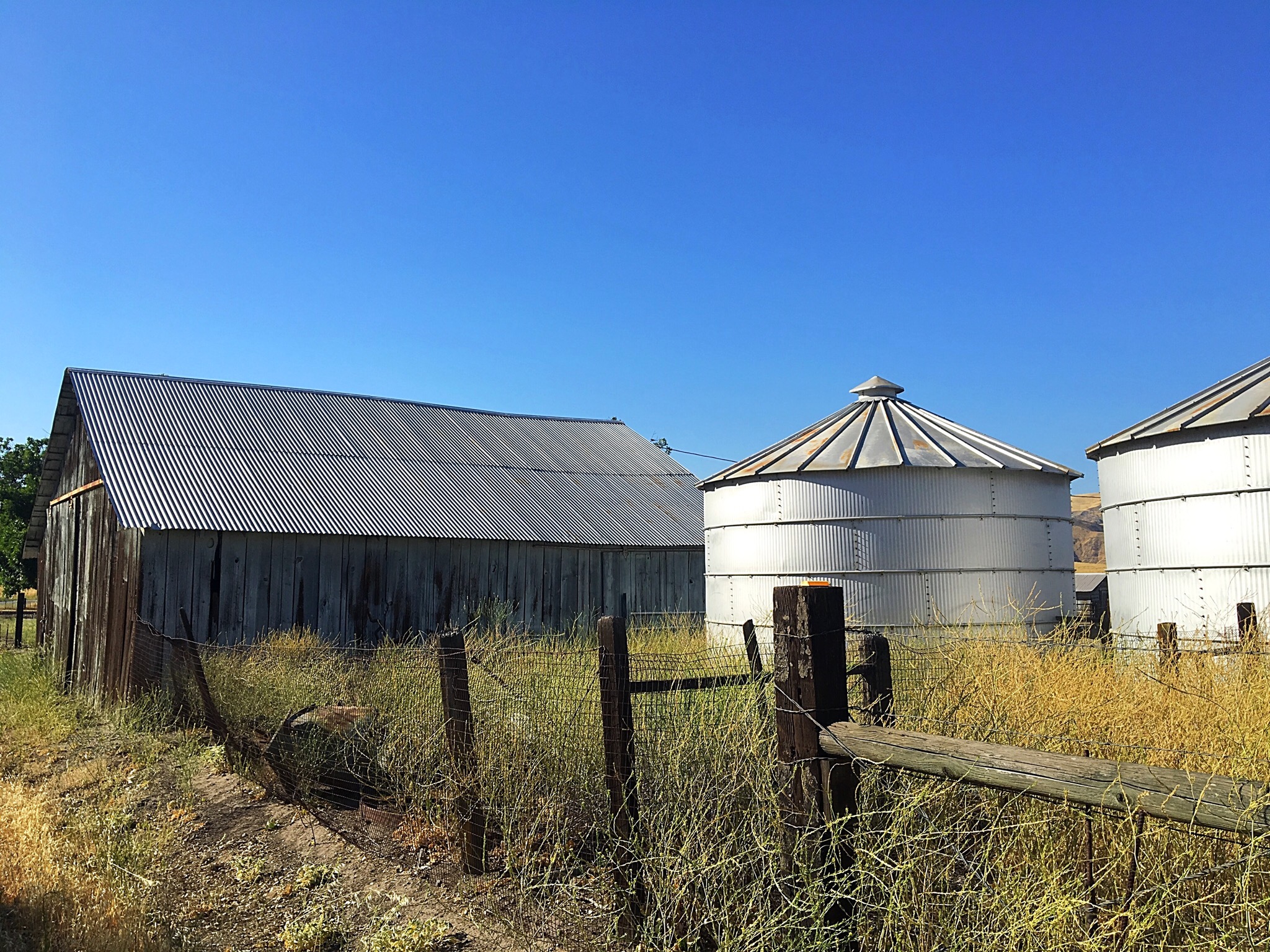
Farm Land on Highway 25

Dinner under an Oak in Pinnacles National Park

Veuve in a Plastic Cup

I learned about Second-Sunday when I first started living as a glamsient and spending time with other glamsients. An unplanned extension of the weekend and luxurious expression of freedom, Second-Sundays are spent with friends enjoying leisurely, Sunday-esque vibes.

Earlier this month, after attending the Big Surreal boutique festival, I headed to Carmel-by-the-Sea for a Second-Sunday, which turned into a Third-Sunday to celebrate Linney’s birthday.

The day began with brunch and bottomless mimosas at Carmel’s Bistro Giovanni followed by afternoon cocktails and appetizers at Grasings — our favorite place to splurge. We laughed at our opulence as appetizers led to dinner; just days before, we were covered in dirt and eating on the ground at the Big Surreal. Satiated and in high spirits, we imagined the most glamsient way to end Linney’s birthday celebration. Of course Linney knew what to do: grab a bottle of Veuve Clicquot and drink it out of plastic cups!

The clerk at Nielsen Brother’s Market didn’t give us a funny look when we asked for plastic cups as we bought the Veuve; she even put the bottle into a paper bag!

Lounging in the evening light, telling stories and listening to the waves at Carmel Beach, we watched the sunset and opened the bottle of Veuve with gratitude. We drank out of the plastic cups, and we drank to our thankfulness — for the ocean, the sunset, and that we live our dreams and follow our fancies. Most of all, we were thankful for each other, because without friends, Second- and Third-Sunday is just free time.

Sunset at Carmel Beach

Zion Transformation

Alone at 6:00 am, watching the sunrise over rock formations, climbing natural staircases, feeling smooth buttresses with the palm of my hand, I come to sit on the top of a earth-made spier — I feel like the uppermost piece of a cairn. I sit patiently, open to a message from the landscape.

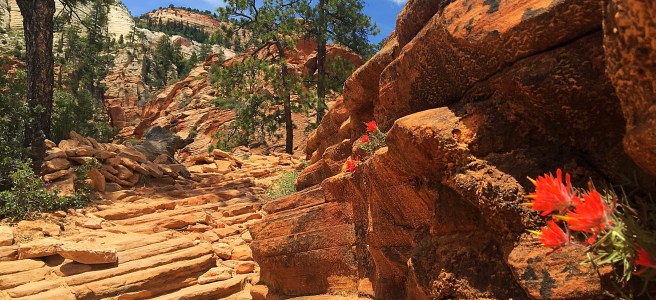
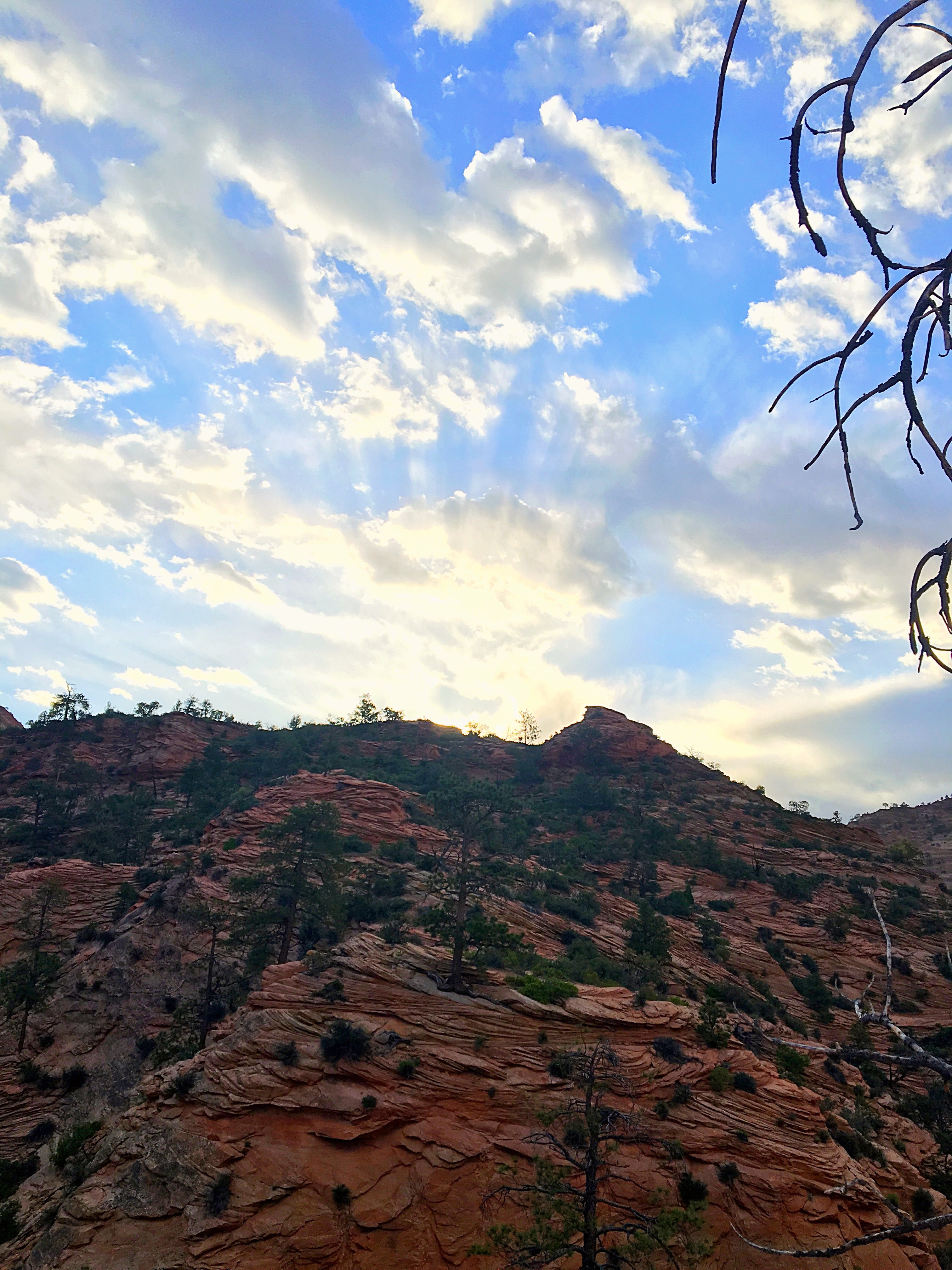
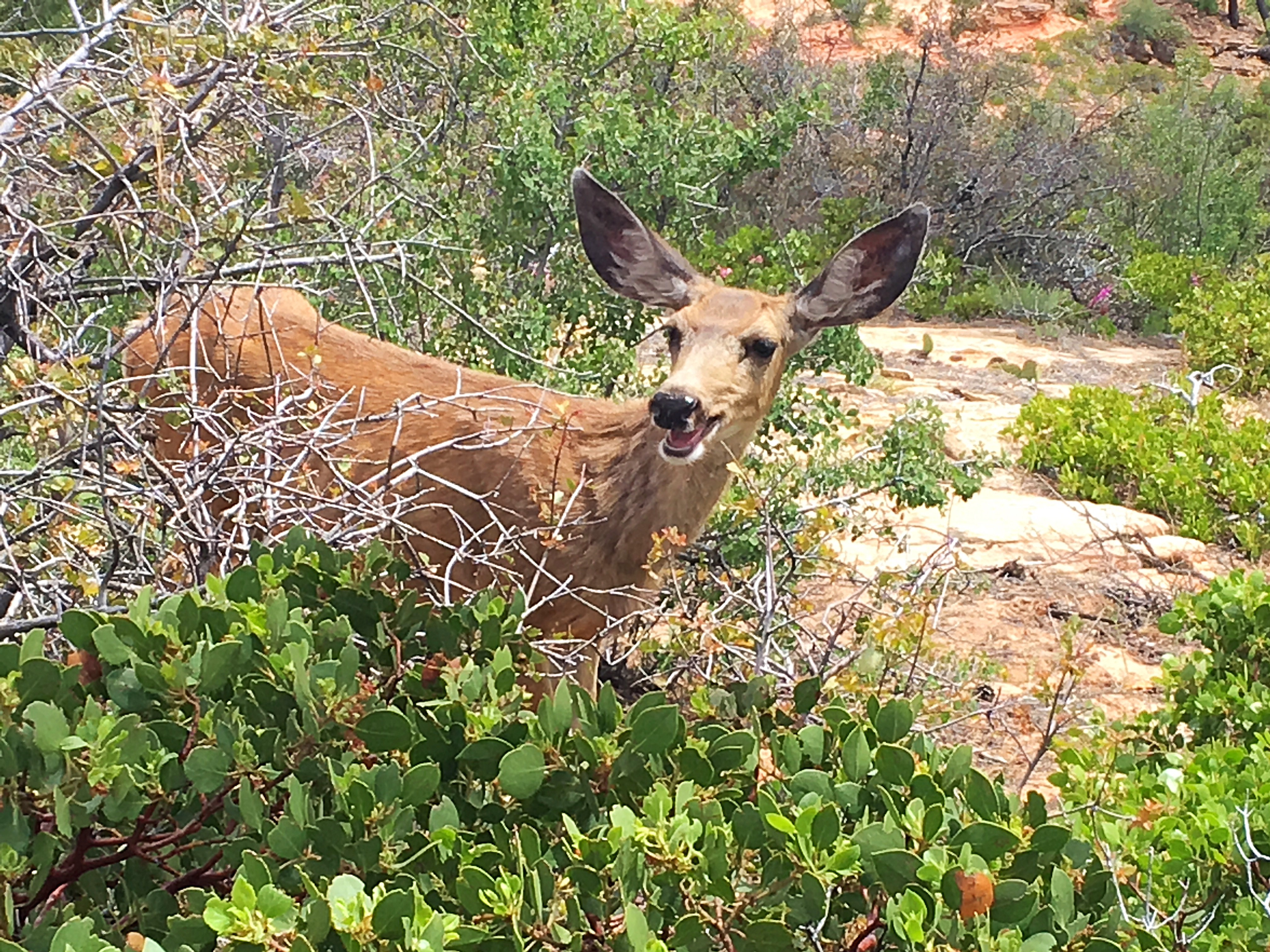
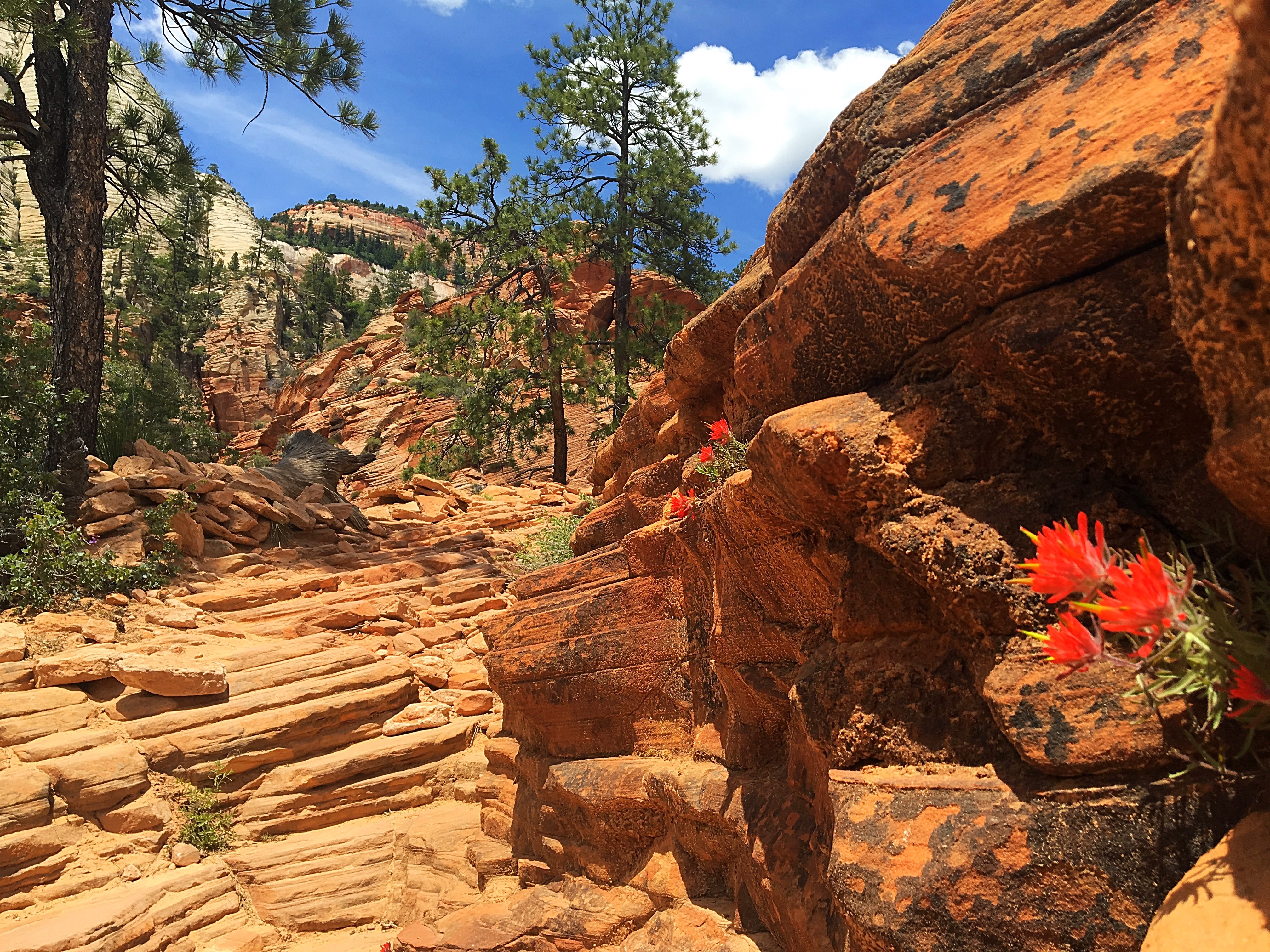
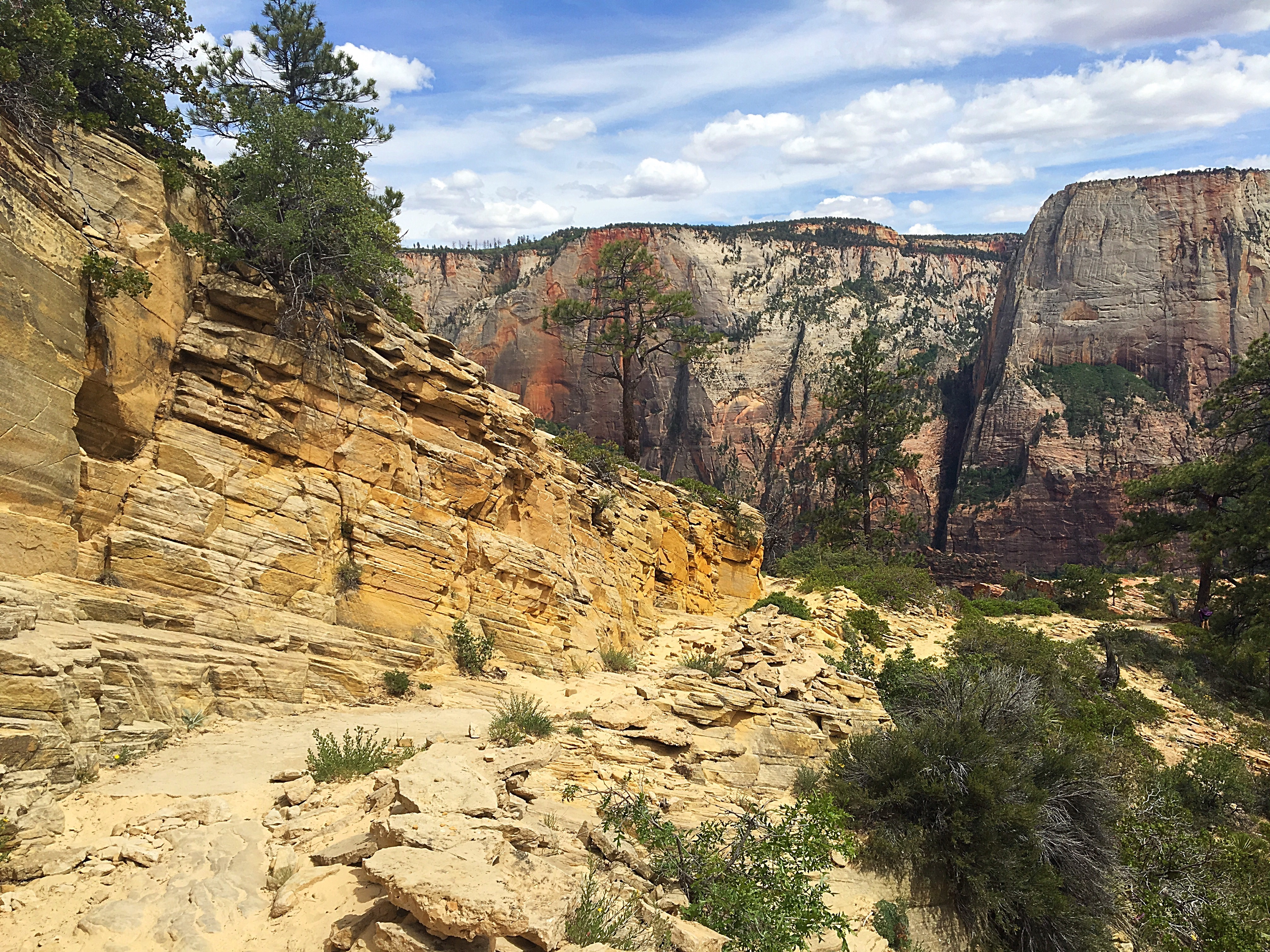
A sparrow flies in circles around me. Scat below my feet tell me deer enjoyed this view not long ago. I recalled the joy I felt seeing the hot and thirsty doe near Angel’s Landing the day before, and my surprise to see her at high altitude. A tree grows from a crack in the rock behind me — most of the trees and plants I see here seem to force their way through hard, impossible places. The sun’s rays pass by clouds, creating beams of majestic light that illuminate the red, yellow and orange striped rocks around me. Only birdsong breaks the silence of the dawning day.

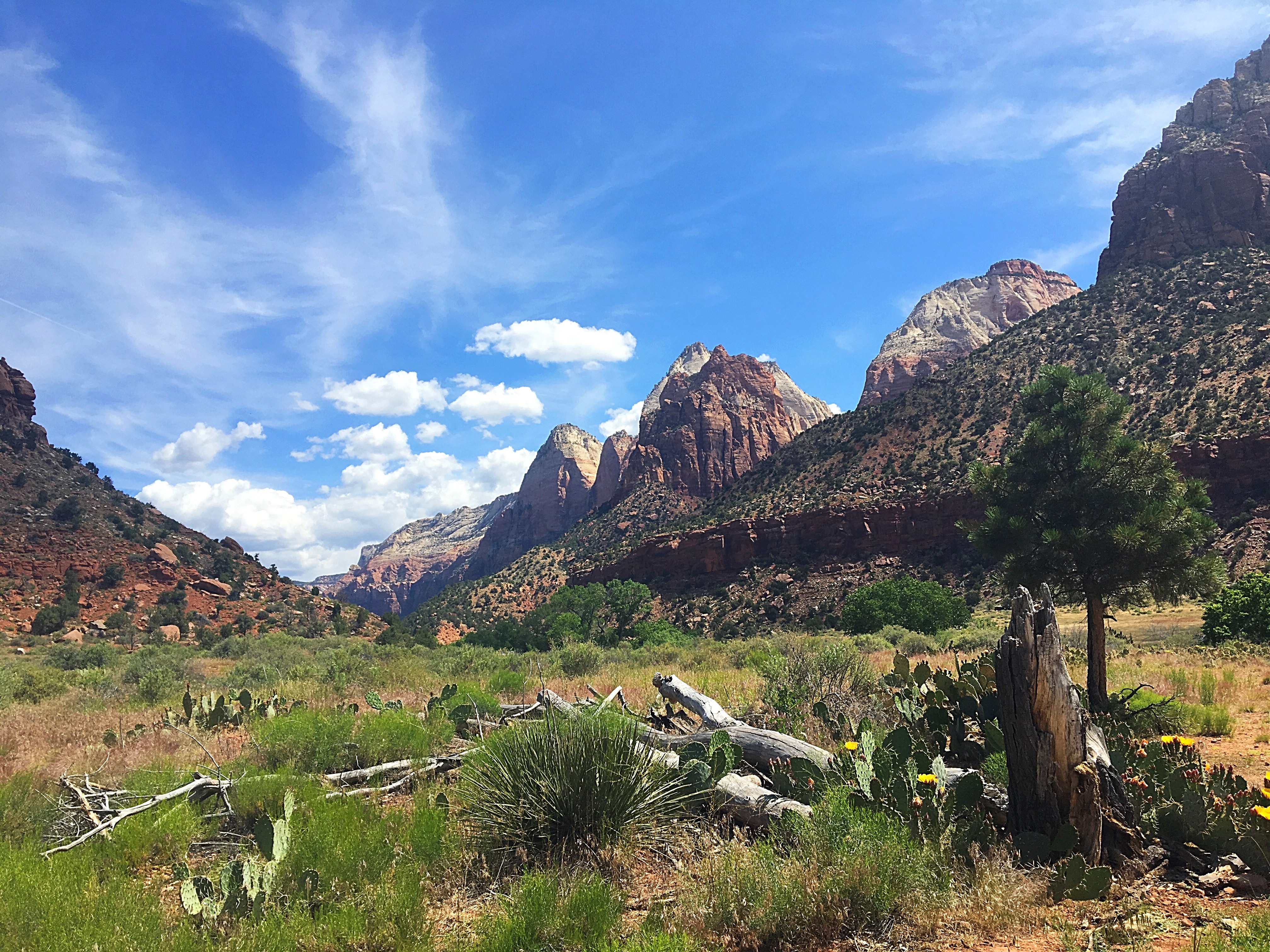
I look upon the earth before me. It is almost impossible to believe, sitting on a rock perch, that 275 million years ago this region was a flat sea basin. But it’s true: The iconic Zion landscape in Utah is the result of millions of years and five geological processes: sedimentation, lithification, uplift, erosion and volcanic activity. I look upon a working transformation — geological processes that continue today.

The resulting transformation is an unparalleled beauty that speaks to the soul of an unseen power. Several times while hiking I had to sit and pause in stillness and quietude to fathom the power of the rivers and the earth’s movements that created the structures and forced the earth towards the sky in vast towers and points.

I wondered, would the flat basin give home to the many plants and animals I had seen? Would the flat basin draw tens of thousands of visitors in a day with its grandeur? Could it provide the same inspiration to artists, have the power to pierce your heart, and take away your breath?

The spirit of Zion revealed itself to me with insight into myself.

I am a creature of change. I actively pursue transformation of my consciousness to become a more radiant reflection of human possibility — an instrument of equanimity, love and peace. I long to be transformed, to allow the processes within and without mold me and sculpt me into the shapes that I am destined to become.

The work of authentic transformation is ongoing and multifaceted: Zion is still changing. The rocks tell me to be humble, relax into the processes, accept and surrender to the unseen power. Growing pains must not be resisted or feared, but rather, seen as an effect of personal evolution. Life provides limitless opportunities for inner refinement; being present to reflect my true nature requires a Zion-like patience.

Sunrise; Zion National Park
Doe near Angel’s Landing
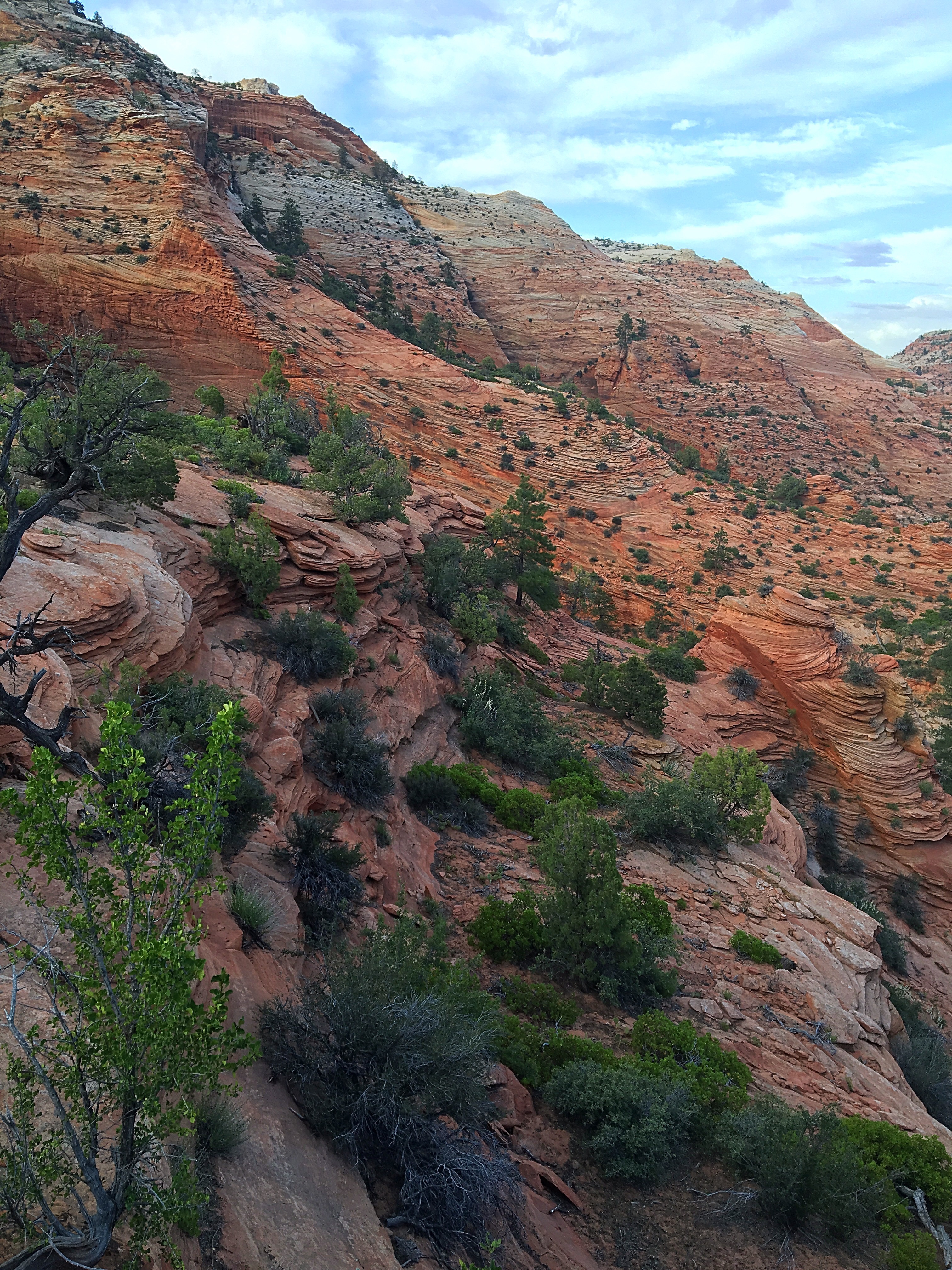
Orange Rocks
Yellow rocks
Once a flat sea basin
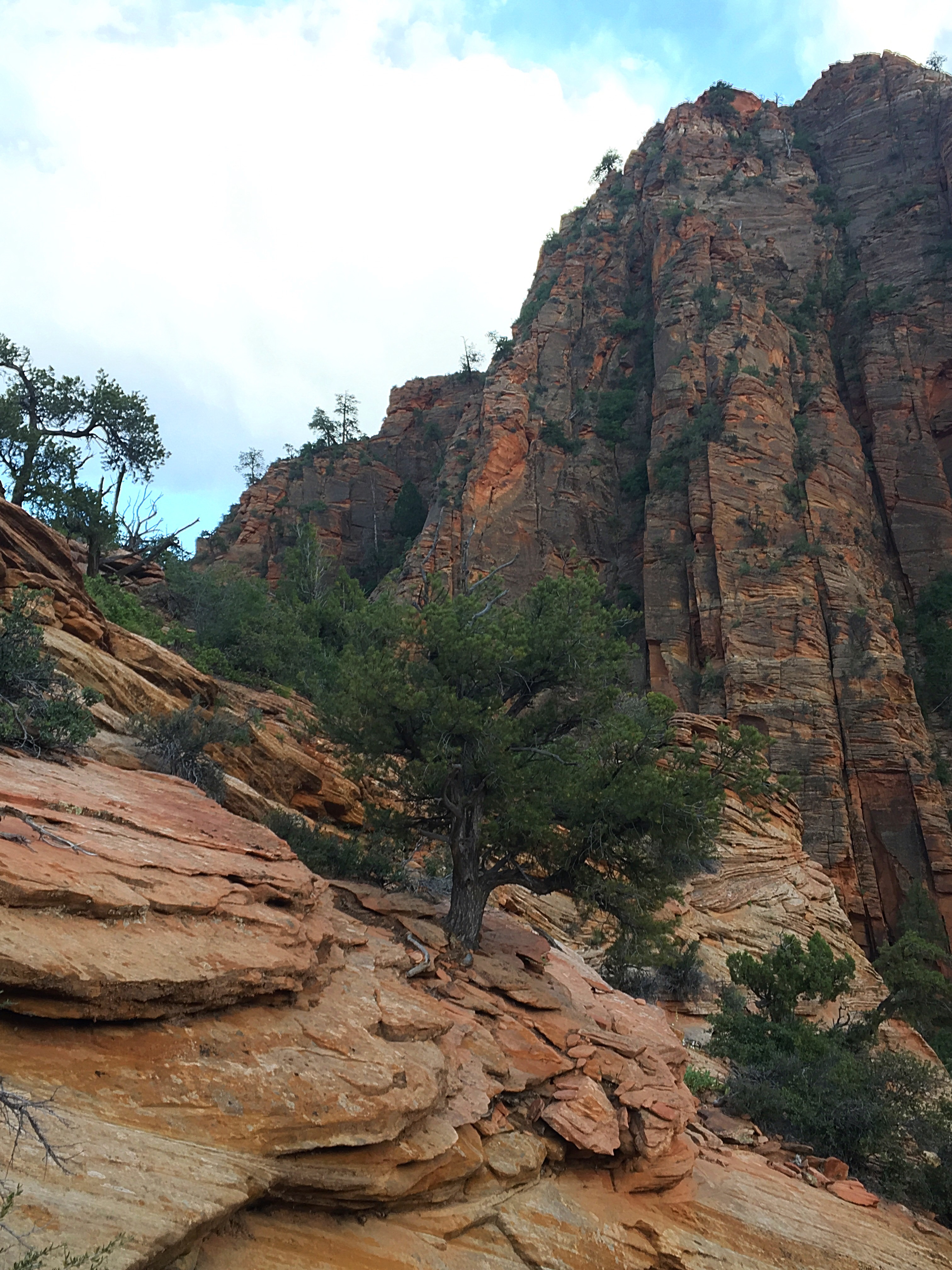
A tenacious tree
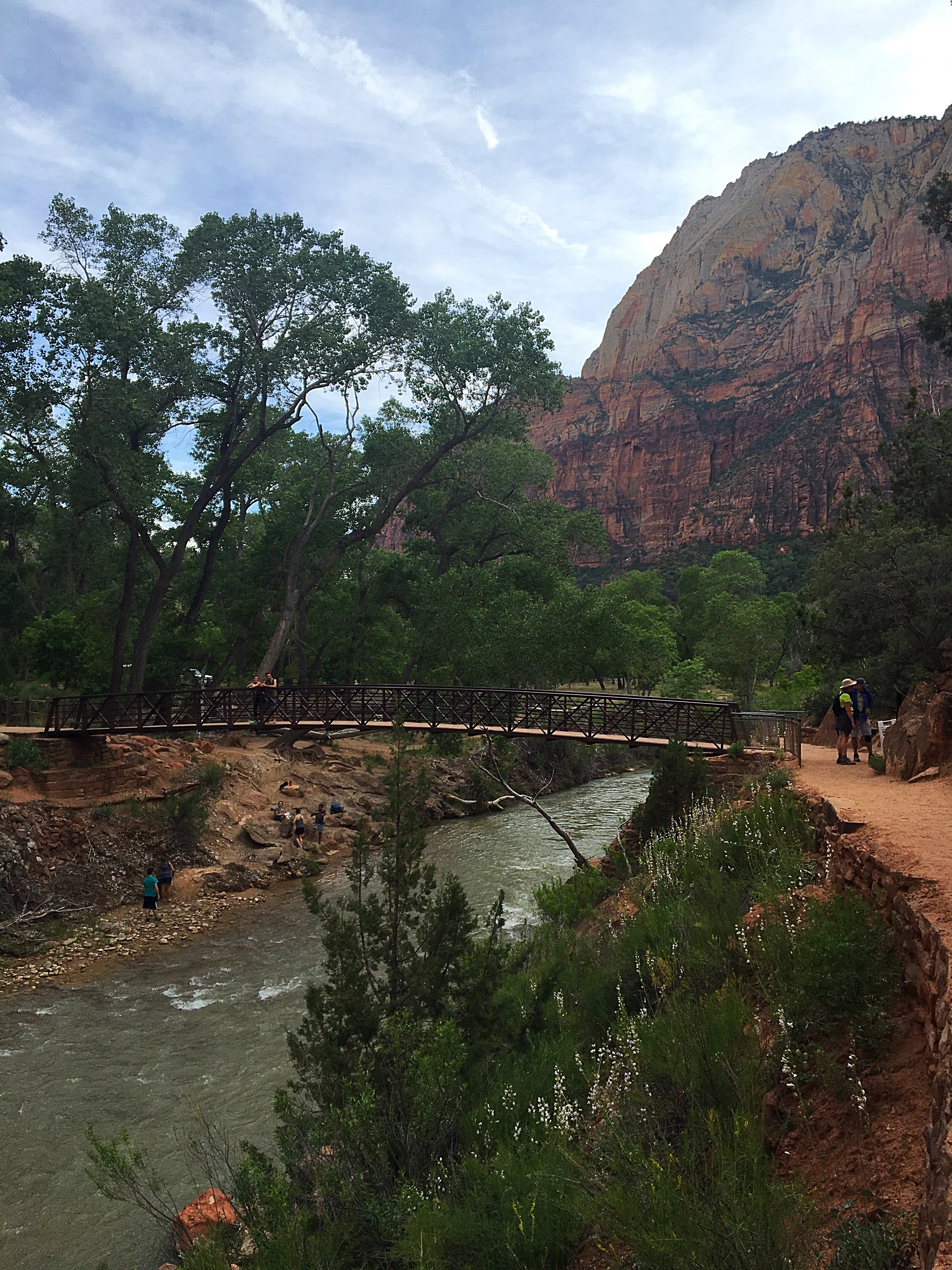
Virgin River; a major force in Zion’s transformation
Trees growing out of striped rock
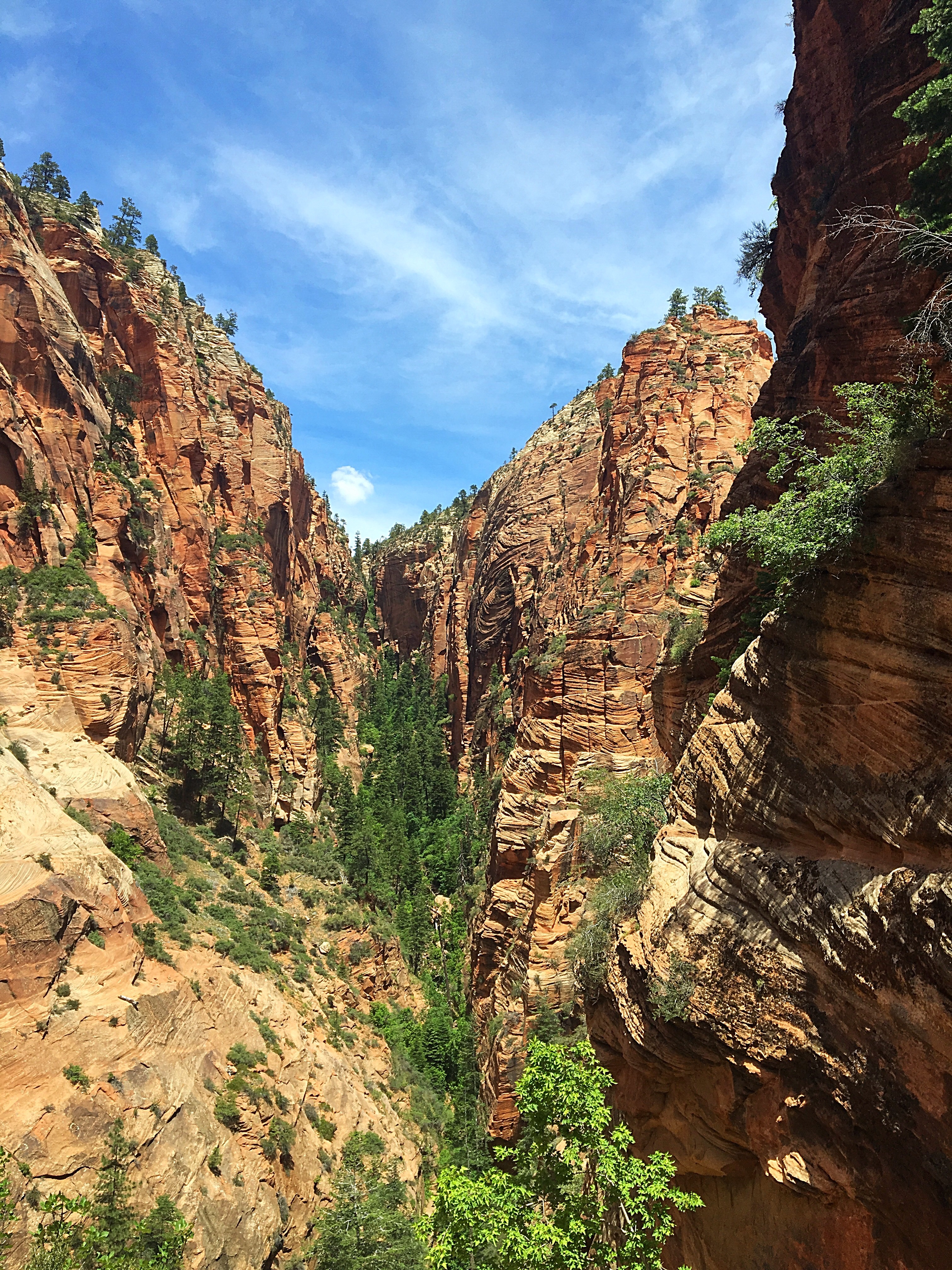
Narrow Canyon